A Christmas Puzzle

A Christmas Puzzle

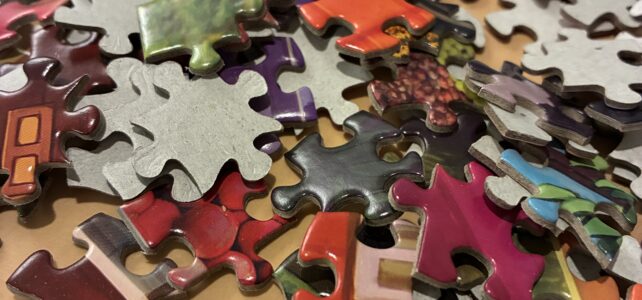
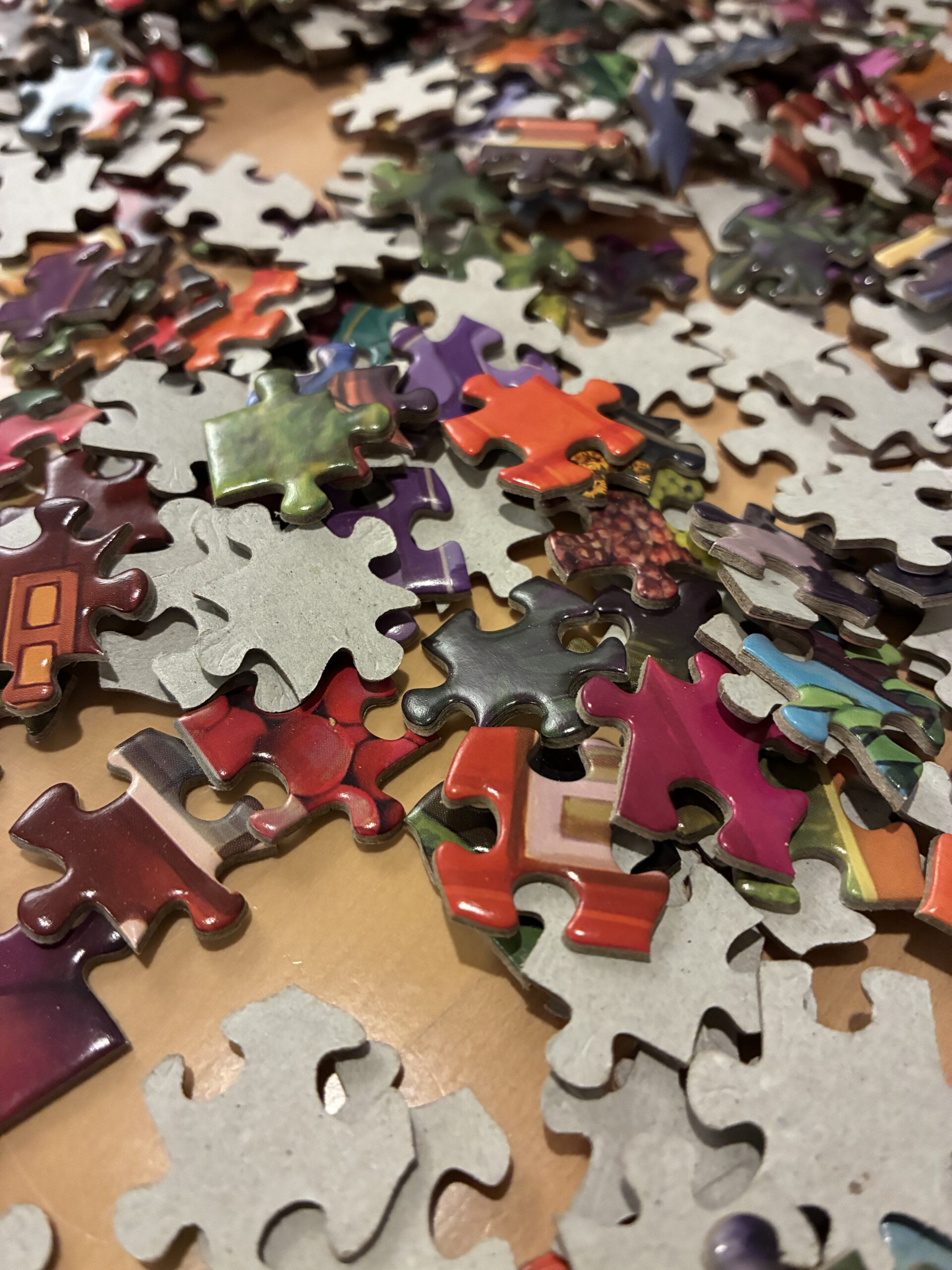
I was never a puzzle person, but my mom was, particularly as her children became adults and had homes of their own. Sometimes, she placed all the pieces of the puzzle to be done on a card table set up in the family room. Carefully she turned over each piece, revealing their colors and patterns as well as their shapes. Slowly, piece at a time, with the image on the lid of the puzzle box as a guide, the picture emerged in the center of the table.

When I came to visit, I’d join her to add a few pieces. When we found some that connected but whose place in the big picture was still a mystery, we’d snap them together and arrange them around the puzzle in progress. Eventually, someone would see where they belonged.  
In a roundabout way, a friend’s recent comment brought puzzle-solving with mom to mind. While my friend believes Love infuses all creation and gives life to the ever-expanding universe, she can’t imagine such a God loving her in particular. She experiences the love of those in her life and the Sacred in creation. But God loving her individually? She can’t believe it. “What difference can I possibly make’” she asked. “I’m just not that important.”

The first thought that came to me was an ongoing correspondence that I’d had years ago with a high school classmate’s cousin. He was a brother at the Dominican House of Studies in Washington, D.C., and she thought we’d enjoy exchanging letters. (No email then!) We did. At one point in our conversation, the image of God came up. Surprisingly, the metaphor of a puzzle came to mind. I wrote that I thought the Holy One was an ongoing process. Since a bit of Divinity is shared with every person, God could not be revealed completely until the final person had lived. Like in a puzzle, one missing piece draws the eye to the empty spot and spoils the picture. I concluded, we are each important, like a puzzle piece, and contribute to the image of God. It isn’t finished.

I shared this memory with my friend. It helped. “Have you written a column about this?” she asked. So, here I am, during the Twelve Days of Christmas, pondering puzzles, Love, and the ongoing Incarnation.

Putting a puzzle together requires patience and paying close attention to the pieces you have, the emerging picture on the table, and the picture on the box lid. Similarly, being present and noticing, as Mary Oliver might say, is essential to experiencing the Sacred in our midst. We don’t have the “big picture” for a guide as puzzle solvers do, but I don’t think God does either. I’ve never been one who believed God has a specific plan for each of us. I’m more inclined to think that the Holy One shares a bit of Divinity with each of us and then gives us free reign to run with it, delighted with where we take it and what we do with it. Well, maybe not always, but we do have opportunities to recenter, change direction, and move on when needed!

Perhaps the mystery of creation and the One who put it in motion is like a puzzle with infinite pieces of many shapes, sizes and colors, and no picture as a guide. The puzzle keeps growing along the edges, the big picture emerging and changing, bit at a time. God, human beings, the cosmos and whatever it holds (I’ve always thought that would include other beings. How could it not?) all evolving together.

NASA Photo

I thought of St. Bonaventure’s words: “God is a circle whose center is everywhere and whose circumference is nowhere.” The growing is around edges that extend from every point in every direction without end.

As I pondered these things during the Christmas season, another quote came to mind. This one is from Meister Eckhart, a 13-14th century priest, theologian, and mystic.

“What good is it to me that Mary gave birth to the son of God fourteen hundred years ago, and I do not also give birth to the Son of God in my time and in my cutlure? We are all meant to be mothers of God. God is aways needing to be born.”

No matter how one experiences the Sacred in life, or what one believes. No matter how one prays or lives, all are called to share Love that is shared with them. All are called to make the world a better place by bringing Sacred love and kindness into their time and space. That’s how I think of each person opening to and accepting the spark of Divinity and “running with it”.

My prayer for 2026 is that more and more people will do this. Take their gifts, their Love, and put them out there in the world, right where they are, to touch and heal and encourage and transform. And, as Pierre Teilhard de Chardin advises, trust in the slow work of God.

I send with hope, wishes for blessed holiday and a new year that is kinder to the earth and all people and creation on it. A 2026 filled with the light of Divine Sparks.
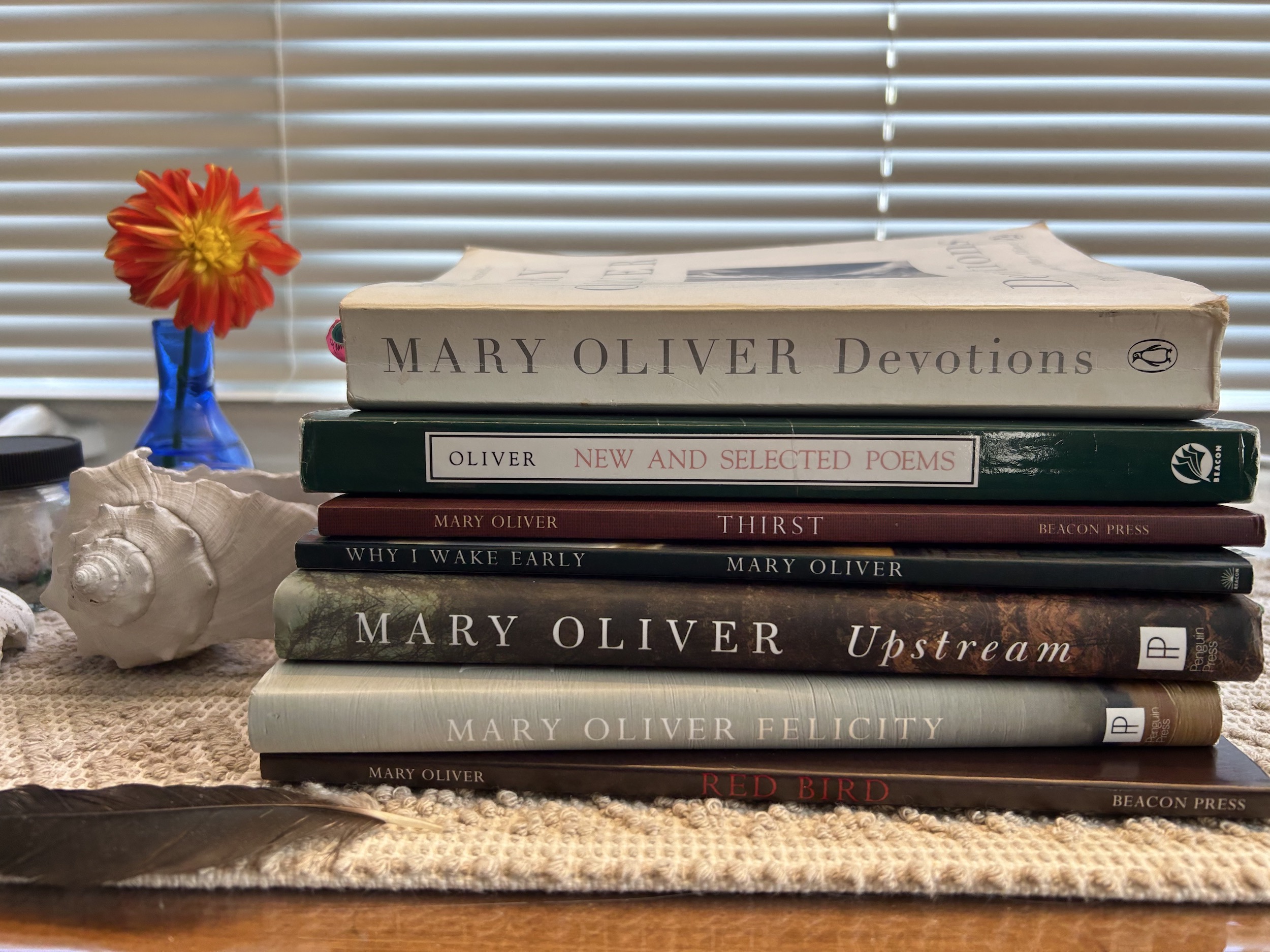
With Gratitude for Mary Oliver

With Gratitude for Mary Oliver

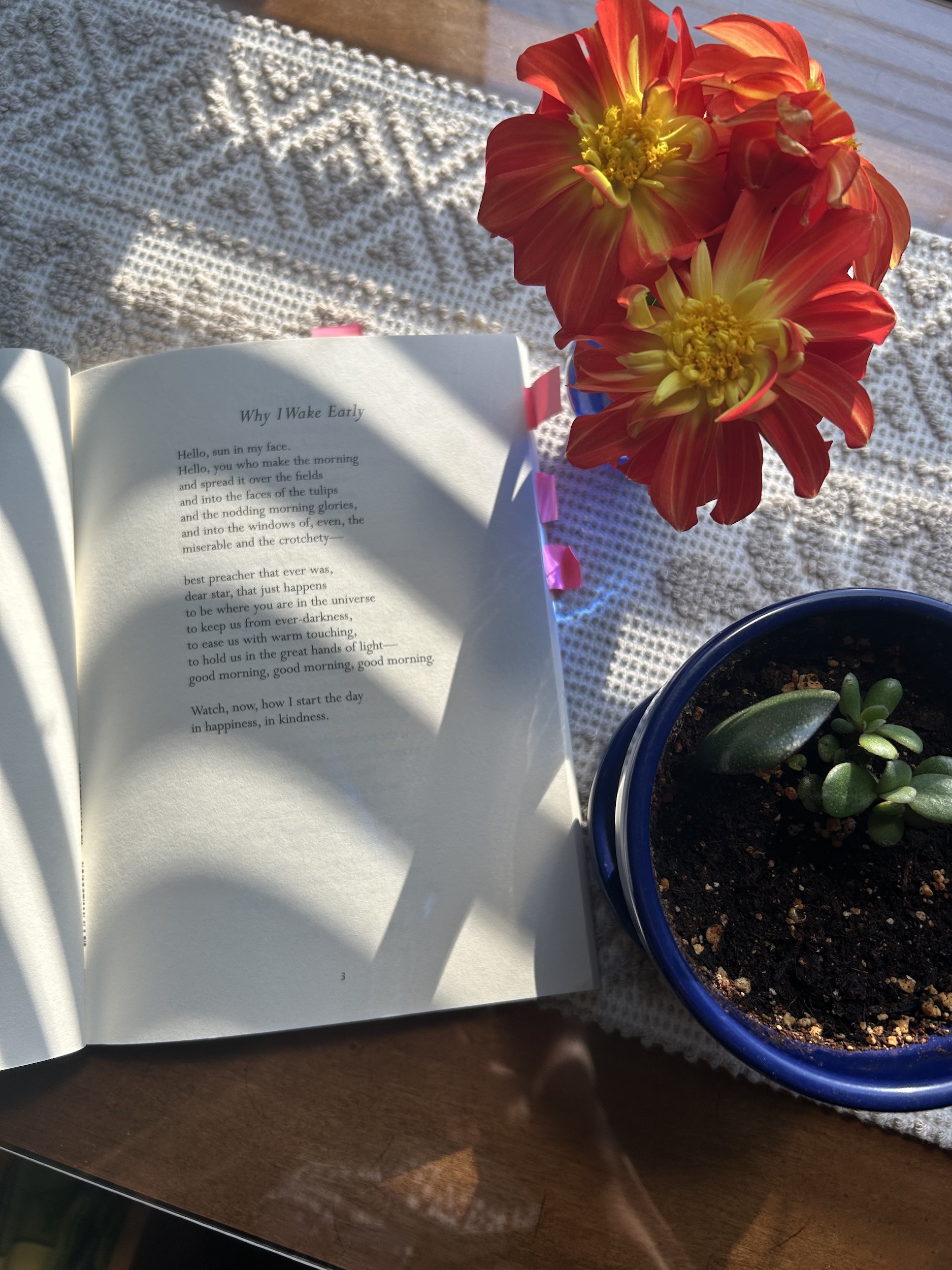
September 10 was Mary Oliver’s birthday. It would have been her 89th. I thought of her that morning as I walked into my living room. The sun poured through the window over the buffet, flooding the plants, shells, and other treasures that live there with light.

Hello, sun in my face
Hello, you who make the morning
and spread it over the fields
and into the faces of the tulips
and the nodding morning glories,
and into the windows of, even, the
miserable and the crochety—...

I recited her poem “Why I Wake Early.” It has become my morning prayer whenever the sun greets me by spreading its light over the chair and couch, painting the hardwood floor with yellow stripes reaching to the dining table at the other end of the room.

Mary Oliver is part of my morning reading, and in her honor, I treated myself with a few favorites. Years ago, when I first read it, “At the River Clarion” won my heart with the opening line: I don’t know who God is exactly. Yes. After years of listening, searching, and studying, I still say the same thing. Attention to creation provided hints to the poet. The river splashing across the stone where she sat. The stone itself. The mosses under the water. They spoke to her of holiness and the part of it all things are. Not a message quickly heard, she said, but one understood by being present to the moment, day by day by day.

In the poem, she wonders how one gets “to suspect such an idea,” being a tiny piece of God. Perhaps it’s as 20th century theologian Karl Rahner articulated: God’s enlivening presence within all from the start creates a desire for something beyond ourselves and enables a response to the Divine.

I remember in my high school years, corresponding with a friend’s cousin who was a lay brother at the Dominical House of Prayer in Washington, D.C. I treasured our letters and wrote that we are all part of the wholeness of God. All holding some bit of God, like a puzzle piece, deep within. And when all things finally gathered together, God would be wholly present. What planted that sense in my teenage heart? If Rahner was right, it was there from the start, calling for openness to Mystery and attention.

As Mary Oliver so clearly understood, we are called to notice. Seeking is unnecessary since God is already here. But attentiveness and quiet have something to do with deepening the relationship with the Holy within and without.

Recently, I spent a day with two friends I have known since we were in our late teens. Like beautiful threads, we weave in and out of one another’s life tapestries. Sharing our spiritual journeys is always part of the conversation. Nestled in the woods on the edge of the Hocking Hills, their home is simple yet adorned with beautiful bits of nature and art (many pieces made by friends). Chairs and couches are arranged in a cozy circle good for talking, and the kitchen, complete with a long table, welcomes family and friends.

We shared memories of past gatherings and coming adventures, titles of books we’re currently reading as well as ones that are staples of our lives. We read poetry, caught up on our families, and ate delicious homemade soup and bread while sipping iced tea.

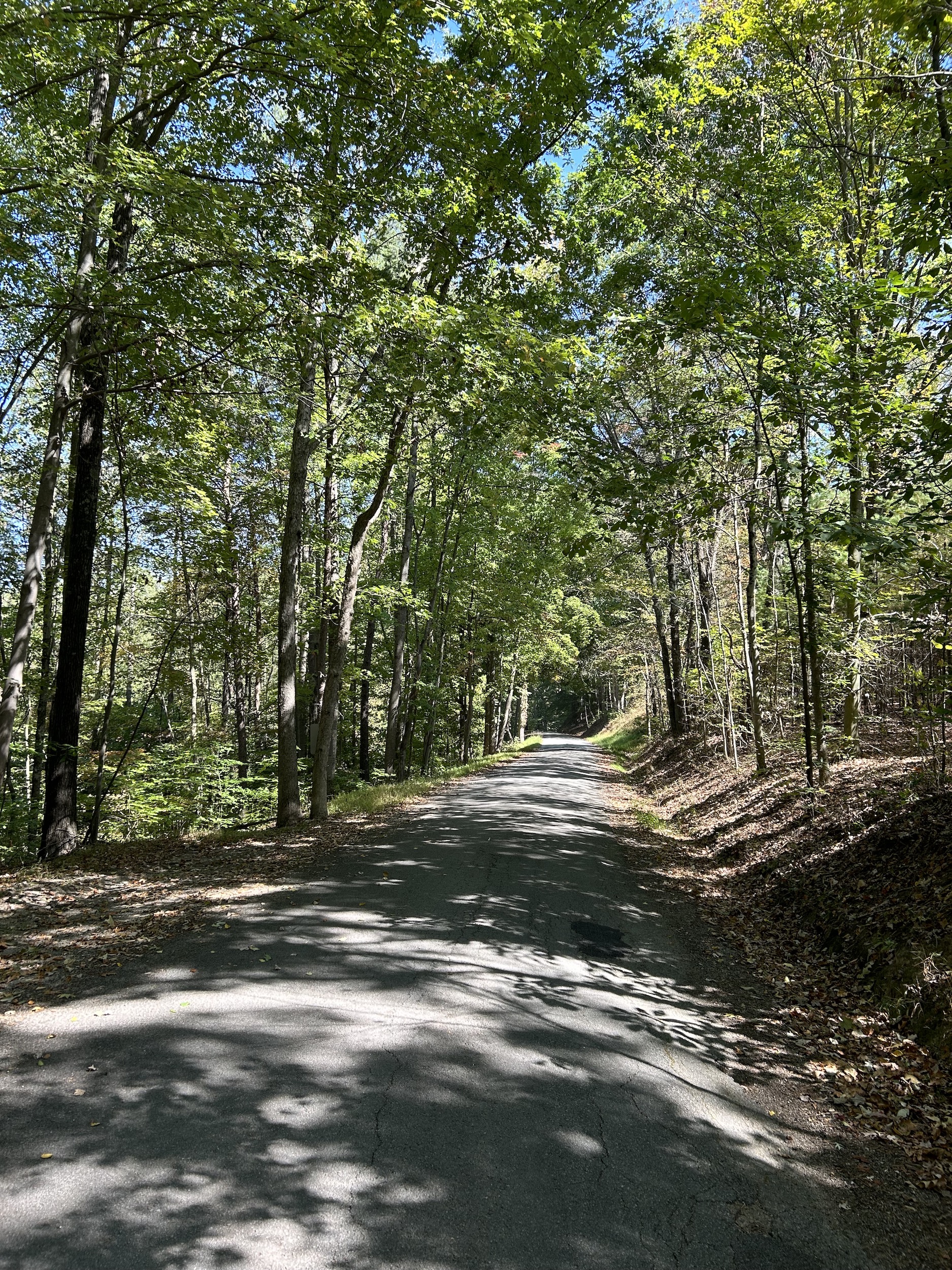
On our walk, light filtered by trees on our right made beautiful patterns across the road and the tree trunks on our left. Nuthatches and chickadees had their lunch at the large feeder and woodpeckers’ drumming announced they were finding theirs elsewhere.

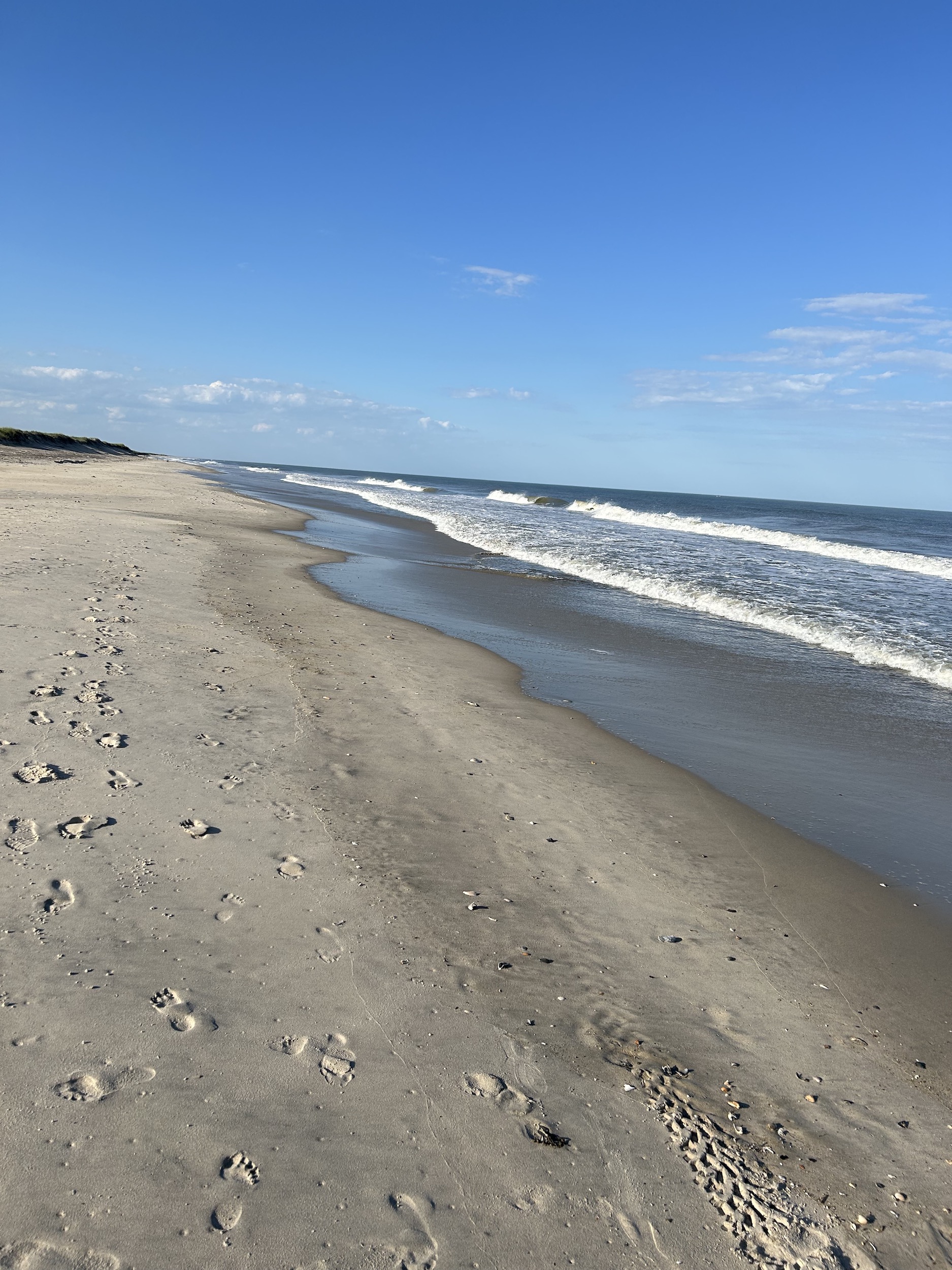
And while I spoke of my soul’s longing to spend days with the ocean, the woody beauty called out for attention. When given to the place where I was at that moment, attention revealed Mystery and Love waiting there.

Oliver’s poem “Praying” begins by pointing out that an encounter with Holy Presence need not be occasioned by something particularly stunning. She says it doesn’t have to be a blue iris. I’d say it doesn’t have to be the ocean.

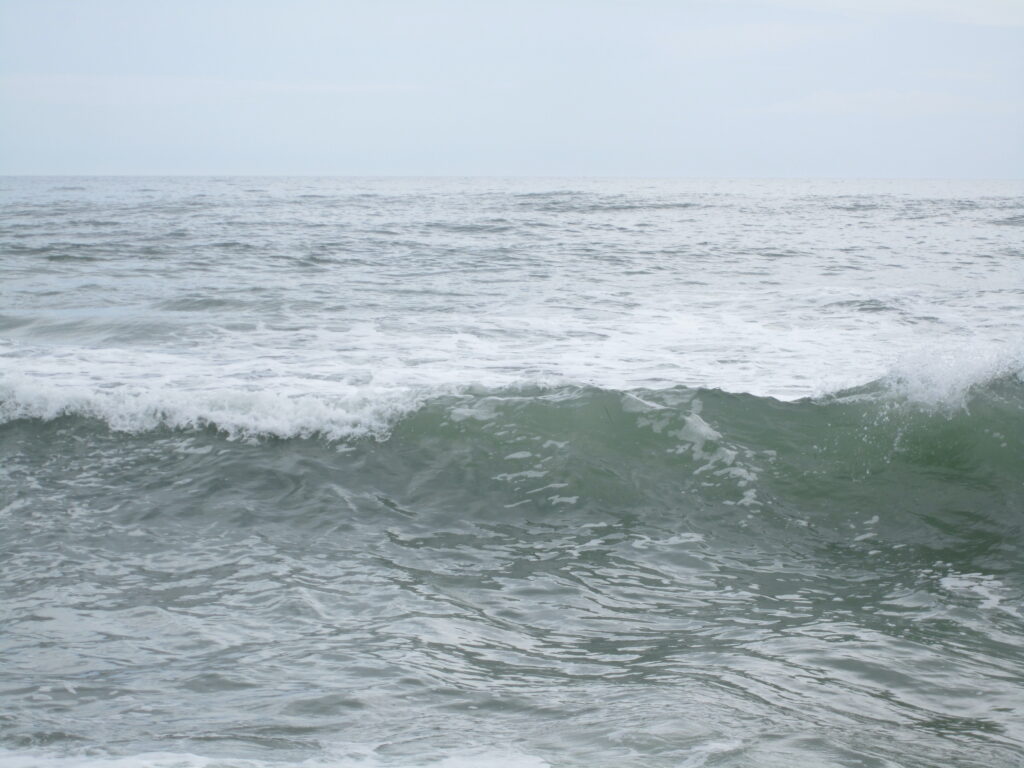
ocean shore
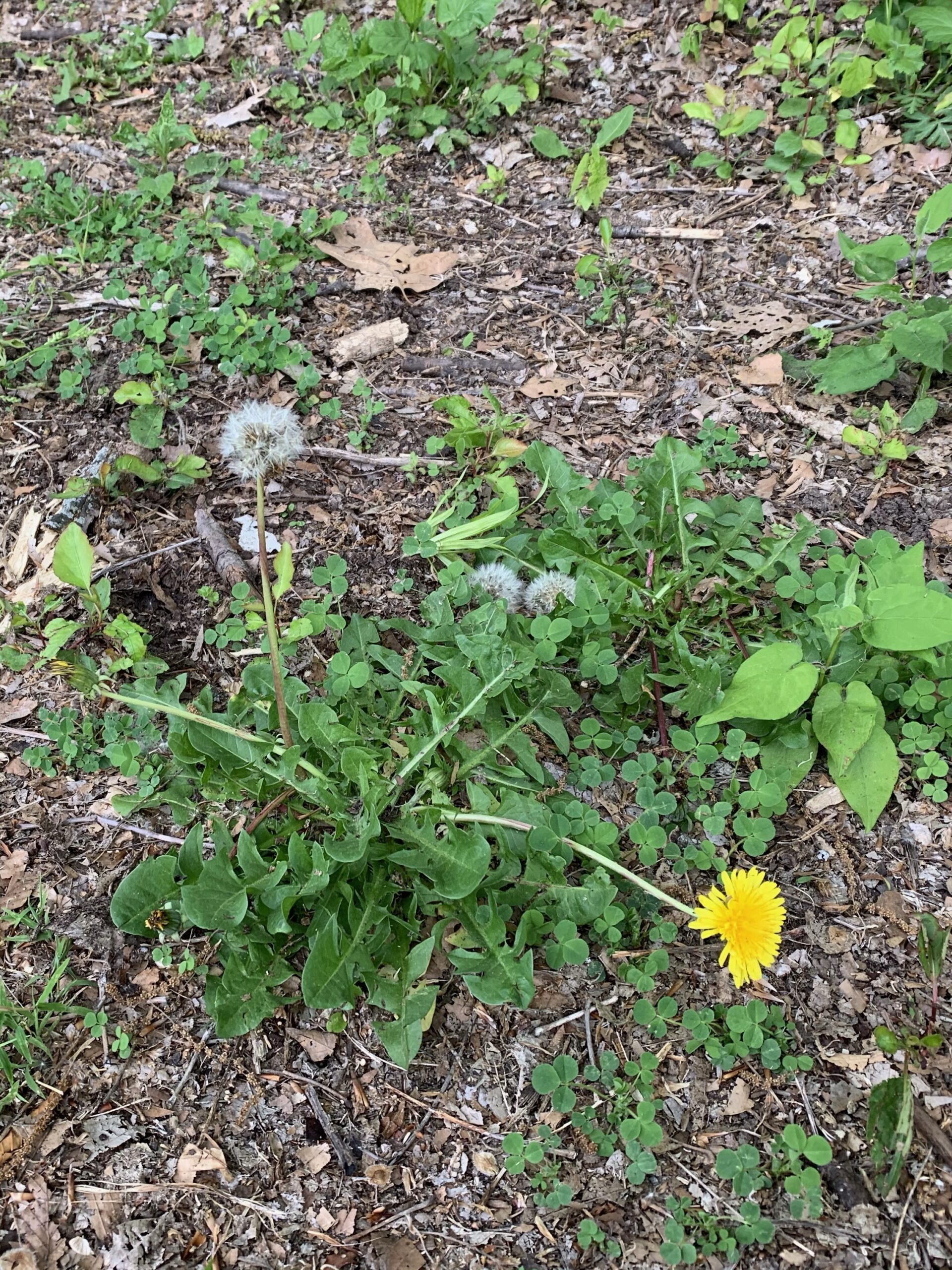
dandelion and weeds
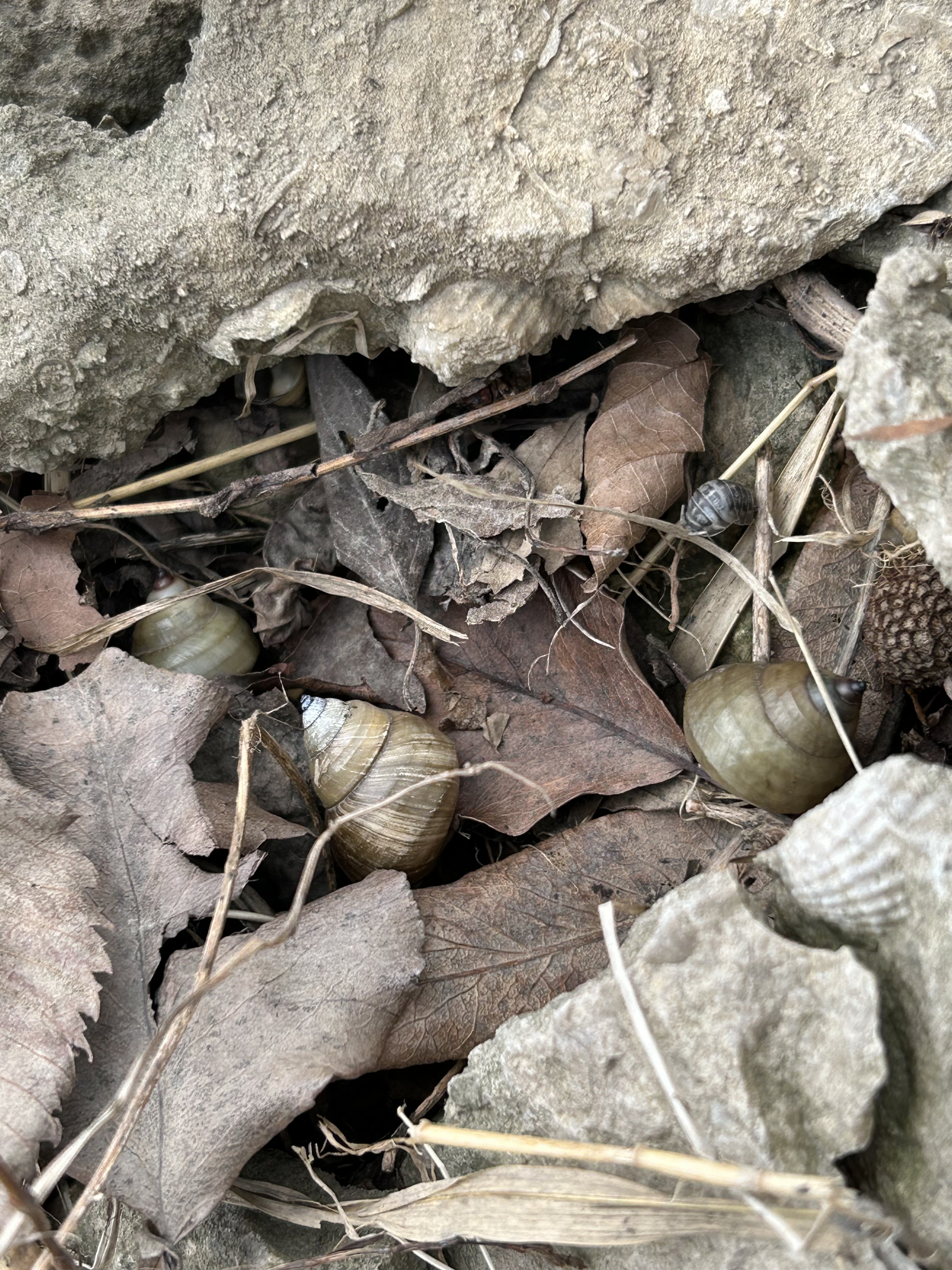
fossil rocks, snail shells leaves

Praying

It doesn’t have to be 
the blue iris, it could be
weeds in a vacant lot, or a few
small stones;
just pay attention, then patch

a few words together and don’t try
to make them elaborate, this isn’t
a contest but the doorway

into thanks and a silence in which
another voice may speak.

Mary Oliver generously shared the fruit of her attention and journey with us in volumes of poetry. I give thanks. And while I’m still hoping for a week or two at a beach before the year is out, I will try to heed her admonition in “Messenger,” that “My work is loving the world…” and that despite having old boots, a torn coat, and arriving at mid-seventies “…still not half perfect …” I will focus on what is mine to do. She sums it up in her poem “Sometimes”:

“Pay attention. / Be astonished. / Tell about it… “

Thank you, Mary Oliver.

Sources:

“Why I Wake Early” by Mary Oliver   Published in Why I Wake Early  (2004) p. 3

“At the River Clarion” by Mary Oliver   Published in Evidence (2000)

“Praying”  by Mary Oliver  Published in Thirst ( 2006) p. 37

“Messenger” by Mary Oliver   Published in Thirst (2006) p. 1

“Sometimes” by Mary Oliver   Published in Red Bird (2008) p. 35-38

All these poems and many more, have been published in Devotions: The Selected Poems of Mary Oliver (2019). She arranged these poems herself from her books published from 1963 to 2015! If you love Mary Oliver, this is a book to own!

You can purchase it online from Bookshop.org and support independent bookstores across the country. if you have a favorite, you can even choose the bookstore you would like to support. Mine is Gramercy Books in Bexley, Ohio

Baptism

Baptism

In honor of National Poetry Month, I offer this poem.

Baptism

It happens sometimes
in early spring or fall 
or any bright day
when the air is chill
despite our star’s faithful burning.
I’m walking outside
and everything is shining.
Suddenly the sky –
- flowing around every bit of matter in its path -
transforms, and
I now walk through water
that yields just enough to let me enter.
With every step
I’m encased in a glorious glove of cool, liquid shine.
I can’t see the stuff sky has become,
but my heart quickens
and I must make an effort
not to fall on my knees.
I glance at other walkers and wonder
if they feel the same
or if this is a private miracle,
a baptism that opens my soul to morning’s glory,
that refuses to let me move on ungrateful.
I can’t remember the first time
I knew sky could turn into water
and back to breath again in an instant.
It doesn't matter.
Nor does how.
Content with mystery
being mystery,
when the moment passes
I emerge into air-breath,
changed as surely as if I’d been walking the beach
and waded into the water
and crouched beneath a wave as it washed over me
and rose up
renewed, awake,
in love with the world again.
© 2024 Mary van Balen

Photos: Mary van Balen

Befriending Good Friday Darkness

Befriending Good Friday Darkness

While staying alone at a friend’s woodland cabin one Good Friday night, I turned off the lights and stepped outside for a walk. My eyes needed a few minutes to adjust until silhouettes of bushes, trees, and clumps of weeds emerged from the blackness. Darkness changes even the familiar, and while I knew where the little creek spilled past the end of the driveway and how the area beyond it opened to a path up a hill and along the ridge, I chose my steps carefully, listening to animal sounds and feeling the earth give way beneath my feet. Night heightened my senses, alert for danger as well as beauty.

I stepped on the end of a weathered, grey board, part of some long-gone fence or building, and the other end sprung up from the ground, startling me. It seemed alive, expectant as I was, aware that we both were in the midst of some unknown something that was coming or perhaps was already there. The board settled back onto the ground once I continued on my way. I imagined it returned to quiet attention. All creation seemed to be waiting through the night for what, I didn’t know.

The dark hours of Good Friday invite us to settle into a time of not knowing, of finally sitting peacefully, if not comfortably, with emptiness. It offers a time of deepening faith that something transformative is always happening under the surface, at the heart of things. It moves, but we cannot see. Like seeds buried in cold winter soil or a caterpillar dissolving and recreating in the shroud of its chrysalis. Like Jesus laying in the tomb. Life is at work even in what looks like death.

That truth reveals itself in the “little deaths” that everyone encounters: illness, loss, struggle, depression, uncertainty. At some point we learn that, as much as society tells us we are in control of our lives, we really are not. Some things are beyond our choosing or our making. These opportunities to let go of control and embrace our own powerlessness and uncertainty invite us to grow in trust. Trust that in the end, as Jesus said, Love cannot be overcome.

He showed us in his life and in his death, what trusting God’s Presence looks like. He lived knowing he was not alone in his journey and assured us that we aren’t either. In his lifetime, those in power tried to put him to death, to snuff out Love that made them uncomfortable and that threatened their position of privilege and their way of life. But Love that is the source of all being would not be destroyed.

Instead, by embracing his own death, Jesus transformed it from an “end” into a “beginning.” We are invited to do the same. To befriend darkness and let it in. To let it open us to surrender and receptivity. The dark times, the Good Fridays, are necessary steps into a new place. Their emptiness provides space for Love to grow deeper and to emerge transformed as Jesus did from the tomb.

At a time when the world is filled with darkness, with violence and hatred and divisions, somewhere, good is happening. Love is growing and changing us and our world. Jesus showed us that it is human to be afraid and angry, but also to trust. Trust that deep down, in places we cannot see or know in the moment, Love is alive and Eastering in us, getting ready to rise and reveal itself again and again.

Good Friday gifts us with the time to sink into quiet, into darkness. To allow ourselves to recognize emptiness and infirmity, mortality and powerlessness, and yet, eventually, find hope.

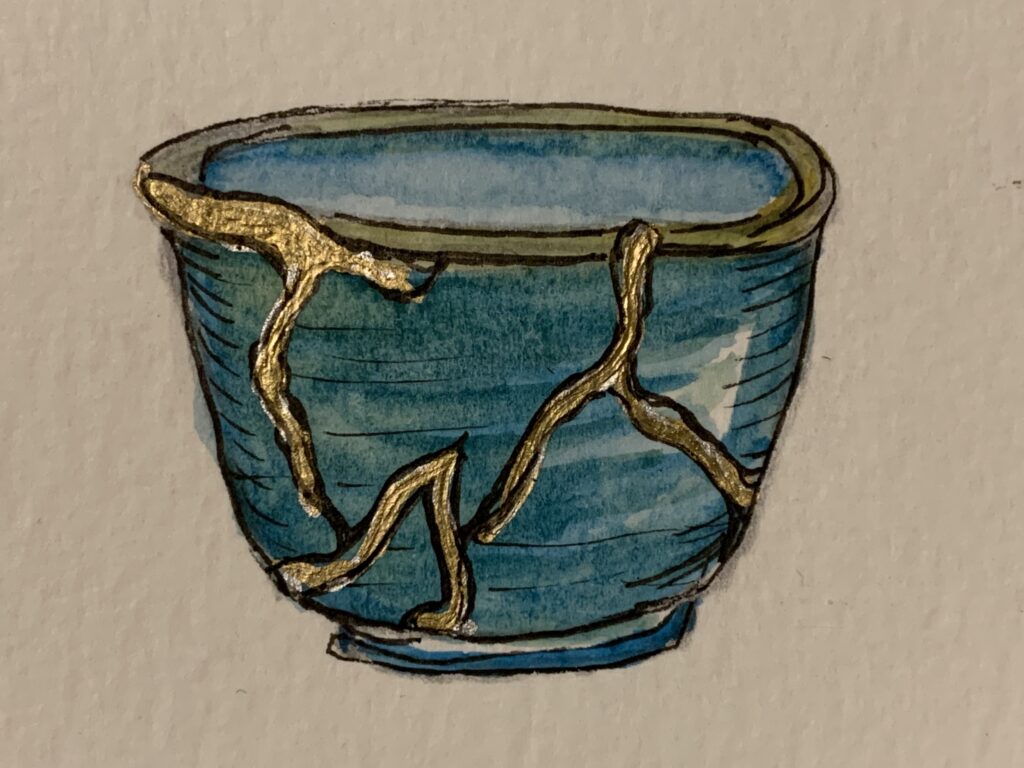
Kintsugi Bowl

Psalm 31, prayed in the Good Friday liturgy, contains the words of surrender and trust Jesus spoke from the cross as he died: “Into your hands I commend my spirit.” But as I read further, the image that stirred my soul was this: “I am like a dish that is broken.” In dark times of unknowing, I feel like a broken bowl, my life, my spirit, in pieces. Good Friday tells me Jesus knew that feeling too. In the end, he trusted that God was holding the pieces. Like kintsugi, the Japanese art of repairing broken pottery by mending them with gold, Love puts us back together, more beautiful, and stronger than before. Able to hold more Love and to give it away.

That night at the cabin, I rested with creation in this Mystery. Unaware of “how,” we were opening to the Eastering always transforming us from within. May this Good Friday be such a gift for you.

Eastering    
      (Unless in silence
      where sings the song?
      What means the morning
      unless first the night?
      Unless into stillness
      where comes the dance?
      Unless into darkness
      where breaks the light?)
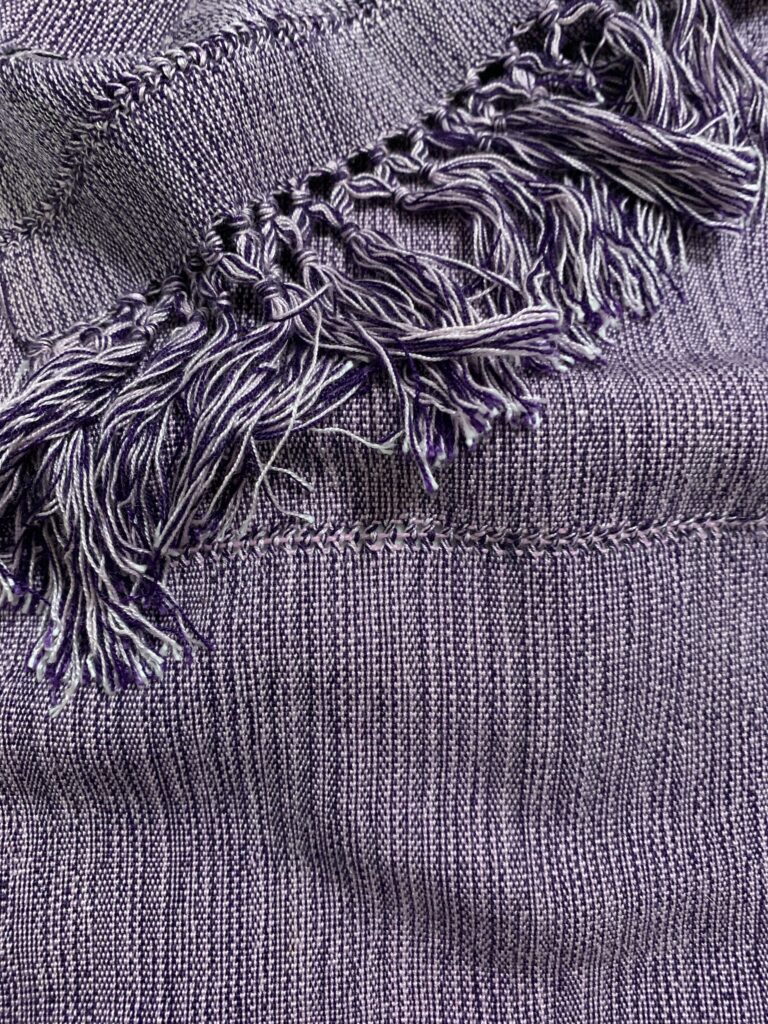
Woven warp and weft of things.

- Mary van Balen 1977

Kintsugi bowl painting and weaving photo: Mary van Balen; Feature watercolor and photo: Kathryn Holt

An Eclipse Unobserved

An Eclipse Unobserved

Sunday night, May 15, I slept through a total lunar eclipse. Usually, I send email reminders to family and friends a day or two before the event. When the night arrives, I set my alarm and stand on my driveway or in the backyard at any hour, no matter how late, to witness the cosmic display. Eclipses, lunar and solar, have inspired several posts on this blog in the past. (See here, here,  here and here.) How’d I miss this one?

I didn’t notice the date on my wall calendar or date book. (Yes, I still use the paper ones.) I passed over the EarthSkyNews1 email alert. I even missed the second text sent that night on our family thread. I saw the first, at 10:02. Uncharacteristically, I was already in bed. “Don’t forget to check out the Blood Moon tonight,” it read. I pulled off the sheet and walked outside to look. It’s edges and light were softened by misty, wispy clouds, but the full moon was just clearing the apartments across the street, headed for open sky above. The text reference to “Blood Moon” was lost on me. The pale orb looked lovely, but nothing red about it. After five minutes or so, I headed back to bed and to a long night of much needed sleep.

When I awoke late Monday morning, I reached over to the bedside bookcase, pulled off my phone and reading glasses and checked for messages. (I’m way too tied to that phone!) Ah. There was another from Sunday night. It arrived at 10:04 pm while I was out in my PJs and bare feet looking at the moon. “The partial eclipse begins at 10:30.” There it was.

A matter of two minutes made the difference between my watching a stunning total lunar eclipse and my sleeping peacefully away for ten hours! “I needed the sleep,” I rationalized, but didn’t feel any better about missing the experience.

The dance of planet, moon, and sun governed by laws of physics never disappoints. Sunday night, the full moon blushed a deep red as it moved into the earth’s shadow. With feet planted on the ground, anyone with a clear sky above could have looked up in wonder at the spectacle that played out nearly 240,000 miles away. It was glorious—whether or not celebrated by human beings.

Creation continues to do what it has been doing for eons, regardless of our attention—evolving, expanding, birthing new stars, galaxies, and realities we can’t imagine. It’s a work in progress. Occasionally the veil of distance, time, and space is drawn back just a bit, and we catch a glimpse. (Did you see the first photo of the black hole at the center of our Milky Way galaxy2?

Image Credit: X-ray – NASA/CXC/SAO, IR – NASA/HST/STScI; Inset: Radio – Event Horizon Telescope Collaboration

As I lamented my missed opportunity, I thought of Psalm 27 that reminds us that God’s grace comes even as we sleep and took some comfort in the knowledge that beauty released into the universe blesses even when unnoticed. The splendor of the Blood Moon, the incredible workings of our solar system that produced it, the ongoing evolution of the cosmos in which we live, are all expressions of Love constantly given away.

A child asleep in her mother’s arms is no less loved than when the little one is awake and aware of the affection. My sleeping through the eclipse didn’t diminish its wonder. As I slept those ten hours away, I rested, cradled in the arms of the universe and the creative arms of the Mother-God in whom it unfolds.

Awareness doesn’t change the reality of Love-shared, but it can enlarge the hearts of those who notice with appreciation and openness to receive.

In Mary Oliver’s long poem “From the Book of Time,”3 she writes of beginning a spring day at her desk but being drawn by birdsong into the outdoors where she noticed the grass and butterflies moving above the field.

“ … And I am thinking: maybe just looking and listening / is the real work. // Maybe the world, without us, / is the real poem…”

Surely, the cosmos doesn’t need us to be what it is, to be the “real poem.” Yet since we are here, we are invited to help with the composition: a word, a phrase, a comma or full-stop. We contribute, knowingly or not. How and what depends on each of us. A bit of glory here, a bit of sorrow there. Love. Hate. Compassion. Fear.

While I trust in Holy Presence, whether cognizant of it or not, I will pay more attention to special events that can open my heart and the eyes of my soul. November 8, the next total lunar eclipse of this year, is already circled on my paper calendars. I might even add an alert on my phone.

Meanwhile, no need to wait for an eclipse. The universe is always spilling over with unfathomable creativity. The jots we are privileged to witness point our minds and hearts toward the Holy Mystery that is far beyond comprehension but is the life force in all that is. This Mystery showers us with goodness and love, even if we, unaware, sleep right through it.

Sources:

1 Subscribe to EarthSkyNews newsletter

2 The Milky Way’s Black Hole

3 “From the Book of Time” in Devotions: The Selected Poems of Mary Oliver, p. 234

More info on the Black Hole: Sagittarius A

The Milky Ways supermassive black hole

Here’s How Scientists Turned the World Into a Telescope (to See a Black Hole)

Black Hole Image Makes History

Feature image by Ulrike Bohr from Pixabay

The “Both/And” of our Our Faith

The “Both/And” of our Our Faith

Photos: Mary van Balen
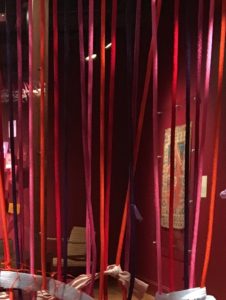
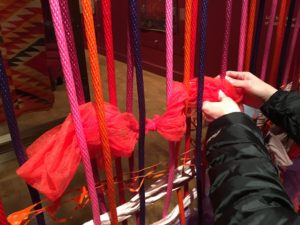
Weaving in progress at the Columbus Museum of Art 12 2017

Originally published in The Catholic Times, December 10, 2017

I looked up the word “advenio” in my old Latin dictionary and found that depending on how it’s used, the verb can mean “to draw near” or “to arrive.”  The noun, “adventus” is also translated as either “approach” or “arrival.” The season of Advent encompasses both. We wait. We celebrate what has already come. It’s the “both/and” of our faith. God is coming. God is already here.

During this season, we ponder that mystery and our participation in it. Liturgical readings are one place to start. For example, the first week of Advent is filled with passages from what is often called “First Isaiah” and provides glorious images of the kingdom to come: people from all nations streaming up the mountain of God, desiring to learn and walk in God’s ways; a kingdom where all live together in peace; great feasts where God provides rich food and choice wine for everyone.

Isaiah paints more pictures: justice for the poor and vulnerable, abundant harvests, broad pastures and running streams. He shows us a God who does not judge by appearances and who responds immediately to the people’s cries. These images were proclaimed in an eighth century BCE Judah that bears a resemblance to our current world situation. The Introduction to Isaiah in the Saint Mary’s Press College Study Bible describes the wealthy getting richer at the expense of the poor and nations posturing for war.

Despite the sins of the people, Isaiah’s prophecies of the Holy One’s faithfulness and the eventual arrival of a messianic king provided hope along with the calls for repentance to those who heard them. Isaiah’s words provide hope for us too, reminding us that God is merciful as well as just, and that with Grace, dark times that challenge and demand we heed God’s word will not last forever.

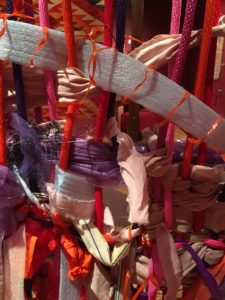
Close up of a finished section of a weaving in progress at the Columbus Museum of Art. Bright colors and a variety of materials

Advent gospels speak of God already come. They tell not only the story of John the Baptist and how Jesus was born into our world through the faith and willingness of a young Jewish girl.  They also tell of his public ministry, proclaiming God’s kingdom with words and actions. He healed the sick, confronted those in positons of power, and showed compassion for the poor and struggling. When asked what was most important, he replied it was love—love of God, self, and neighbor.

Jesus was open to surprise, amazed at the deep faith coming not from the Israelites, but from “the other”—a centurion. Echoing Isaiah, Jesus told his followers that they’d be sharing the heavenly banquet with people they mightn’t have expected, coming from east and west.

He relied on others to share in his work. When the huge crowd that had been listening to him for days needed to be fed, Jesus asked first that those present share what they had. Then he blessed it. Before sending his disciples out to spread the good news, he lamented that there was much work to be done and few to do it.

Yes, God is already here, and has been since before time as we know it began. Yet, “God is coming.” The events in our world, far from echoing the visions of Isaiah or the example of Jesus, speak of the need for this coming. The poor and vulnerable, so close to Jesus’ heart, are still abused and overlooked by those grasping for power and wealth. Nations continue to prepare for and to wage war. We are far from beating swords into plowshares.

Jesus knew that being faithful to the commandment of love can bring suffering and death in a world unwilling to accept it. After his death and resurrection, he sent the Spirit who dwells within each of us and in every bit of creation. We are part of the “both/and,” the coming” and the “already here.”

How do we live in the tension of this mystery? How do we join in God’s work today? How do we live in dark times and still have both faith in God-with-us and hope in God- to-come? Perhaps, during Advent we can take quiet time to listen for the Spirit that lives in our hearts. To become aware of our part giving birth to that bit of divinity that has been shared with us and that the world sorely needs. We are not only graced with the Presence of God with us, we are called to do our part in birthing the God who is yet to come.

© 2017 Mary van Balen