What Prayer Looks Like These Days

What Prayer Looks Like These Days

My prayer changes as I do and as life does. There are the tried and true: meditation, quiet prayer, old favorites, books of hours, chants. There are communal gatherings and liturgical celebrations. But sometimes, when the world turns upside down, the “order” that I have established prayer-wise disappears. Despite good intentions, I can’t maintain the routine. I blame myself and forget that the spiritual journey is not a smooth, predictable path. (I will borrow from Richard Rohr’s paradigm: order, disorder, reorder.) During this “disorder,”what once brought a sense of connection with the Holy One no longer does. During spiritual dark nights, when the Holy One seems absent, I’ve been counseled to pray through it, to open my heart even when nothing seems to fill it. And so I have.

I remind myself that some of those “dark nights” took months, once even years, to pass. They required trust in my relationship with the Holy One, which, really, is what prayer is all about. Perhaps that is the root of my difficulty with prayer: floundering trust as chaos envelopes the U.S. The hatred, greed, and disregard for law and Constitution is infuriating. Mass deportations without due process and lack of concern for innocents swept up in the frenzy rend my heart. Scrubbing this country’s past of contributions of those who are not white and straight creates an alternative history and implies that everyone else is inconsequential. Removing the immorality and cruelty that has been part of US history glorifies the powerful while dismissing their victims. Truth is one of the victims.

The pushback against the LGBTQ community, particularly the trans community, continues to grow, fueled by misinformation, ignorance, and fear.

The current budget bill passed by Congress is immoral. Slashing programs that serve the poor, the oppressed, and the marginalized in this country and around the world makes no sense. Tax cuts for the wealthiest 1%? Jesus must be weeping.

In this time, I have difficulty “reordering.” I feel spiritually adrift. After sharing this with my spiritual director, we talked about prayer and different ways to frame it.

Prayer is spreading Love energy, she said. It’s resting in God and following God’s Way as best I can. A Christian, I connect that with the way Jesus lived his life. Others will have different understandings, but Love is the root of them all. Standing up for Love. Bringing Love and compassion into this time and place. Standing up for the marginalized. Anyone can do it.

stamp with image of Guan-Yin

Image of Guan Yin, Buddhist bodhisattva whose name means “Observing the sounds of the world.” She has multiple heads to see and hear those suffering and multiple arms to aid them.

Intention is the key to my prayer these days. I pause and remember I am called to be Christ in the world. Is what I do contributing to bringing compassion into the world? Am I compassionate to myself, taking time for self care so I am able to be present for others? Am I a good “ear” for people who need to tell their stories, listening deeply so they know they are heard and held? Are my letters and calls to legislators designed to defend those targeted with executive orders or legislation that threaten their well-being. To expose harm and hold up morality to those in power and to encourage reflection and change? When I write a column, first I pray that what small bit I have been given to share encourages those who are looking for ways to make a difference.

Christ Has No Body

Christ has no body but yours,
No hands, no feet on earth but yours,
Yours are the eyes with which he looks
Compassion on this world,
Yours are the feet with which he walks to do good,
Yours are the hands, with which he blesses all the world.
Yours are the hands, yours are the feet,
Yours are the eyes, you are his body.
Christ has no body now but yours,
No hands, no feet on earth but yours,
Yours are the eyes with which he looks
compassion on this world.
Christ has no body now on earth but yours.

Theresa of Avila 1515-1582, Spanish Mystic and Carmelite reformer along with John of the Cross.

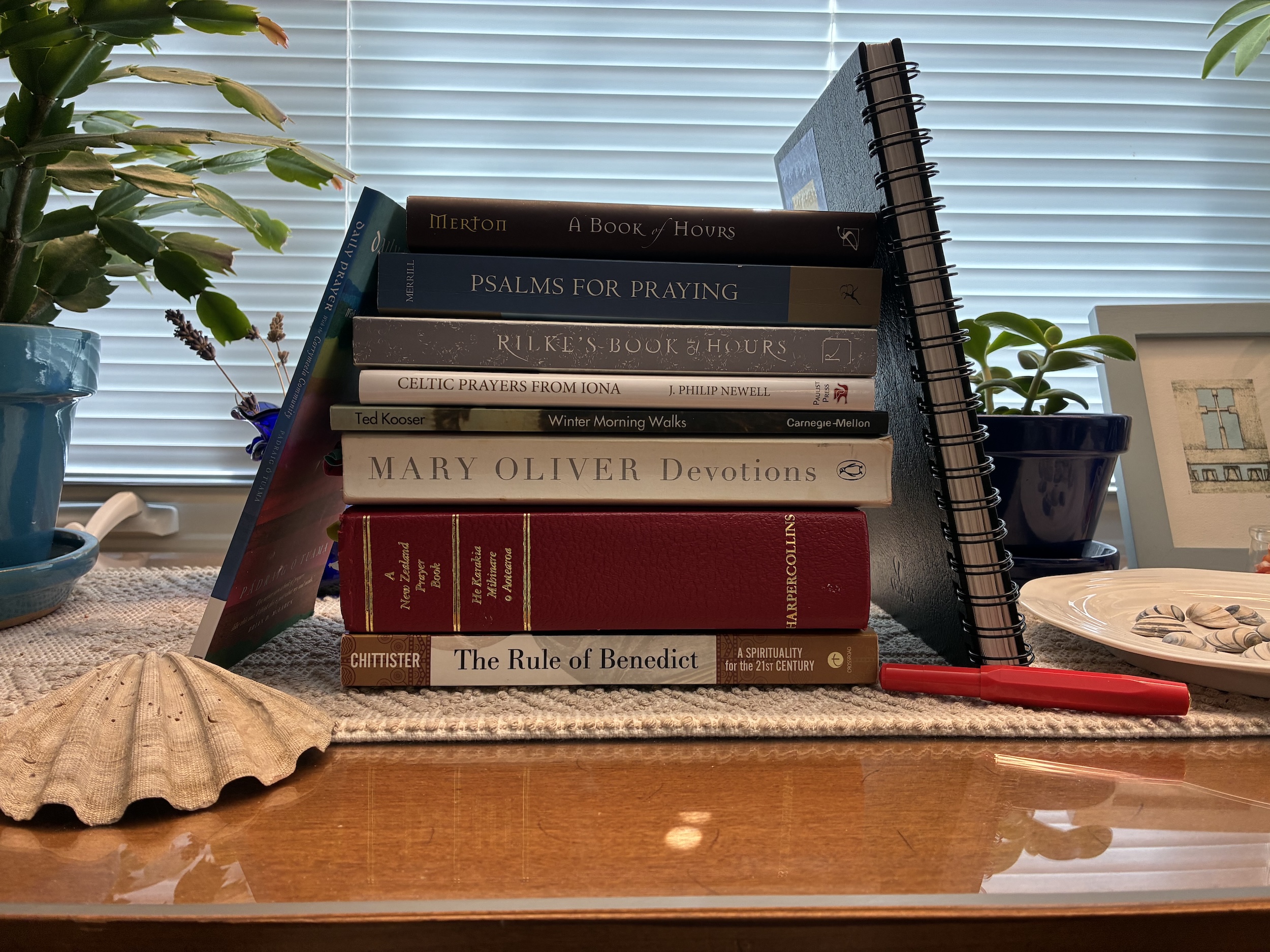
While making an effort to pray with a favorite small book of prayer, Daily Prayer with the Corrymeela Community, by Padraig O Tuama, I am also practicing reframing my understanding of prayer: being intentional about how I live the unfolding day and making sure it is to bring Love and justice into the world. Speaking out as I am able, against the darkness. And trusting in my relationship with the Presence that holds all.

The Civil Rights activists in the 60’s provide inspiration. Their actions were supported by their faith. They weren’t advocating revenge, but respect, equality, and justice. Martin Luther King, Jr.’s “I have a dream speech” speaks to the unending struggle of those on the margins.

“Now is the time to make justice a reality for all of God’s children,” he proclaimed in his soaring oratory. “I have a dream that one day this nation will rise up and live out the true meaning of its creed: ‘We hold these truths to be self-evident: that all men are created equal.’”

Prayer for me these days is all about intention to be present to Love…and to be Love in the present moment. How it looks day to day doesn’t matter.

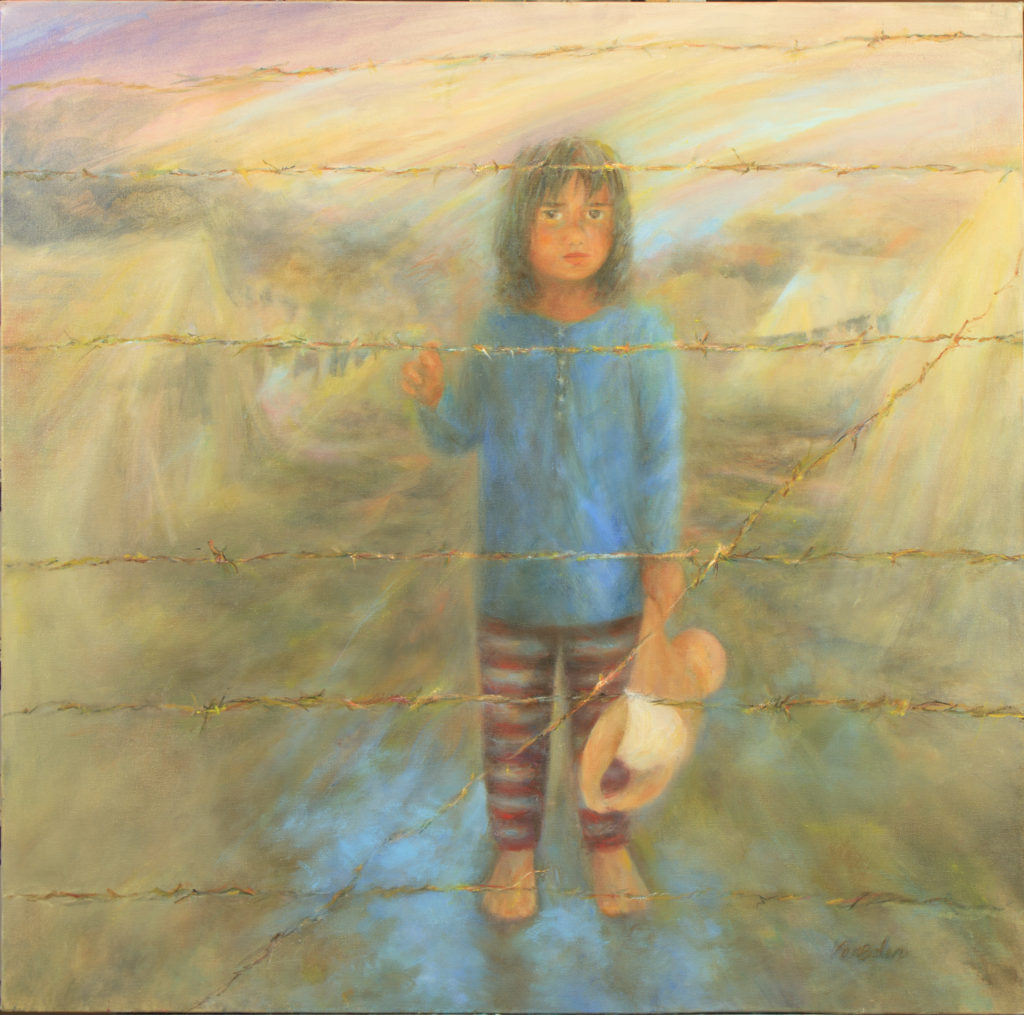
To Live Justly, To Love

To Live Justly, To Love

Painting by Laurie VanBalen, Project Director and Producer of Columbus Crossing Borders Project

The Scripture readings for Sunday, November 25, and Pope Francis’s new encyclical, Fratelli Tutti, share major themes that speak to current global and national issues. The texts clearly place this call front and center: Love and care for our neighbors (that’s everyone) and the common good, and turn from “idols” that hinder us from doing so.

Exodus reminds us that the poor, marginalized, and vulnerable among us deserve special respect and care. This is not an option. This is not charity. It is justice required by a compassionate God. When they are mistreated, God hears their cries.

The pandemic has highlighted the inability of the global community to work together to address the crisis. It has revealed failures and fissures in this country’s polices, institutions, and lack of will when it comes to justice and providing for those living on the edges.

Pope Francis introduces the social encyclical’s first chapter, “Dark Clouds Over a Closed World,” saying he intends “…simply to consider certain trends in our world that hinder the development of universal fraternity” (9). [Numbers after Fratelli Tutti quotes indicate the paragraph in the document where they are found.]

His list of concerns includes a throwaway world where “Some parts of our human family, it appears, can be readily sacrificed for the sake of others considered worthy of a carefree existence. Ultimately, persons are no longer seen as a paramount value to be cared for and respected, especially when they are poor and disabled, ‘not yet useful’ – like the unborn, or ‘no longer needed’ – like the elderly” (18).

Among other topics addressed in this section are the pandemic (32), loss of a sense of history that leads to “new forms of cultural colonization” (14), the spreading of despair and discouragement and using extremism and polarization as political tools (15), unequal respect of universal human rights (22), the fading sense of being part of a “single human family” (30), and poor treatment of migrants crossing borders around the world (37).

In Sunday’s gospel from Luke, Jesus elevates the call to love and care for our neighbors. When asked what the greatest command was, he had two, not one: Love God and love your neighbor as yourself. Everything, he said, depends on these two.

Chapter Two of Fratelli Tutti reflects on perhaps the most well-known parable in the New Testament: The Good Samaritan. Francis warns against the danger of hypocrisy evidenced by the priest and Levite, who passed the injured man without stopping to help: “It shows that belief in God and the worship of God are not enough to ensure that we are actually living in a way pleasing to God (74).” He encourages readers to start small, acting at local levels and then moving out to needs in their countries and in the world. “Difficulties that seem overwhelming are opportunities for growth, not excuses for a glum resignation that can lead only to acquiescence” (78).

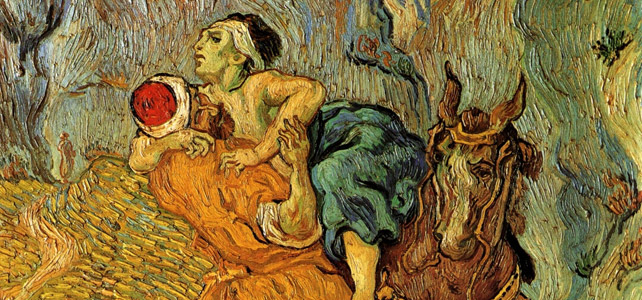
Detail from The Good Samaritan by Vincent van Gogh

He writes forceful words about the Samaritan caring for the injured man and what that example means for us:

 “… it leaves no room for ideological manipulation and challenges us to expand our frontiers. It gives a universal dimension to our call to love, one that transcends all prejudices, all historical and cultural barriers, all petty interests” (83).

In Sunday’s second reading, St. Paul praises the Thessalonians in part for turning away from idols to serve the true God. When reading about idols in Scripture, I don’t always make the connection to the idols in my life. It’s tempting to relegate them to earlier eras and the worship of statues or images.

But certainly, this age has its idols that get in the way of serving God and joining in the work of bringing God’s kingdom.

Everything, then, depends on our ability to see the need for a change of heart, attitudes and lifestyles.

Pope Francis Fratelli Tutti

Fratelli Tutti makes numerous references throughout to what I would call “idols” today: aggressive nationalism, limitless consumption, individualism, wealth, control, and self-interest to name a few.

Francis sees hope in the midst of the gloom – in willingness to dialogue and engage in genuine encounter, in the desire to love. God has placed goodness in the human heart, and many go about their ordinary days trying to be true neighbors, remembering no one is saved alone; we share the same hope; we sail in the same boat.

These readings and this encyclical are deeply challenging, if we take them seriously. In these times, how can we not? As Pope Francis writes, Everything, then, depends on our ability to see the need for a change of heart, attitudes and lifestyles (166).

©2020 Mary van Balen

Proximity and Hope

Proximity and Hope

“Nocturne Navigator” Alison Saar, 1998
Collection: Columbus Gallery of Art “…commemorates those involved with the Underground Railroad…The figure’s billowing skirt, illuminated from within, shows the constellations of stars that would help guide the fugitives on their nighttime journey, while her heavenly gaze and outstretched arms suggest a mix of anguish, prayer, and gratitude.” (from museum signage)

A movie or book can be transforming. For Black History Month, I’m sharing an experience with both. In January, I attended a movie with friends: Just Mercy.

Based on the book Just Mercy: A Story of Justice and Redemption, written by Bryan Stevenson and published in 2014, the movie centers around Stevenson’s representation of death-row inmate Walter McMillian, appealing his murder conviction.

Stevenson is a Black public interest lawyer who, after graduating from Harvard Law School, went to Alabama to represent those who had been illegally convicted or poorly represented at their trials.

Just Mercy is powerful and sometimes difficult to watch. If you don’t think racism’s roots are deeply embedded in this country when you walk in, you’ll be questioning your assumption when you walk out. But the movie isn’t only about the fear, hatred, and oppression that has been visited upon Black Americans since their forced arrival as slaves. Or how fear and ignorance disfigure the oppressors. Its main message is about accepting truth, about hope and the possibility of change.

The movie includes Stevenson’s 1989 founding of the nonprofit Equal Justice Initiative (EJI), located in Montgomery, Alabama. According to its website, EJI is “… committed to ending mass incarceration and excessive punishment in the United States, to challenging racial and economic injustice, and to protecting basic human rights for the most vulnerable people in American society.”

In talks across the country, Stevenson names hope as one of the four things necessary to effect change. He calls it a “superpower” and the enemy of injustice. “It is what makes you stand up when someone tells you to sit down.”

He names another element necessary for change: proximity. In a speech at Penn State in Abington, Stevenson gave this advice: “We need to get closer to people who are suffering and disfavored so we can understand their challenges and their pain. We can’t create solutions from a distance. Decide to get closer to people who are suffering, marginalized, disadvantaged, poor. Only in proximity to those who are suffering can we change the world.”

Reading this, I thought of Pope Francis’s call, early in his pontificate, for priests to be close to the people they serve: “This is what I am asking you — be shepherds with the smell of sheep.”

Jesus lived that out. He spent time with ordinary people and those on the margins. He counted fishermen and tax collectors as his early followers and included women in his close circle of friends and disciples. He ate and drank with sinners, much to the dismay of religious leaders who kept their distance.

I’ve also been reading Howard Thurman’s book, Jesus and the Disinherited. A Black theologian, pastor, and spiritual mentor to Martin Luther King Jr., Thurman reminds us that Jesus was marginalized. He was poor, and he was a Jew in an occupied land. Jesus knew the suffering of those on the edge, or as Thurman might say “those with their backs to the wall.” He devotes a chapter to fear and its effects on people.

But Jesus’s response to marginalization was not fear. It was not violence. It was love. It wasn’t separation from those who were suffering. It was proximity. He showed us how to love and to serve our neighbor—who is everyone.

He spoke the truth. He healed on the Sabbath. He said the Kingdom of God is within us. He had hope and faith in the One who sent him and in the power of compassion. He stood up when he was told to sit down.

This month is a good time to reflect on our history, the state of our country, and the divisiveness that is increasingly expressed in violence against “the other” – not only Blacks, but also Jews, LGBTQ+ people, the poor, and immigrants.

If you’re able, see the movie (or read the book). Read Howard Thurman. They invite us to ponder how we can, as Isaiah admonishes, remove oppression, false accusations, and malicious speech from our midst; to ponder how can we share our bread with the hungry and give shelter to the homeless.

They challenge us to follow Jesus’s example of walking with the marginalized and of love, to believe that love will cast out fear and bring hope instead.

© 2020 Mary van Balen

Surprised by Pope Francis: Day and Merton

Surprised by Pope Francis: Day and Merton

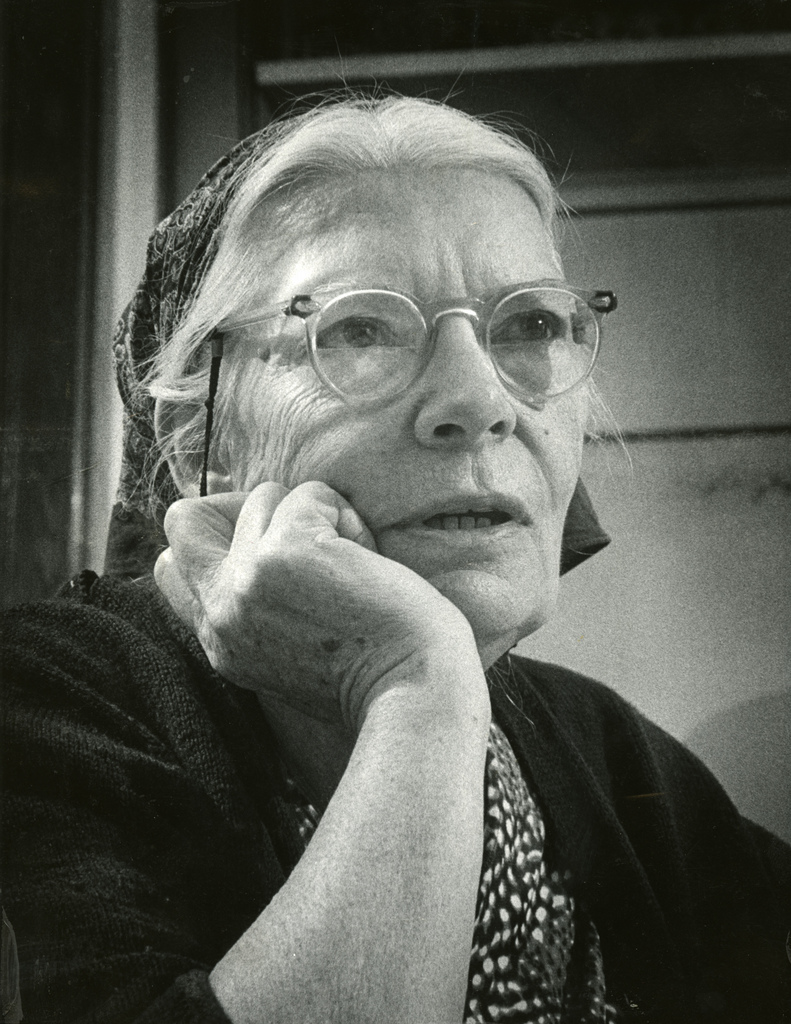
Close up of Dorothy Day

First published in The Catholic Times, October 11, 2015 issue


I stayed home from work the morning that Pope Francis spoke to the United States Congress. I wanted to watch his face and the faces of those gathered to hear him: A congress mired in partisan politics, hopelessly polarized. What would Pope Francis say to them? To the country? How would our elected officials receive his words? It was a moment I wanted to witness as it unfolded.

The pope did not disappoint. Just a couple of weeks ago, at a gathering of citizens concerned about issues of social justice and a stalled political system, a gentleman expressed dismay that the concept of the common good was no longer a topic in public discourse. Pope Francis took care of that.

He had barely spoken a hundred words when he directed attention to our solemn responsibility for the common good. “You are called to defend and preserve the dignity of your fellow citizens,” he said to the lawmakers, “in the tireless and demanding pursuit of the common good, for this is the chief aim of all politics.”

By now, most who read this column will have read (or heard) various commentaries on the address and what the pope did and did not say. But, what surprised me was how he said it: He used the example of four great Americans who gave their lives to service and to the betterment of society. Two, Abraham Lincoln and Martin Luther King, Jr., often serve as inspirational examples, fittingly so.

The other two are the ones I didn’t expect: Dorothy Day and Thomas Merton. In my late teens I read a number of their books. They influenced my faith and spirituality. Still, I wondered, how many of the government officials sitting in the room knew those names? How many watching and listening around the country wondered who they were and searched for them on mobile phones and tablets?

They’d find Dorothy Day, born in 1897, was a radical who advocated for women’s suffrage, a pacifist who opposed all wars, and a tireless worker for social justice who saw the need not only to serve the poor she encountered in daily life, but also to change the system that created such poverty and injustice. She was a writer and journalist who gave voice to marginalized people and causes.

A convert to the Catholic faith that fed and sustained her, Dorothy attended daily Mass, read scripture, and wove prayer throughout her days. As a friend who once heard her speak said, “She was prayer.

Dorothy, along with close friend Peter Maurin, founded “The Catholic Worker” newspaper and the movement of the same name. Catholic Worker Houses continue to welcome the poor and are places where the corporal works of mercy are lived out. As Pope Francis encourages, they are places of encounter.

The pope spoke a second name that I didn’t expect to hear: Thomas Merton, a Trappist Monk at the monastery of Gethsemani, in Kentucky. We celebrated the 100th anniversary of his birth this year. Pope Francis singled him out for his openness to dialog with others of all faiths, seeing them as pilgrims on the same search for ultimate truth. His last journey was to Bangkok where he attended an international conference on monasticism, organized by Buddhist monks. Like Day, he calls us to deep encounter with those unlike ourselves.

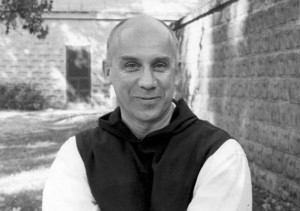
Thomas Merton standing outside Pope Francis also recommended Merton’s openness to God in a contemplative style of prayer. Merton in the midst of a world immersed in “noise” of all types—digital, visual, aural—pouring out of players, electronics, out of the depths of our souls, calls us to quiet presence. For those who fill up every moment with activity and distraction, he says, “Be still. Listen.”

Like Dorothy Day, Thomas Merton was a writer and a convert. His books addressed spirituality and political topics. He was an outspoken critic of the Viet Nam War and the arms race.

Two people of deep faith and prayer: One active in the world, the other a monk responding to world issues with his pen; both social activists who pointedly challenged the status quo and whose words speak to us today. Immigration, poverty, climate change, racism, and violence require bold responses from all of us, not only governments.

If you’re not familiar with Dorothy Day and Thomas Merton, consider reading some of their work or finding out more about their lives and spiritual journeys. Pope Francis’ choices challenge us all.

© 2015 Mary van Balen