Lent: Letting Love Enter In

Lent: Letting Love Enter In

vigil candle burning with warm glowOn Ash Wednesday I took tentative steps into the Lenten season. I wasn’t sure what disciplines to embrace, but that morning I lit a candle and sat quietly in prayer before going through liturgical readings for the season. I attended a noon service and stood in line to receive ashes on my forehead, remembering that I was dust and someday, to dust would return.

After work I made a few calls checking on a friend who had undergone surgery for a broken hip, chatting with a daughter who was celebrating a birthday, and catching up with someone I hadn’t seen in a while.

Then again, a prayer candle burned as I read through the lectionary one more time. Lent is full of powerful readings.

They include passages that remind us the most important commandment is to love and care for others, especially the least among us. And when we do, Jesus tells us, we are caring for him. Isaiah insists that the sacrifices God wants aren’t the drooping of ash-covered heads or the rending of garments.

That’s not the drama the Holy One desires. No, the desired actions are more along the lines of freeing the oppressed, sharing food, taking care of the marginalized, being civil in speech, and working for justice – all facets of the Love commandment.

There’s the Samaritan woman who’s the first to recognize Jesus as the Messiah. After accepting the truth about her own life and also the love offered to her by Jesus, she hurries back to town, telling everyone that she has met the Messiah, right over there at the community well.

Instructing the people to repent of their wrongdoing, Nineveh’s king showed humility and sincerity that changed God’s mind about destroying the city. Queen Esther beseeches God for help in foiling the enemy’s plan and turning her husband’s heart in order to save her people.

These are just a smattering. But in the midst of the more grand and familiar passages sits a small one from Isaiah, just two verses. They grab my heart. Maybe it’s the simple comparison of the life-bringing fall of rain and snow onto the earth to the transforming entrance of God’s word into the universe:

Just as from the heavens / the rain and snow come down / And do not return there / till they have watered the earth, / making it fertile and fruitful, / Giving seed to the one who sows / and bread to the one who eats, / So shall my word be / that goes forth from my mouth; / It shall not return to me void, / but shall do my will, / achieving the end for which I sent it.

 I’m not sure how that works, but it is hopeful in a time when hope is difficult to find.

This passage reminds me of short poem, Indwelling, by Thomas E Brown, an 19th century scholar, teacher, poet, and theologian born on the Isle of Man.
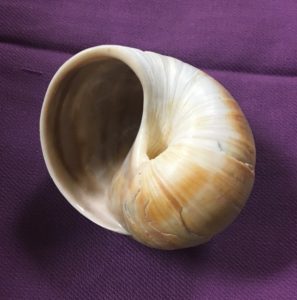
close up of shell on purple cloth

PHOTO: Mary van Balen


If thou could’st empty all thyself of self,

Like to a shell dishabited,

Then might He find thee on the ocean shelf,

And say, “This is not dead,”

And fill thee with Himself instead.


But thou are all replete with very thou

And hast such shrewd activity,

That when He comes He says, “This is enow

Unto itself – ’twere better let it be,

It is so small and full, there is no room for me.”

… … … 

The connection between the two? Indwelling suggests to me why God’s word does not return without doing what it was sent to do. It is a living Word that dwells within each of us. As Brown writes, the more we empty ourselves of false selves, of cluttering activity, the more Divine Love can fill us and do its work.

We participate in the Word fulfilling mission – as Jesus prays at the Last Supper – to bring all together in love, united with the One who sent him.

Whatever disciplines fill Lent, may they be ones that allow more Love to enter in.

© 2020 Mary van Balen

Valentine’s Day Reflection

Valentine’s Day Reflection

watercolor heart

My uneven heart

I’ve been reviving my prayer practice of drawing/painting. Sometimes my efforts are part of a journal entry. Words often come first. Sometimes, like today the image is first, and words come after.

I didn’t intend the reflection and prayer. The painted heart was to be a Valentine’s Day text to my daughters. I hadn’t planned enough ahead to send a card as I usually do.

So, out came the watercolors. No matter how I try, I cannot draw a symmetrical heart. One side is always rounder or larger or sits lower. Today was no different. Eventually, I quit trying and simply sat in silence with the painted heart for a while, trying to hear what it was saying…

Love isn’t “even,” it said. Love isn’t meant to be measured in its giving or receiving. It’s a flow, a reality in which we dwell.

Sometimes we are full of love and it flows outward. Sometimes we’re running low and, if we’re open, it flows in.

It’s not something we have or hold on to or save up. It’s meant to be savored and  given away.

Love is.

And I am grateful for all those in my life’s river of love.

© 2020 Mary van Balen

Proximity and Hope

Proximity and Hope

“Nocturne Navigator” Alison Saar, 1998
Collection: Columbus Gallery of Art “…commemorates those involved with the Underground Railroad…The figure’s billowing skirt, illuminated from within, shows the constellations of stars that would help guide the fugitives on their nighttime journey, while her heavenly gaze and outstretched arms suggest a mix of anguish, prayer, and gratitude.” (from museum signage)

A movie or book can be transforming. For Black History Month, I’m sharing an experience with both. In January, I attended a movie with friends: Just Mercy.

Based on the book Just Mercy: A Story of Justice and Redemption, written by Bryan Stevenson and published in 2014, the movie centers around Stevenson’s representation of death-row inmate Walter McMillian, appealing his murder conviction.

Stevenson is a Black public interest lawyer who, after graduating from Harvard Law School, went to Alabama to represent those who had been illegally convicted or poorly represented at their trials.

Just Mercy is powerful and sometimes difficult to watch. If you don’t think racism’s roots are deeply embedded in this country when you walk in, you’ll be questioning your assumption when you walk out. But the movie isn’t only about the fear, hatred, and oppression that has been visited upon Black Americans since their forced arrival as slaves. Or how fear and ignorance disfigure the oppressors. Its main message is about accepting truth, about hope and the possibility of change.

The movie includes Stevenson’s 1989 founding of the nonprofit Equal Justice Initiative (EJI), located in Montgomery, Alabama. According to its website, EJI is “… committed to ending mass incarceration and excessive punishment in the United States, to challenging racial and economic injustice, and to protecting basic human rights for the most vulnerable people in American society.”

In talks across the country, Stevenson names hope as one of the four things necessary to effect change. He calls it a “superpower” and the enemy of injustice. “It is what makes you stand up when someone tells you to sit down.”

He names another element necessary for change: proximity. In a speech at Penn State in Abington, Stevenson gave this advice: “We need to get closer to people who are suffering and disfavored so we can understand their challenges and their pain. We can’t create solutions from a distance. Decide to get closer to people who are suffering, marginalized, disadvantaged, poor. Only in proximity to those who are suffering can we change the world.”

Reading this, I thought of Pope Francis’s call, early in his pontificate, for priests to be close to the people they serve: “This is what I am asking you — be shepherds with the smell of sheep.”

Jesus lived that out. He spent time with ordinary people and those on the margins. He counted fishermen and tax collectors as his early followers and included women in his close circle of friends and disciples. He ate and drank with sinners, much to the dismay of religious leaders who kept their distance.

I’ve also been reading Howard Thurman’s book, Jesus and the Disinherited. A Black theologian, pastor, and spiritual mentor to Martin Luther King Jr., Thurman reminds us that Jesus was marginalized. He was poor, and he was a Jew in an occupied land. Jesus knew the suffering of those on the edge, or as Thurman might say “those with their backs to the wall.” He devotes a chapter to fear and its effects on people.

But Jesus’s response to marginalization was not fear. It was not violence. It was love. It wasn’t separation from those who were suffering. It was proximity. He showed us how to love and to serve our neighbor—who is everyone.

He spoke the truth. He healed on the Sabbath. He said the Kingdom of God is within us. He had hope and faith in the One who sent him and in the power of compassion. He stood up when he was told to sit down.

This month is a good time to reflect on our history, the state of our country, and the divisiveness that is increasingly expressed in violence against “the other” – not only Blacks, but also Jews, LGBTQ+ people, the poor, and immigrants.

If you’re able, see the movie (or read the book). Read Howard Thurman. They invite us to ponder how we can, as Isaiah admonishes, remove oppression, false accusations, and malicious speech from our midst; to ponder how can we share our bread with the hungry and give shelter to the homeless.

They challenge us to follow Jesus’s example of walking with the marginalized and of love, to believe that love will cast out fear and bring hope instead.

© 2020 Mary van Balen

Do What You Are Doing

Do What You Are Doing

Liturgically speaking, summer is all “ordinary time.” It’s a break after the Lent/Triduum/Easter seasons that concluded with the feat of Pentecost. That’s fine with me. Summer is full enough without more events and expectations. Besides, I love “ordinary” time. It gives us breathing room to discover just how extraordinary ordinary is.

PHOTO: Mary van Balen

There is a Latin phrase that provides wisdom for living and praying the “ordinary time” moments in our lives: Age quod agis or “Do what you’re doing.” Finding the origin of the Latin phrase was impossible. Finding its use was easier. It appears in things as diverse as the old western movie, Tombstone, Pope John XXIII’s Journey of a Soul, Saint Ignatius and Jesuit spirituality, and school mottos to name just a few.

Whatever you’re doing, do it with attention. Throw your whole self into it. It’s tempting to idealize this interpretation of the phrase, applying it to individual tasks. You know, if you’re folding laundry, well, concentrate on the laundry. Enjoy the smell and feel of clean clothes. Be grateful you have that neat stack.

On the other hand, such single-mindedness isn’t always possible and isn’t always the wisdom age quod agis offers at a particular moment. The recent family scene in the living room of my nephew and his young family comes to mind.

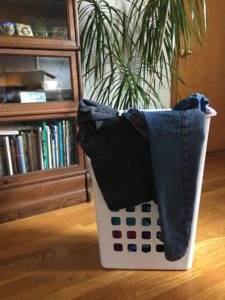
Jeans hanging over full white laundry basketHe and his wife were busy folding loads of laundry and sorting it into piles for each of their four children. They were preparing for a month-long trip to visit both sets of grandparents and, in addition to that, camping for a week. In the midst of their preparations, they offered hospitality to a visiting aunt, which would be me. And of course, all four children were around, talking to their visitor and taking care of their own preparations—which may have included cleaning rooms and gathering books to take. I leave it to your imagination. Not a lot of time there to sniff the laundry.
Life and prayer are a communal endeavor. “What you’re doing” can be one thing or a number of things. Those young parents were taking care of laundry while answering questions, directing activity, and making me feel welcome. Their “what you are doing” was being good parents while welcoming the visitor. They gave it their all.

Same with us. We might be students, teachers, employees, parents, or members of a community (vowed or not). We might be children, arranging care for an aging parent. And while it would be nice to give ourselves completely to a solitary walk on the beach, listening uninterrupted to a symphony, or gardening quietly in our yard, life doesn’t always happen that way. It’s more likely a hodgepodge of activity.

What ordinary time says to me is that’s ok. No, not just “ok.” That’s the path to holiness. “Do what you’re doing.” No matter what that is in the present moment, it’s where we meet God.

We celebrate feast days of a number of saints in July who were good at this. While the lives of all these virtuous predecessors can speak to the holiness of living fully the ordinary, everyday life, Benedict (July 11), Mary Magdalene (July 22), Joachim and Anne (July 26), and Martha (July 29), hold a special place in my heart.

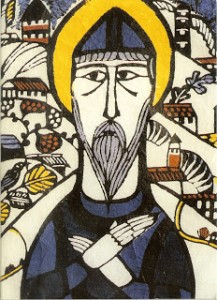
Watanabe Sado (1913-1996) Tokyo. Stencil print on rice paper.Hangs in the Gathering Place at the entrance to Sacred Heart Chapel at Saint Benedict’s Monastery, St. Joseph, MN

Benedict for his great Rule written with emphasis on community as a way to holiness and his understanding of humility, compassion, and care for one another as spiritual disciplines right up there with prayer and fasting. Flexibility was key then as it is now. Mary Magdalene for her courage and deep love of Jesus. Hers was the woman’s voice that first proclaimed the resurrection to others who were disinclined to believe her. Joachim and Anne (or if those aren’t their actual names, the parents of Mary) for being good parents. Enough said! Martha, who often gets a bad rap for hanging out in the kitchen when she could have joined the others at the feet of the teacher. She took care of the nitty-gritty and, as one who has spent countless hours doing that, surely heard most of what was said!

Happy summer. Courage! Age quod agis!

© 2019 Mary van Balen

The Challenge and Grace of Embracing Truth

The Challenge and Grace of Embracing Truth

We are often afraid of the truth. Rather than experiencing it as a way to experiencing a deeper reality, we see it as something that up ends our world, threatens our sense of security, and even our sense of self. We have found a comfortable place to “fit in,” and we don’t want anyone or anything to disturb it. It’s how we make sense of the world.

Jesus brought the challenge of truth with him and he certainly disturbed the religious status quo of his time. Many religious leaders and officials didn’t see how they would fit in to his world view. They had narrowed their vision to see the world through their lenses of laws and rituals and understanding of history that made sense to them and that assured their place in it. Jesus and his truth were a threat and, as we observe on Good Friday, he was murdered for it.

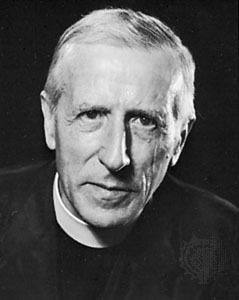
photo of Pierre Teilhard de Chardin

Pierre Teilhard de Chardin

April 10 was the anniversary of Pierre Teilhard de Chardin, (1846-1955), Jesuit priest, scientist (geologist and paleontologist), theologian, and mystic whose work informed his spirituality. Much of what he wrote and spoke about was unacceptable to some who had the authority to deny his ability to publish, teach, or lecture.

Despite the censure of his work, he remained faithful to his vows of obedience and to the church, as painful and disheartening as it was. After his death, his work was published and has informed much current theology and spirituality. If you are familiar with the work of Richard Rohr, to mention only one, you will have been introduced in some way to Teilhard’s theology of evolution on both a physical and spiritual level and the incarnation of God in all matter.

I have always believed that sincere seekers of truth, whatever their field of study, spiritual path, or human experience, will come eventually to the same place: The Holy One who is Truth.

In The Gallery of Paleontology and Comparative Anatomy, part The National Museum of Natural History Paris, France
PHOTO: Mary van Balen

One night, when my middle daughter was five, I went upstairs to check on her and found her wide awake.

“Mom,” she said, “I don’t know what to do. I love God, but I love science, too. Some people say that people and dinosaurs lived at the same time. That the Bible talks about everything being created at once. But dinosaurs and people didn’t live together. Paleontologists know that.”

She sighed “I don’t know which to choose, God or science.”

“The good news is you don’t have to choose,” I said. The Bible isn’t a science book. The writers of the Bible were telling stories and sharing history that pointed to the truth as they knew it about God. They were truth seekers.

Scientists are looking for truth, too. Sometimes they have to change what they thought because a new discovery proves it wrong. But they keep observing and experimenting.

All truth leads to God. So, you don’t have to worry. The Bible. Science. Truth. Eventually, they take you to the same place.”

She smiled. “I’m glad,” she said, then rolled over and went to sleep.

First photo of a black hole
Credit: Event Horizon Telescope Collaboration

Seeking truth and accepting it when it isn’t what’s expected takes openness and humility as well as courage. History is full of examples. In our own time, new discoveries and understandings in many fields challenge the status quo. What do we know of race, of the cosmos, of human psychology, of the effect of human activity on our planet? Truth is always drawing us forward into new territory.

“Conventional truth” confronted Jesus as he entered Jerusalem. It made sense to his palm-waving, excited followers, caught up in signs and wonders. Of course, he would be King. It made sense to them, but not to Jesus.

Jesus refused to deny the truth of who he was. He had a message for all people, for all creation that transcended religion, politics and power. His work was to proclaim the radical love of God for all and in all.

That truth was hard for his followers to accept. It certainly turned their world upside down. For some it was too much to accept.

The same is true for us. Jesus’s message and our slowly evolving way of experiencing it is a challenge. It requires us to both let go and to accept. We can never understand God. But we can believe that always, God is drawing all things closer to the Divine Self until one day, we will understand that, mysterious as it is, we are one.

© 2019 Mary van Balen

Tea, Haiku, and a Walk in the Woods

Tea, Haiku, and a Walk in the Woods

To celebrate this first day of Spring, the Vernal Equinox, I gave myself the gift of a slow morning and filled it with tea, haiku, and a walk in the woods.

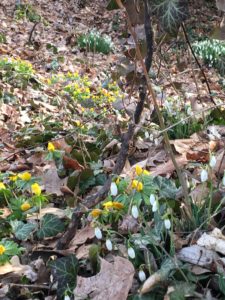
First, I poured myself a cup of tea, brewed from fresh ginger root and soft, sweet Medjool dates, as my Korean friend had taught me. Then, I opened a slim, old book of poetry, Haiku Harvest. I bought it when I was in high school and quickly fell in love with the old haiku masters’ elegant simplicity of word and wisdom. Finally, having nourished body and soul, I set out for a walk, stopping first at a patch of snowdrops and slightly spent winter aconite and then making my way to a small nearby woods.

A patch of snowdrops and winter aconite

Snowdrops and winter aconite PHOTOS: Mary van Balen


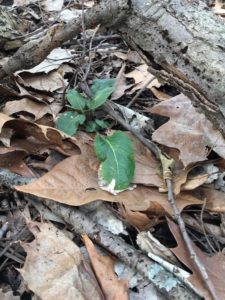
Small green sprout pushing up through last years brown leaves

A small bit of green pushing up through last years leaves


HE IS UNKNOWN

THE POET WHO SINGS

THIS  GREATEST

OF ALL SONGS — SPRING!

Shiki


HONKING WILD GEESE COME

SCRAWLING DELIGHT

IN SPRING’S COLD

PALE MORNING SUNLIGHT

So-In


I didn’t hear any honking geese this morning, but the woods were filled with chickadees flitting form tree to tree, dipping and singing spring songs. The woodpeckers remained hidden, but I could hear their calls and hollow drumming on dead tree trunks.


a piece of weathered and hollowed out tree roots in the woods


IN MY HOUSE THIS SPRING

TRUE, THERE IS NOTHING,

THAT IS,

THERE IS EVERYTHING!

Sodo


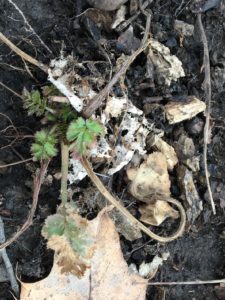
In the woods, tiny green leaves appear sprouting from last year's growth.

Spring greening


OUT OF ONE WINTERY

TWIG, ONE BUD,

ONE BLOSSOM’S WORTH

OF WARMTH AT LONG LAST!

Ransetsu


UNDER A SPRING MIST,

ICE AND WATER

FORGETTING

THEIR OLD DIFFERENCE…


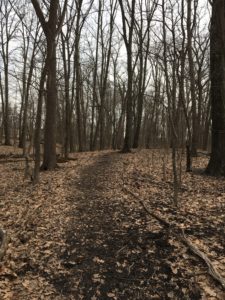
A dirt path though brown, fallen leaves, trees on either side

MY HORSE CLIP-CLOPPING

OVER A FIELD…

OH HO!

I’M PART OF THE PICTURE!

Basho


And so we are…

Happy Spring!


Now Is the Acceptable Time

Now Is the Acceptable Time

Woods and fir trees on Whidbey Island

PHOTO: Mary van Balen

While reading some reflections by Richard Rohr on the presence of Christ in creation from the beginning, I was struck by the phrase “Christ-soaked world.” It brought to mind two Scripture readings from Paul used for the beginning of Lent: one from 2Corinthians and the other from Romans. In both, he draws from Hebrew Scriptures, and in both, reminds us of the immediacy of God’s presence.

“In an acceptable time I heard you / and on the day of salvation I helped you…” (Isaiah 49) “Now is an acceptable time,” Paul writes is 2Corinthians. “Now is the day of salvation.” Not yesterday. Not tomorrow. Now. This moment. Every moment. Because God has always “heard” and has always “helped.” From before time. That is who God is. Presence. Love. Always given. We didn’t miss it. We don’t have to wait for it. It is always poured out in and through us and creation.

In Romans Paul reminds us: “What does Scripture say? /The word is near you, / in your mouth and in your heart.” (Deuteronomy 30) God assures those listening that what is commanded is not a mystery or far away. “It is not in up in the sky, that you should say, ‘Who will go up in the sky to get it for us and tell us of it, that we may carry it out?’” It isn’t across the sea either. “No, it is something very near to you already in your mouths and in your hearts. You have only to carry it out.”

 We may forget this. The Pharisees did. They didn’t recognize God in Jesus let alone the tax collectors and “riffraff” he hung out with. They expected to find God in “holier” places. The temple. The people who kept all the laws. People like themselves. Jesus confounded them with his insistence of spending time with the poor and marginalized, with his talk of God’s care for sparrows and stories of rejoicing over finding a lost coin or wandering sheep. Surely the Holy One was more discriminating than that!

No, not really. God is constantly giving Godself away because that’s what Love does. The incarnation in Jesus didn’t happen because people had made such a mess of things that only the sacrifice of his life could appease an angry God. No. As the thirteenth century Franciscan theologian, John Duns Scotus taught, Christ was always the plan.

Jesus showed us to what lengths Love would go, not to atone for sins or to be a scapegoat, but to be Love’s heart and human face on this planet. “See, this is how much I love you,” he said with arms outstretched on the cross.

These readings, reminders that God lives not far away but in the depths of our hearts at this very moment, set the tone for the Lenten journey. It’s not necessarily about giving up favorite foods or candy (though I wouldn’t mind losing a few pounds) or reading more Scripture, though it could be.

Lenten practice, whatever we choose, is about helping us grow in our trust that divine Love truly does live within us—not somewhere in the sky or across the sea. Lent is a time to listen. To discover what helps us deepen our relationship with God and to do it.

The focus is not personal salvation. It never was. It’s about becoming an uncluttered conduit of love and care for others and all creation. Jesus shows us that we are part of Christ and the work of “soaking the earth” with Love and Presence. As Isaiah tells us, the fast God wants is freeing the oppressed and unjustly bound, sharing our bread with the hungry, sheltering the oppressed and homeless, taking care of the other. (Isaiah 58)

This is the work Lent prepares us to do by reminding us to deepen our relationship with the Holy One who dwells within. Trusting it. Drawing our strength and hope from Love so we can be faithful to our part of Love’s transforming the earth.

This season invites us to take a breath, to nurture our spirits, mind, and body for this work. Now is the acceptable time.

Jesus’ life and eventual death attest to the struggle and danger of being radical love in a world that isn’t ready for it. But, as part of the Christ, that is our call.

© 2019 Mary van Balen

Hope in the New Year

Hope in the New Year

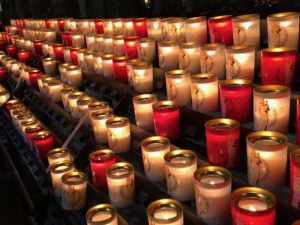
White and red vigil candles in Notre-Dame de Paris

Vigil candles in Notre-Dame de Paris
PHOTO: Mary van Balen

I like to celebrate Christmas—all 12 days of the season. So, while discarded Christmas trees line neighborhood sidewalks, mine still shines with white lights and carefully chosen ornaments. By the time you read this, Epiphany will have come and gone, and my tree will be back in the basement. But not yet.

This year I added a small book of daily readings to my holiday ritual: The Work of Christmas: The 12 Days of Christmas with Howard Thurman, by Bruce Epperly. It helped me reflect on Christmas well beyond the Advent struggle to keep mind and heart centered on God-with-us while busy with pre-Christmas preparations and dealing with holiday stress when the day finally arrived.

Christmas was especially enjoyable for me, filled with lots of family and company. Despite the activity, I made time each day to sit with this book. And when the holidays passed, family returned to their homes, and I returned to work, feelings of joy and hope that have been elusive, stirred in my heart.

2019 begins with dark days in our nation and in the world. Wars rage around the globe. Refugees, fleeing oppression and violence are being turned away from places once considered welcoming, including our country.  Division, fear and anger abound. The environmental crisis of global warming threatens catastrophic change for people and living things that inhabit the earth. Even progress that has helped clean up air and water is being turned back, profits more important than health.

Not much had changed between December 25 and January 1. So, where was this sense of joy and hope coming from? Why the easy smile? Why did grace and beauty pop into my view more often?

I thought it had something to do with the book, so I sat with it again and began reading from the beginning, searching for particular words or phrases that might have awakened these feelings.

Perhaps it was looking at Christmas through the eyes of an African American theologian and mystic born in Florida who grew up in the south during the days of Jim Crow. A man who knew oppression and could empathize with the oppressed and marginalized people in today’s world.

Or maybe, I thought, the words that recognized beauty in the midst of darkness helped me to become more aware of the beauty that resides in the world today. I kept looking.

Suddenly, these words filled my mind, pushing everything else aside: You are not alone.

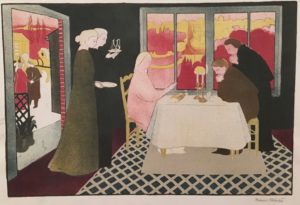
The Pilgrims of Emmaus by Maurice Denis 1895 Color Lithograph – Columbus Museum of Art
PHOTO: Mary van Balen

I closed the book. That was it. Experiencing that truth over the past two weeks had made the difference though I hadn’t realized it at the time. Whether reading examples from Thurman’s own life, reflecting on the Scripture passages chosen and reflections written by Epperly, or living it with my daughters, family, and friends, I experienced the Epiphany revelation: God is with us. Always has been. Always will be.

And that is source of my hope.

It doesn’t make everything easy. Thurman didn’t sentimentalize Christmas. When he spoke of light coming out of darkness, he knew what he was talking about. Still, he had hope. In “The Mood of Christmas,” he reminds us that “… good is more permanent than evil.”

Epperly’s reflections focused attention on the reality that Christmas is not only blessing but also work, as Thurman’s poem “Now the Work of Christmas Begins” expresses. It is God’s work that we are created to do. Each of us. In our own way. In our own time and place. With our own gifts.

We do it together, sustained by countless acts of love and creativity. We live in the river of Grace that has flowed through all people and creation since the beginning of time. And it flows still. We contribute to it by being faithful and sharing the particular Grace we have been given.

Trusting that, trusting that God, indeed, is with us, allows us not only to have courage to contribute to that river of life in dark times as well as in light, but also to enjoy beauty and goodness along the way. And to hope.

©2019 Mary van Balen

Originally appeared in The Catholic Times, January 13, 2019 with different title


If you are interested in learning more about Howard Thurman and his spirituality, consider registering for the Howard Thurman Retreat Day offered by the Shalem Institute. I took advantage of this online retreat last year and highly recommend it. Thurman has much to say to us and our times. Follow the link above for more information.

Rev. Graetz: Standing Together for Justice

Rev. Graetz: Standing Together for Justice

Rev. Robert and Jeannie Graetz Photo: Mary van Balen

I browse New York Times (NYT) headlines in the mornings even though the news is often depressing and stirs anger and frustration rather than wonder at new-day possibilities. But one morning in August, I was surprised by a headline and photo of an old friend, Rev. Robert Graetz. “Bombed by the K.K.K. A Friend of Rosa Parks. At 90, This White Pastor Is Still Fighting,” it read. The article, by Alan Blinder, included an interview with Robert and his wife, Jeannie.

After being ordained a Lutheran minister in Columbus Ohio, he was assigned to his first pastorate in 1955—Trinity Lutheran, a predominantly Black congregation in Montgomery, Alabama. There he was practically the only white minister who publicly supported the bus boycott and as the NYT headlines reveal, he and his family paid a price. According to Jeannie, threats began “As soon as the Klan and the Klan-type people knew that we were involved.”

Back in Ohio

The Graetzes moved back to Ohio a few years later. They lived in a simple house nestled in the woods of southern Ohio. Robert wrote a monthly column, part of the “Point of View” series that ran during the 70s and 80s in the Catholic Times, the diocesan newspaper of Columbus, Ohio.

I knew Robert from reading his columns (and his first book, “Montgomery: A White Preacher’s Memoir”), but in October 1992, we met at an alternative observance of Columbus Day. The 4-day event was led by Indigenous Peoples. Covering it for the Catholic Times, I saw Robert, and we shared lunch and good conversation.

Rev. Graetz spoke at some Martin Luther King Jr. Day services I attended over the years. So, in the early 2000s, when I was an adult educator for a family literacy program severing poor, mostly single, young parents, Robert was my first choice to be an MLK Day speaker for our students.

Rev. Robert and Jeannie Graetz addressing a group of students

Photo: Mary van Balen

He and Jeannie came and shared stories, not only of their time and roles in Montgomery and the bus boycott, but also of their continued work for causes of justice and equality. It included the fight against racism and embraced other forms of injustice: sexism, income disparity, oppression of minorities based on ethnicity, sexual orientation, or anything that separates persons as “other.” Their message was written large on a tablet displayed beside them as they spoke: R.A.C.E.– Respect All Cultures Equally.

It wasn’t only the “big” message that touched my students. It was the little things. “Did you see how Jeannie slid that cough drop across the table to him when he started to cough?” they asked. Her simple act deeply moved those young parents who had been abused for most of their lives. They insisted that we drive up to Columbus to hear him preach at St. Philips Lutheran Church.

I enjoyed reading the NYT article that morning and learned that the Graetzes now live in Montgomery. It was good to remember people who inspired. Who walked the walk. People who did their best to love as Jesus loved and to take a stand against oppression and injustice when they saw it, despite danger to themselves and their family.

Divisiveness, violence, and hate that swirl around us today are disturbing. When asked for his thoughts about what was happening in Alabama and across our country, Robert said it’s “…one of the most dangerous periods of time I’ve ever been through in this world.” Sobering from one who has lived through tumultuous years of the Civil Rights Movement.

Hope

Photo of the bus Rosa Parks was riding when she refused to give up her seat.

The bus Rosa Parks was riding when she refused to give up her seat. Now at the Henry Ford Museum, Dearborn, MI.

Yet there is hope. During a 2011 PBS interview, Robert observed that many people thank Jeannie and him for what they did. He’s quick to point out that it wasn’t only what “they” did. He gives credit to the Women’s Political Council made up of Black American women who started the bus boycott and all those who were involved. “It was 50,000 Black people who stood together, who walked together, who worked together, who stood up against oppression,” he said. “If it had not been for this whole body of people working together, this would not have happened.”

At the end of the NYT article, he said that seeing two people getting together and smiling was a source of optimism for him.

I take these two thoughts to heart. Today we need to “be peace” where we are, in the little moments, showing love and support. Like Jeannie and the cough drop, you never know when small kindnesses will touch someone’s heart.

But we also need to work together as we speak out and stand up for justice today.

© 2018 Mary van Balen

Similar column published in the Catholic Times, Columbus, Ohio. 9.9.2018

Easter is More than History

Easter is More than History

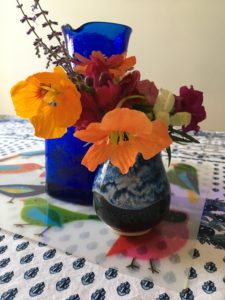
Bouquet of bright flowers and cobalt blue glass water jug on table

Photo: Mary van Balen

Originally published in The Catholic Times, April 8, 2018

After the Resurrection, Jesus appeared over and over again to those who were closest to him. The gospel readings this week and through Sunday tell the stories. The women were the first to see him.

In Matthew’s gospel Mary Magdalene and Mary the mother of James and John walked in the early morning to the tomb. They were the brave ones who watched the angel appear like lightening, roll back the stone, and sit on it, frightening the Roman guards into a death-like stupor. They listened to the angel and hurried to tell the disciples what they had seen and heard. On their way, Jesus appeared to them, calmed their fears, and told them to instruct the disciples to meet him in Galilee.

In Luke’s gospel, the women were again the first at the tomb. They saw it was empty and spoke to the messengers of God about what had happened. The women told Simon and John who thought their story was nonsense, though Peter went to check it out and saw the empty tomb just as the women had reported.

In John’s gospel, Mary Magdalene walked to the tomb alone, and seeing it was empty hurried to tell Peter and John. They ran to the tomb and saw it was as Mary had described. John noticed the neatly folded cloth that had covered Jesus’ face and believed. The men returned home, but Mary remained, weeping in her grief. She entered the tomb, spoke with the angels who appeared to her, and then turned around. She saw Jesus, though she didn’t recognize him until he called her name. He instructed her to tell the others that she had seen him and to share what he had said to her. Mary was the first entrusted with the Good news of the resurrection. The first to proclaim it to the others.

Jesus continued to appear to his disciples. He walked with two travelers on the road to Emmaus who didn’t recognize him until they broke bread together.

He appeared on the shore of the Sea of Tiberias where some of his disciples had been fishing all night, to no avail. His instructions led them to an extravagant catch, and they shared breakfast on the beach. Jesus moved through locked doors where his followers were gathered in fear and confusion. He blessed them with peace and breathed the Spirit into them with his own breath. He ate with them, showed them his wounds, and later invited Thomas to put his fingers into them so he would believe.

Who do you identify with as you ponder these different accounts? Mary Magdalene who recognized Jesus when he called her name? The brave women, fearful yet persistent as they watched the angels and then met Jesus while on their way to tell the others? Or are you more a skeptical Peter and John? Disciples who just couldn’t fathom the truth of what was being said? Would you recognize the risen Jesus or think he was a ghost? Or maybe you’d be a Thomas who needed physical proof before he’d believe.

We have the advantage of hindsight. I’d like to imagine I’d be like the brave women, bearing the light of angels, listening through my fear, and proclaiming the resurrection. I’m not so sure. I would more likely have been found behind locked doors worrying about what was next.

Reflecting on these readings and placing ourselves in the scenes can be a good meditation but pondering where we encounter the suffering and the risen Christ today in our world is also important. Do we recognize the Divine in others? What opens our eyes? Do we see the wounds of Jesus in the wounds of others? In ourselves? When we do see, how do we respond?

What we celebrate is not simply history. Easter is not only an event. It is a way of living. It is Divine activity that reverberates through time and space and all creation. And we are part of it.

We are called to follow Jesus’s example in our world. To stand with the suffering. To embrace hurt and woundedness in others and in ourselves with God’s transforming love.

Jesus was murdered because he was faithful to being the Love of God on a planet that just couldn’t handle it. But that wasn’t the end of the story. Love is dangerous. It is hard. But in the end, it prevails!

Blessed Eastering!

© 2018 Mary van Balen