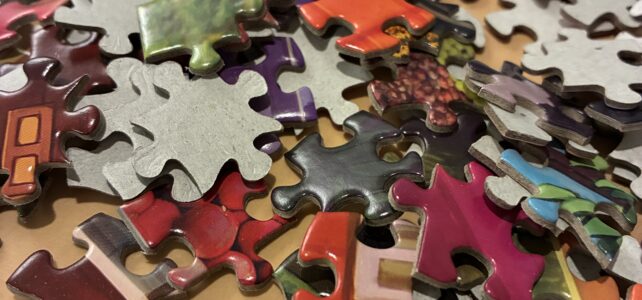
A Christmas Puzzle

A Christmas Puzzle

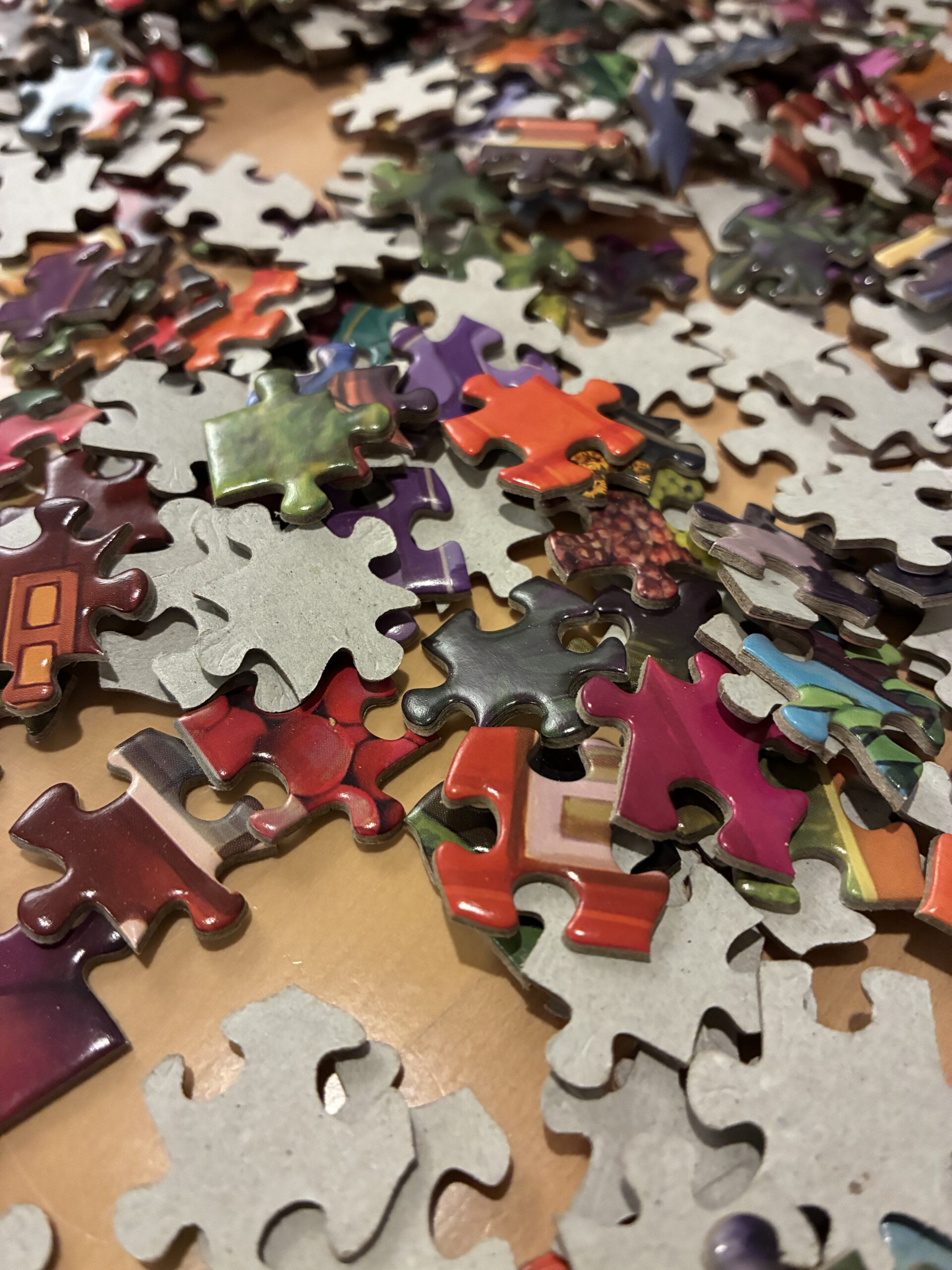
I was never a puzzle person, but my mom was, particularly as her children became adults and had homes of their own. Sometimes, she placed all the pieces of the puzzle to be done on a card table set up in the family room. Carefully she turned over each piece, revealing their colors and patterns as well as their shapes. Slowly, piece at a time, with the image on the lid of the puzzle box as a guide, the picture emerged in the center of the table.

When I came to visit, I’d join her to add a few pieces. When we found some that connected but whose place in the big picture was still a mystery, we’d snap them together and arrange them around the puzzle in progress. Eventually, someone would see where they belonged.  
In a roundabout way, a friend’s recent comment brought puzzle-solving with mom to mind. While my friend believes Love infuses all creation and gives life to the ever-expanding universe, she can’t imagine such a God loving her in particular. She experiences the love of those in her life and the Sacred in creation. But God loving her individually? She can’t believe it. “What difference can I possibly make’” she asked. “I’m just not that important.”

The first thought that came to me was an ongoing correspondence that I’d had years ago with a high school classmate’s cousin. He was a brother at the Dominican House of Studies in Washington, D.C., and she thought we’d enjoy exchanging letters. (No email then!) We did. At one point in our conversation, the image of God came up. Surprisingly, the metaphor of a puzzle came to mind. I wrote that I thought the Holy One was an ongoing process. Since a bit of Divinity is shared with every person, God could not be revealed completely until the final person had lived. Like in a puzzle, one missing piece draws the eye to the empty spot and spoils the picture. I concluded, we are each important, like a puzzle piece, and contribute to the image of God. It isn’t finished.

I shared this memory with my friend. It helped. “Have you written a column about this?” she asked. So, here I am, during the Twelve Days of Christmas, pondering puzzles, Love, and the ongoing Incarnation.

Putting a puzzle together requires patience and paying close attention to the pieces you have, the emerging picture on the table, and the picture on the box lid. Similarly, being present and noticing, as Mary Oliver might say, is essential to experiencing the Sacred in our midst. We don’t have the “big picture” for a guide as puzzle solvers do, but I don’t think God does either. I’ve never been one who believed God has a specific plan for each of us. I’m more inclined to think that the Holy One shares a bit of Divinity with each of us and then gives us free reign to run with it, delighted with where we take it and what we do with it. Well, maybe not always, but we do have opportunities to recenter, change direction, and move on when needed!

Perhaps the mystery of creation and the One who put it in motion is like a puzzle with infinite pieces of many shapes, sizes and colors, and no picture as a guide. The puzzle keeps growing along the edges, the big picture emerging and changing, bit at a time. God, human beings, the cosmos and whatever it holds (I’ve always thought that would include other beings. How could it not?) all evolving together.

NASA Photo

I thought of St. Bonaventure’s words: “God is a circle whose center is everywhere and whose circumference is nowhere.” The growing is around edges that extend from every point in every direction without end.

As I pondered these things during the Christmas season, another quote came to mind. This one is from Meister Eckhart, a 13-14th century priest, theologian, and mystic.

“What good is it to me that Mary gave birth to the son of God fourteen hundred years ago, and I do not also give birth to the Son of God in my time and in my cutlure? We are all meant to be mothers of God. God is aways needing to be born.”

No matter how one experiences the Sacred in life, or what one believes. No matter how one prays or lives, all are called to share Love that is shared with them. All are called to make the world a better place by bringing Sacred love and kindness into their time and space. That’s how I think of each person opening to and accepting the spark of Divinity and “running with it”.

My prayer for 2026 is that more and more people will do this. Take their gifts, their Love, and put them out there in the world, right where they are, to touch and heal and encourage and transform. And, as Pierre Teilhard de Chardin advises, trust in the slow work of God.

I send with hope, wishes for blessed holiday and a new year that is kinder to the earth and all people and creation on it. A 2026 filled with the light of Divine Sparks.

Following the Servant-King

Following the Servant-King

The feast of Christ the King has rolled around again, and I have decided to do something I rarely do: repost a column. This one, written in the first year of the pandemic, is as relevant now as it was then. Perhaps more so in these days of NO KING demonstrations. I changed the title, added Samuel’s warning to the people’s demand for a king, and deleted reference to the pandemic. I tweaked a bit here and there.

This time, I close the column with the word “kin-dom” rather than “kingdom” because that is the reality Jesus lived and preached—an inclusive, egalitarian community of all people, respecting and caring for one another and the planet with love. He knew that we—along with all creation—are part of the same cosmic kin-dom.

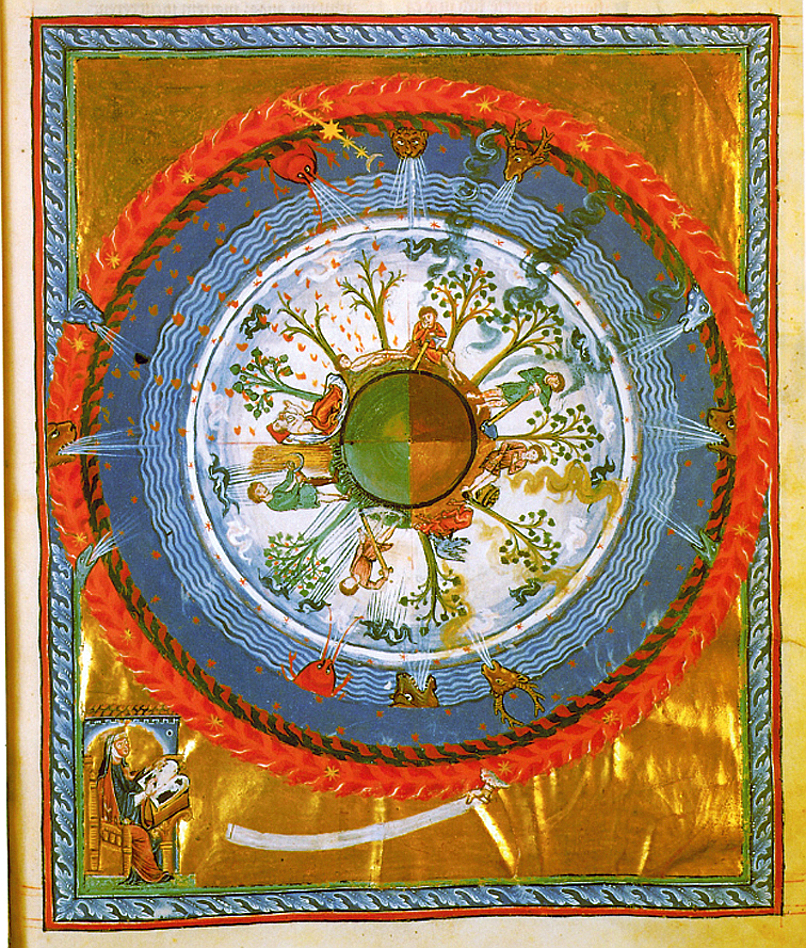
Mandala by Hildegard von Bingen showing four seasons
Mandala, “The Wheel of Life,” by Hildegard von Bingen

I’ve never warmed up to the image of Christ the King. “King” has too many political overtones. Images of a stern king enthroned and bedecked in robes and a gleaming crown, maybe with one hand grasping a scepter, a symbol of power, have put me off. It seems an odd segue into the celebration of the ongoing Incarnation and the remembrance of Jesus’s birth in poverty.

Kings and kingship have a long history, including the Judeo/Christian tradition. Samuel resisted the people’s desire to have a king:

Samuel told all the words of the Lord to the people who were asking him for a king.  He said, “This is what the king who will reign over you will claim as his rights: He will take your sons and make them serve with his chariots and horses, and they will run in front of his chariots.  Some he will assign to be commanders of thousands and commanders of fifties, and others to plow his ground and reap his harvest, and still others to make weapons of war and equipment for his chariots.  He will take your daughters to be perfumers and cooks and bakers.  He will take the best of your fields and vineyards and olive groves and give them to his attendants. He will take a tenth of your grain and of your vintage and give it to his officials and attendants.  Your male and female servants and the best of your cattle and donkeys he will take for his own use.  He will take a tenth of your flocks, and you yourselves will become his slaves.  When that day comes, you will cry out for relief from the king you have chosen, but the Lord will not answer you in that day.”  1 Samuel 8, 10-18

The people’s reasoning – because everyone else has one – seemed shaky. But a king they got, for a while.

I suppose there have been genuinely good kings (and queens) over the centuries, but the associated trappings of power and wealth are hard to overlook. And they corrupt.

In his lifetime, Jesus resisted the title of king, and when people clamored to make him one, he made himself scarce. Of course, the “kingdom of God” is central to his message. But it is a kingdom unlike any earthly kingdom: there is room for all. It isn’t observable. It’s a work in progress, and the progress depends on the people.

It isn’t about exteriority but what’s in the heart, for that is where the kingdom resides, where the Word is spoken and takes root and grows. The signs of the kingdom are love, service, joy, peace, willingness to suffer for the good of others. God sows this Word-seed in human hearts. It has power to grow and transform every person and through them works to transform the world. But how painfully slow is that process!

The kingdom is both/and. Already here and yet to come. “Already here” because the Holy One has placed a bit of Divinity in everyone. “Yet to come” because it must grow with cooperation and surrender.

The kingdom is Presence and Possibility. All creation exists in the embrace of the Christ – “The soul is in God and God in the soul, just as the fish is in the sea and the sea in the fish.” (St. Catherine of Siena) All creation, including human beings, is becoming – “Above all, trust in the slow work of God.” (Pierre Teilhard de Chardin)

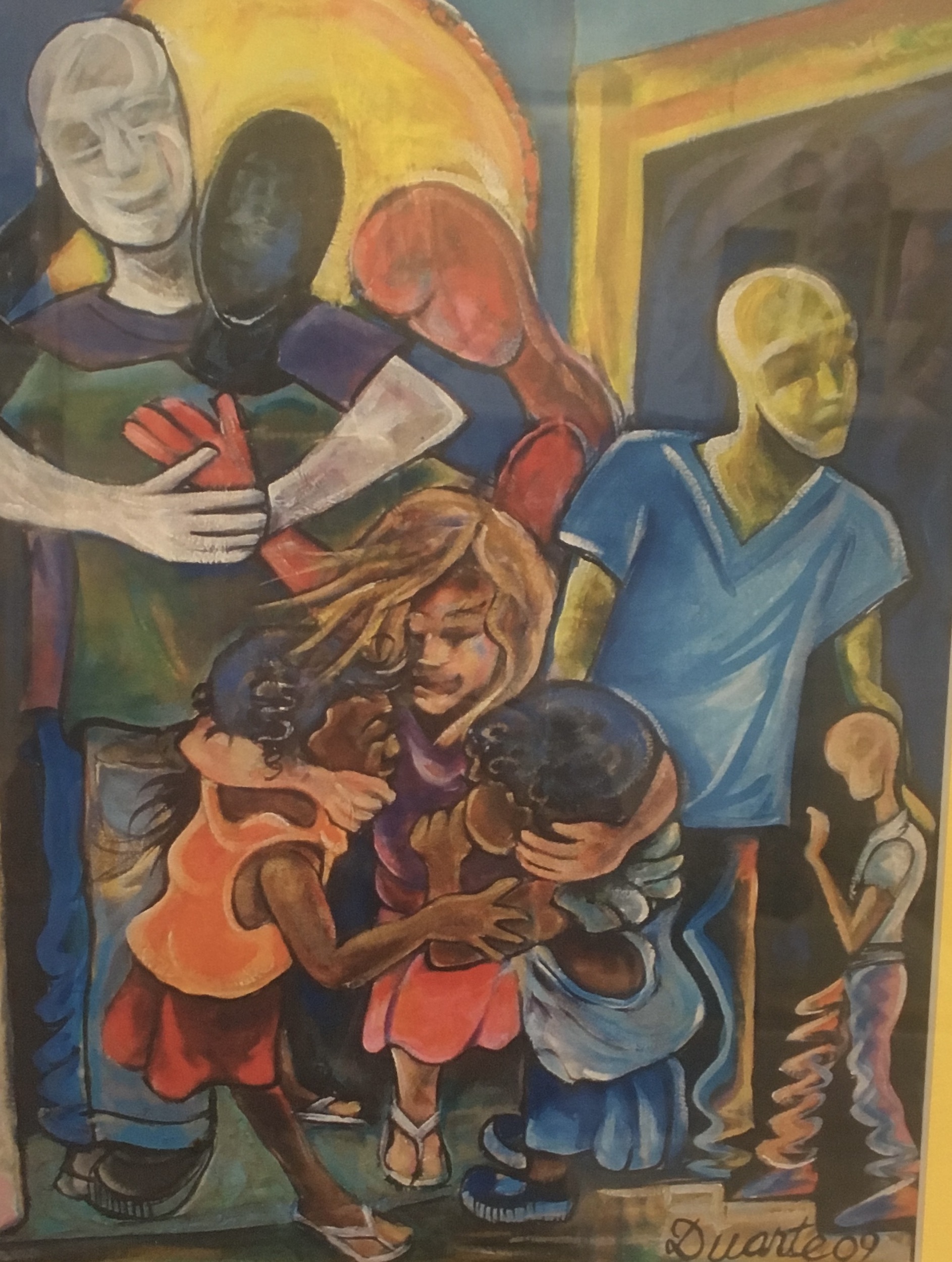
Detail of painting by Richard Durate Brown

It is a servant-king that Jesus modeled. He didn’t sit on a throne or live in opulence or control with commands or hang out with those in power. His motives weren’t self-aggrandizement or accumulation of wealth. He didn’t have a place to rest his head. He led by example. The poor and marginalized where his companions.

Jesus was a man of both action and prayer. He preached, healed, fed, walked, and sat with others. And when he prayed, he didn’t sit in a privileged place but more likely on a rock in the wilderness.

In our time and place in a world ravaged by violence, divisiveness, hatred, and othering. A world in political turmoil, the call is to follow this Servant-King. The power to be wielded is that of Love, prayer, and service. Jesus provides a job description in Matthew’s gospel. When he“ sits on his glorious throne,” the criteria for judgement is love in service. Did you feed the hungry and give drink to the thirsty? Did you clothe the naked and visit the prisoners? What did you do to open yourself to Love and then give it away?

If I were asked to create an image of Christ the King, it would be of a person busy taking care of others. Ordinary attire would replace robes and crowns. The scepter would be gone, and if a hand was free at all, it would hold a shepherd’s staff or maybe food to be given away, a stethoscope, a cooking pot, seeds, a pen, a book, a brush. Whatever one needs to be who they are created to be. To do their work in bringing the kin-dom.

What Prayer Looks Like These Days

What Prayer Looks Like These Days

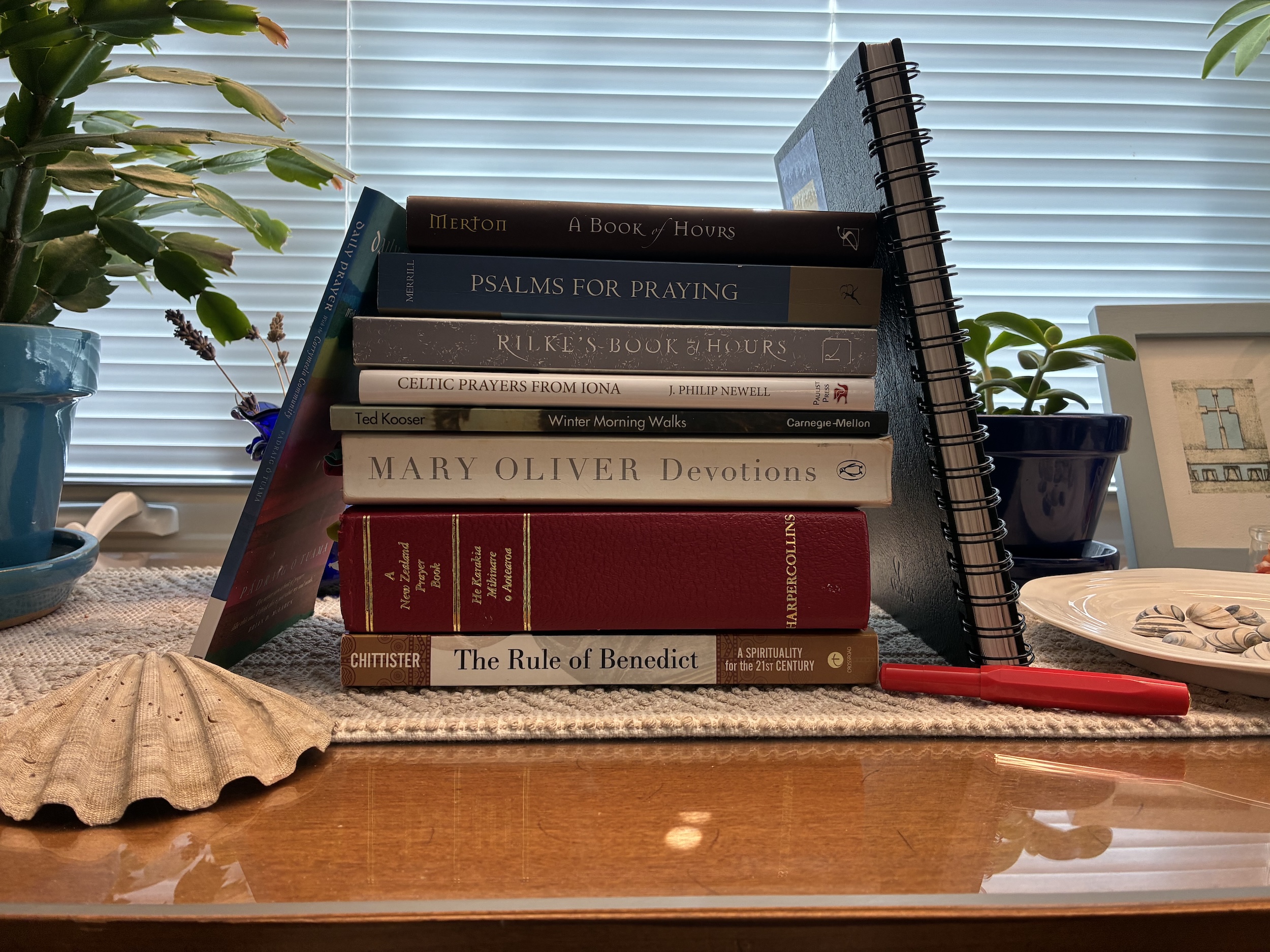
My prayer changes as I do and as life does. There are the tried and true: meditation, quiet prayer, old favorites, books of hours, chants. There are communal gatherings and liturgical celebrations. But sometimes, when the world turns upside down, the “order” that I have established prayer-wise disappears. Despite good intentions, I can’t maintain the routine. I blame myself and forget that the spiritual journey is not a smooth, predictable path. (I will borrow from Richard Rohr’s paradigm: order, disorder, reorder.) During this “disorder,”what once brought a sense of connection with the Holy One no longer does. During spiritual dark nights, when the Holy One seems absent, I’ve been counseled to pray through it, to open my heart even when nothing seems to fill it. And so I have.

I remind myself that some of those “dark nights” took months, once even years, to pass. They required trust in my relationship with the Holy One, which, really, is what prayer is all about. Perhaps that is the root of my difficulty with prayer: floundering trust as chaos envelopes the U.S. The hatred, greed, and disregard for law and Constitution is infuriating. Mass deportations without due process and lack of concern for innocents swept up in the frenzy rend my heart. Scrubbing this country’s past of contributions of those who are not white and straight creates an alternative history and implies that everyone else is inconsequential. Removing the immorality and cruelty that has been part of US history glorifies the powerful while dismissing their victims. Truth is one of the victims.

The pushback against the LGBTQ community, particularly the trans community, continues to grow, fueled by misinformation, ignorance, and fear.

The current budget bill passed by Congress is immoral. Slashing programs that serve the poor, the oppressed, and the marginalized in this country and around the world makes no sense. Tax cuts for the wealthiest 1%? Jesus must be weeping.

In this time, I have difficulty “reordering.” I feel spiritually adrift. After sharing this with my spiritual director, we talked about prayer and different ways to frame it.

Prayer is spreading Love energy, she said. It’s resting in God and following God’s Way as best I can. A Christian, I connect that with the way Jesus lived his life. Others will have different understandings, but Love is the root of them all. Standing up for Love. Bringing Love and compassion into this time and place. Standing up for the marginalized. Anyone can do it.

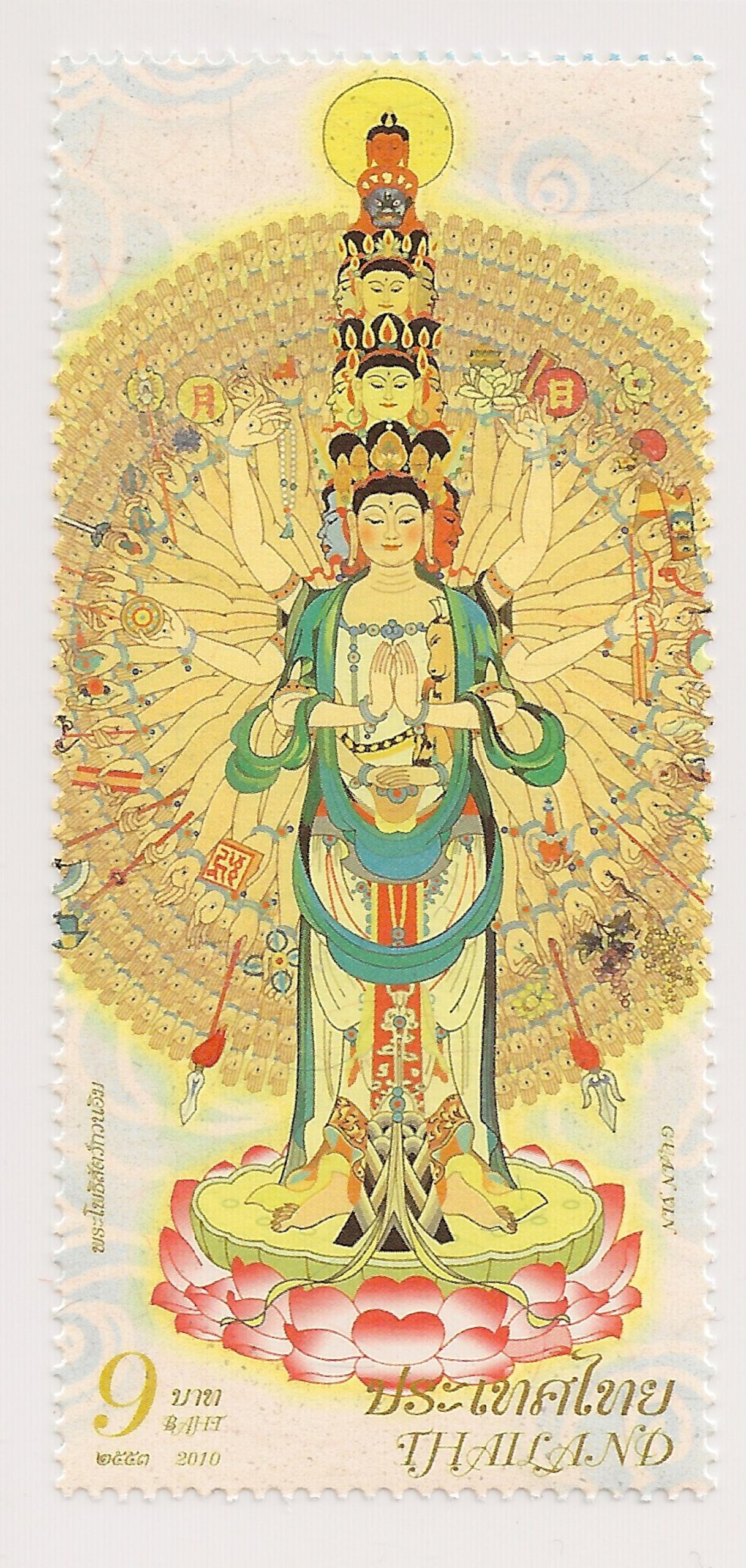
stamp with image of Guan-Yin

Image of Guan Yin, Buddhist bodhisattva whose name means “Observing the sounds of the world.” She has multiple heads to see and hear those suffering and multiple arms to aid them.

Intention is the key to my prayer these days. I pause and remember I am called to be Christ in the world. Is what I do contributing to bringing compassion into the world? Am I compassionate to myself, taking time for self care so I am able to be present for others? Am I a good “ear” for people who need to tell their stories, listening deeply so they know they are heard and held? Are my letters and calls to legislators designed to defend those targeted with executive orders or legislation that threaten their well-being. To expose harm and hold up morality to those in power and to encourage reflection and change? When I write a column, first I pray that what small bit I have been given to share encourages those who are looking for ways to make a difference.

Christ Has No Body

Christ has no body but yours,
No hands, no feet on earth but yours,
Yours are the eyes with which he looks
Compassion on this world,
Yours are the feet with which he walks to do good,
Yours are the hands, with which he blesses all the world.
Yours are the hands, yours are the feet,
Yours are the eyes, you are his body.
Christ has no body now but yours,
No hands, no feet on earth but yours,
Yours are the eyes with which he looks
compassion on this world.
Christ has no body now on earth but yours.

Theresa of Avila 1515-1582, Spanish Mystic and Carmelite reformer along with John of the Cross.

While making an effort to pray with a favorite small book of prayer, Daily Prayer with the Corrymeela Community, by Padraig O Tuama, I am also practicing reframing my understanding of prayer: being intentional about how I live the unfolding day and making sure it is to bring Love and justice into the world. Speaking out as I am able, against the darkness. And trusting in my relationship with the Presence that holds all.

The Civil Rights activists in the 60’s provide inspiration. Their actions were supported by their faith. They weren’t advocating revenge, but respect, equality, and justice. Martin Luther King, Jr.’s “I have a dream speech” speaks to the unending struggle of those on the margins.

“Now is the time to make justice a reality for all of God’s children,” he proclaimed in his soaring oratory. “I have a dream that one day this nation will rise up and live out the true meaning of its creed: ‘We hold these truths to be self-evident: that all men are created equal.’”

Prayer for me these days is all about intention to be present to Love…and to be Love in the present moment. How it looks day to day doesn’t matter.

Grace Finds a Way

Grace Finds a Way

Who knew that a tiny moth larva could turn my house upside down?  Emptying, scrubbing, and bleaching that one, packed closet and reevaluating which items I wanted to keep took all day. Rearranging what remained led me to take a closer look at other closets, cupboards, and storage bins in the basement. More cleaning, trips to donation centers, and filled trash bags.

A couple of days before Advent, my house was still a disaster. I began the morning with quiet time, determined to make mental and physical space for the simple practice. There I was, sitting in my favorite meditation space, unable to stop thinking about what cleaning task to tackle next. Of course, thoughts always bounce around in one’s head during quiet prayer time. The practice is not about keeping all thoughts out but in acknowledging them and letting them go. That morning each thought came with an irresistible hook, and before I knew it, five or ten minutes filled with imagined schedules and jobs had passed.

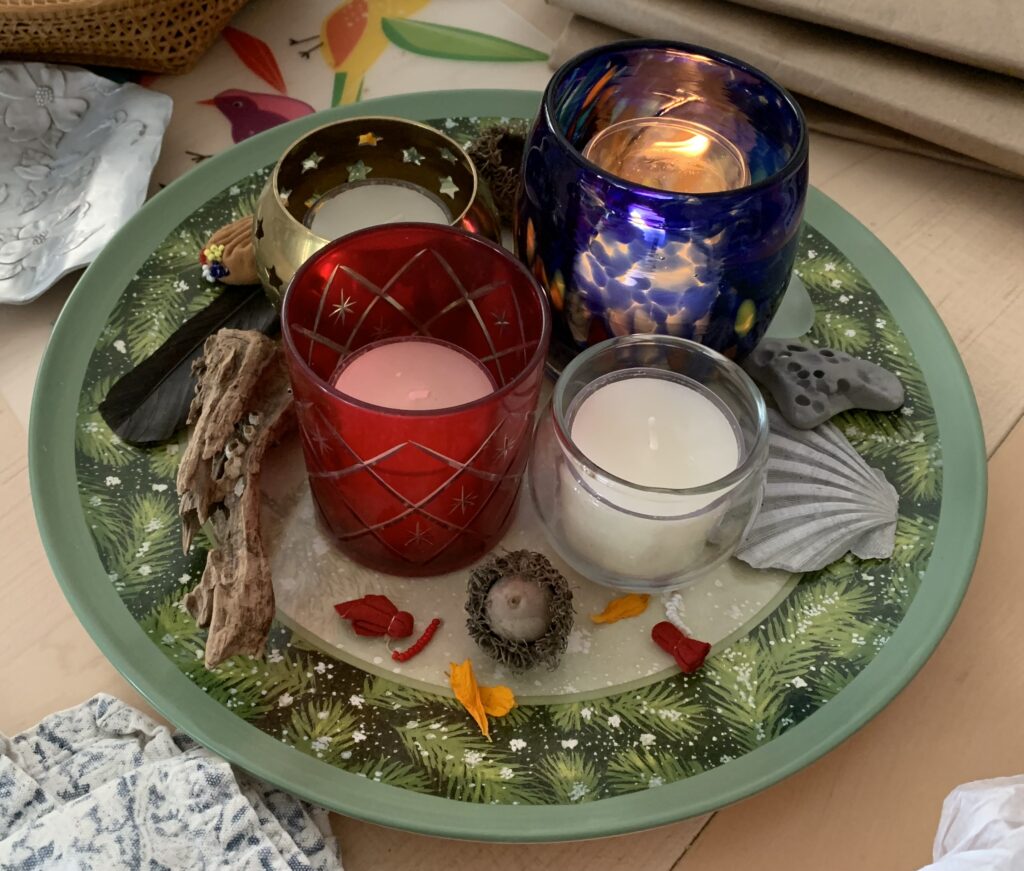
No surprise, then, that Advent arrived with no room on my table for an Advent wreath. “Surely,” I thought, “if I work hard enough, the table will be clean by day’s end.” Not so much. My choice: wait for another day, or two, or three, until the table was straightened up and ready or push enough stuff around to place the wreath in the center.

So, when evening arrived, there it sat, in the middle of the mess

As I watched the first of four candles flickering in the handblown glass, the appropriateness of the setting suddenly became apparent. If Advent is a season of waiting and watching, it is of waiting, watching in the middle of a mess. Isn’t that where I encounter the Holy One anyway. From right where I am?  

I can imagine myself organized. (Well, that is a stretch!) “Doing” the social action stuff that calls out for people to be involved. Writing all the letters. Making all the calls. Someday I’ll be on track, reading the books on my list of important reads. I’ll paint more. Write more. Eat healthier. Never miss a day of exercise. I can imagine… But really? Maybe one at a time. But all at once? Not likely.

If I had to wait until everything was just right, from my house (spiritual and physical) to the world order, I’d never be open to the Sacred. I’d miss out on the transformative encounters that offer themselves every day, every place, every minute. Isn’t that the meaning of the Incarnation? The Holy One meeting us right where we are?

Persistent Love trusts that eventually, there will be moments when I’m particularly receptive to the gift of Divine Self always being given. Even when I’m not aware, Grace seeps through cracks in the shell of busyness, fear, and doubt that often encase my heart. The Holy One finds a way to be with, as promised … always.

Whitewashing History

Whitewashing History

After weeks of writing, reading, research, and procrastination, I have told myself today is the day. The day this column will be finished and published, and I can move on to other projects. Why has this one been so difficult to pull together? I had to work through a lot of emotions: anger, frustration, depression, and perplexity to name the most common. But today I’ve decided to stop reading more articles, stop allowing myself to be mired in feelings that pull me down and knock me out. Instead, I’ll write (which is often how I pray and how I work through difficult times) and tell you what I’m feeling. What I’m thinking. What I hope.

Feelings

I’m anxious about the possibility of state-controlled education that will exacerbate divisiveness, hatred, and “othering” in this country and curtail free speech and democracy.

I am deeply concerned. A citizen and former teacher, I shudder reading about the numerous bills (some already laws) introduced in state legislatures and school boards across the country that restrict or outlaw the discussion of issues of diversity, inclusion, and equality. These include topics of sexuality, gender, and systemic racism. While all such attempts to discriminate against people on the margins are terrible and threaten the well-being of students and teachers and the very survival of democracy in this country, this Black History month I’m particularly mindful of those that impact Black Americans and their place in U.S. history.

I’m overwhelmed by the hypocrisy of legislators, governors, mayors, and school board members scurrying to push through laws and resolutions that ARE the very systemic racism that they deny exists now and in our history.

I’m overwhelmed by the fear that motivates such actions and by the hate, discrimination, arrogance, and self-righteousness that it engenders.

I’m overwhelmed by the willingness of people in power to rewrite history to their own advantage and by the effects their efforts (if successful) will have on upcoming generations and the possibility of peace and reconciliation.

I am troubled. A Christian, I feel that many involved in rewriting our history and perpetuating a climate of racism and fear are doing so in the name of Jesus and under the banner of Christianity.

I feel betrayed that more religious leaders, local and national, are not publicly and strongly speaking out against this appropriation of the faith that is fundamentally about trying to live as Jesus lived. Surely, Jesus weeps. He hung out with the marginalized. He chastised those who put down others. His life is a witness to inclusion, of welcoming all into his family.

I flirt with despair that this nation cannot be healed.

Thoughts

I think re-writing history to favor those is power is something authoritarian governments and dictatorships do. Denying that racism is embedded in U.S. history and laws is one way to do this. Another is to threaten teachers who discuss such topics and present truth, uncomfortable as it might be, to their students. It is whitewashing this country’s past.

The term “whitewashing” at one time primarily meant using whitewash to cover a surface. Since the late 1990s in the U.S., it’s also been used in the entertainment field to refer to the use of white actors to portray people of color or to replace people of color with white characters. In 2019, Merriam Webster added this definition of “whitewashing” to its list of meanings: to portray (the past) in a way that increases the prominence, relevance, or impact of white people and minimizes or misrepresents that of nonwhite people. The Cambridge Dictionary defines it as: an attempt to stop people finding out the true facts about a situation.

It takes courage to acknowledge the past, own it, and move forward together to heal the wounds caused by immoral actions, policies, and institutions. Efforts to deny the uglier parts of this country’s past treatment of Black Americans —slavery and systemic racism embedded in laws and institutions for example— make healing the racial divide impossible. Like a bodily wound that festers and becomes infected, the wounds of the past must be exposed, cleaned, and tended to heal. Otherwise, the infection grows and poisons the whole body.

“Hope is being able to see that there is light despite all of the darkness.”

– Desmond Tutu

Nelson Mandela and Rev. Desmond Tutu knew this. Mandela created the Truth and Reconciliation Commission and appointed Tutu as its chairman. It gave voice to the victims of apartheid and allowed perpetrators of violence to admit their guilt, seek forgiveness, and receive amnesty. It was about healing not vengeance and helped South Africa move to a democracy. It wasn’t perfect. Nothing is. But it showed the world a way to respond when past crimes are poisoning the present.

The way forward isn’t denial. It is encounter. With the past. With the present. With those wronged and those who perpetrated the wrongs.  There is no other way to wholeness.

Jesus knew that.

His life is a witness to honestly facing the hypocrisy of institutions (including religious ones). He didn’t shy away from reminding the Jews of their history—including worship of idols, the murder of prophets for speaking the truth—because facing the past might make them feel uncomfortable or guilty. He didn’t hesitate to call out merchants who were making the temple a “den of thieves.” He named the Pharisees “whitened sepulchers”—pretty to look at but filled with corruption. Jesus didn’t mince words to spare feelings.

His life showed that only in facing personal and institutional sin and history could people and intuitions be healed, made whole, and become a blessing to the world and help build God’s kingdom. His teaching, his life came down to one thing: Love. Love of God and and neighbor, who is everyone. God’s kingdom is a “kindom.” It is filled with people of all ethnicities, skin colors, genders, and sexualities.

Jesus called us to love one another. I admit, I’m not great at that. I struggle to love those I perceive as perpetuating racism, sexism, transphobia, homophobia, and other “isms” that divide the world into “them – bad” and “us – good.” Deep listening is as difficult as taking action when I’m not sure what I can do to make a difference. Praying is hard when my mind is filled with upsetting news articles about one more shooting of an unarmed Black man or one more legislator jumping on the politically expedient bandwagon of whitewashing agendas.

It’s difficult to “see the log in my own eye” when I’m focused on removing the splinter from someone else’s. It’s easier to see the racism and fear of the “other” embedded in laws and institutions than to recognize it in my own heart.

I think courageous Love is the only way.

But I know, somehow, that only when it is dark enough can you see the stars. 

– Martin Luther King, Jr.

Hope

I struggle with hope because I struggle with trust, not only in human beings but in God-with-us. How can I trust in Divine Presence drawing all things into union with itself when the world is in such a mess? When so many in positions of leadership are motivated by greed and the desire to hold on to power rather than to serve the greater good, where is hope?

Yet God calls us to hope. To find light in darkness. To BE light in darkness. To be healers.

To be part of that, I realize the importance of encountering God within me and growing to trust that God resides and moves in all creation, however hidden or unrecognized. I can look for light rather than being overwhelmed by darkness. I can grow in experiencing that all things are connected and that humble as well as spectacular acts of love and healing work together to move humanity toward wholeness.

Will it get there? I don’t know. But I don’t need to know before I open up to receive and to share Love in the places where I am. I don’t need to know, but to trust.

The new dawn blooms as we free it. / For there is always light, / if only we’re brave enough to see it, / if only we’re brave enough to be it.  

– Amanda Gorman from her poem “The Hill We Climb”

Read: Langston Hughes’s poem:

“Let American Be America Again”

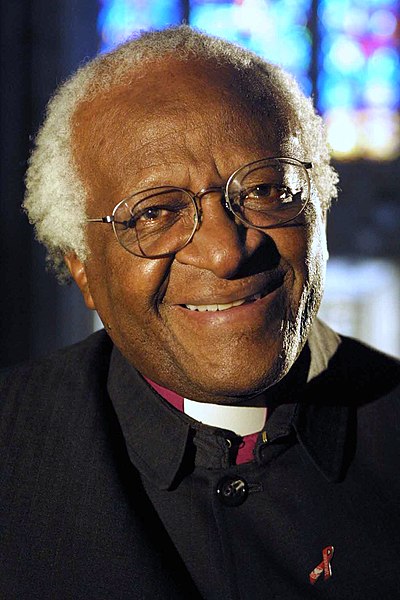
photo Archbishop Desmond Tutu
Archbishop Desmond Tutu
Photo: Benny Good Public Domain
via Wikimedia Commons
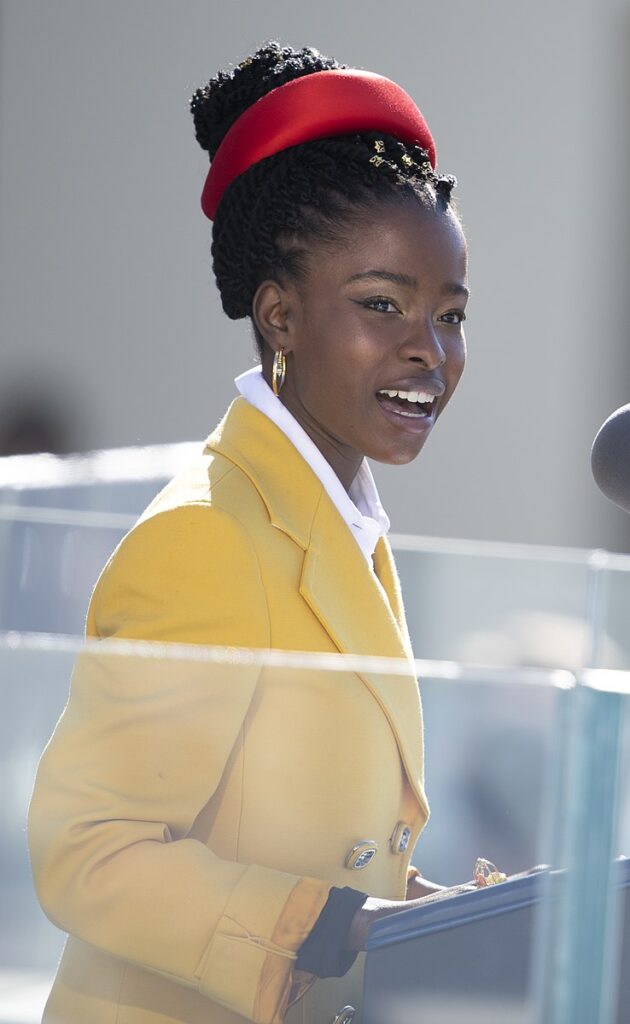
Amanda Gorman
Photo: Chairman of the Joint Chiefs of Staff from Washington D.C., United States,
via Wikimedia Commons

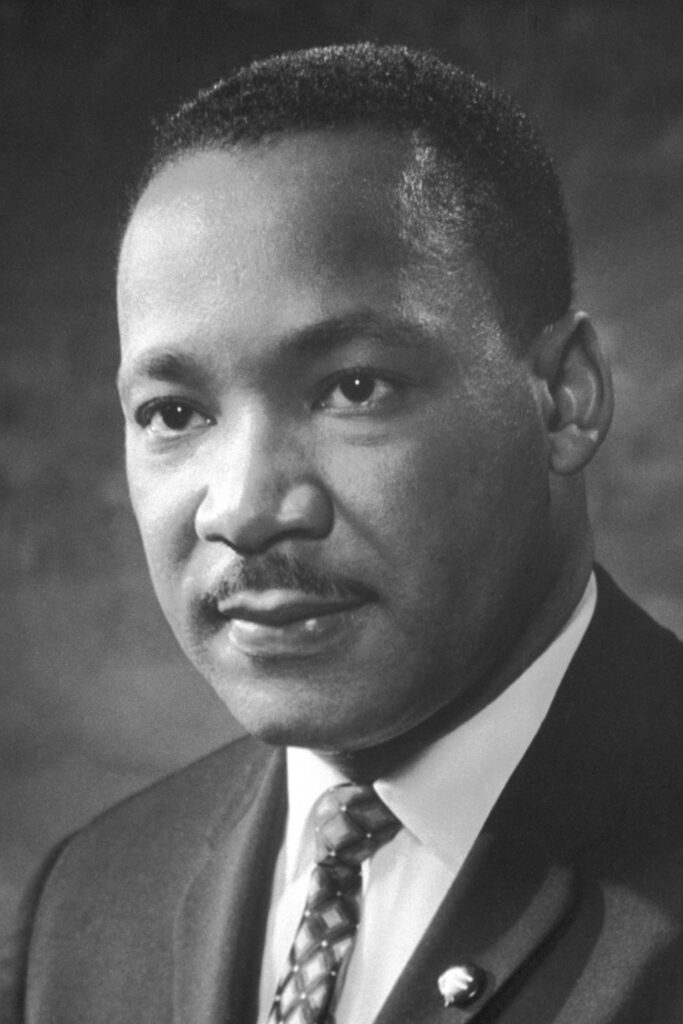
Photo Rev. Martin Luther King, Jr.
Rev. Martin Luther King, Jr.
Photo: Nobel Foundation, Public domain,
via Wikimedia Commons
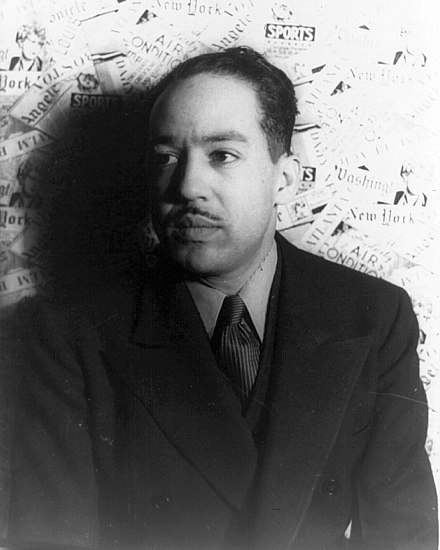
Langston Hughes
Photo: Carl Van Vechten; cropped by Beyond My Ken (talk) 07:07, 5 August 2010
Public Domain,
via Wikimedia Commons

What the Trees Had to Say on Thanksgiving

What the Trees Had to Say on Thanksgiving

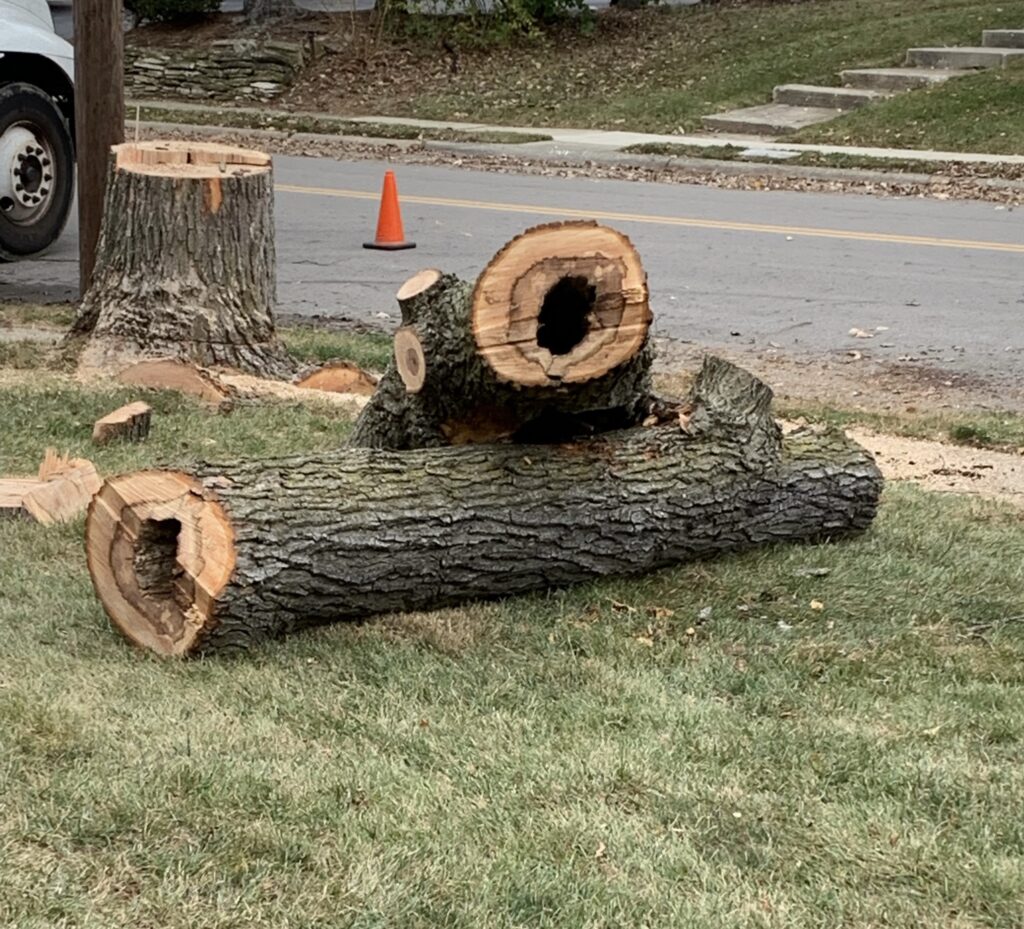
Recently I stood witness as the old maple tree in my front yard was taken down. Losing a tree is always sad, but, in a neighborhood – not a forest – it is sometimes necessary. Rot had set in, sending the largest branch crashing to the ground barely missing a neighbor’s truck and sprawling across the lawn to the building next door. With winter snow, ice, and wind ahead, the tree was too dangerous to leave standing.

Still, knowing that didn’t make the event easier to watch.

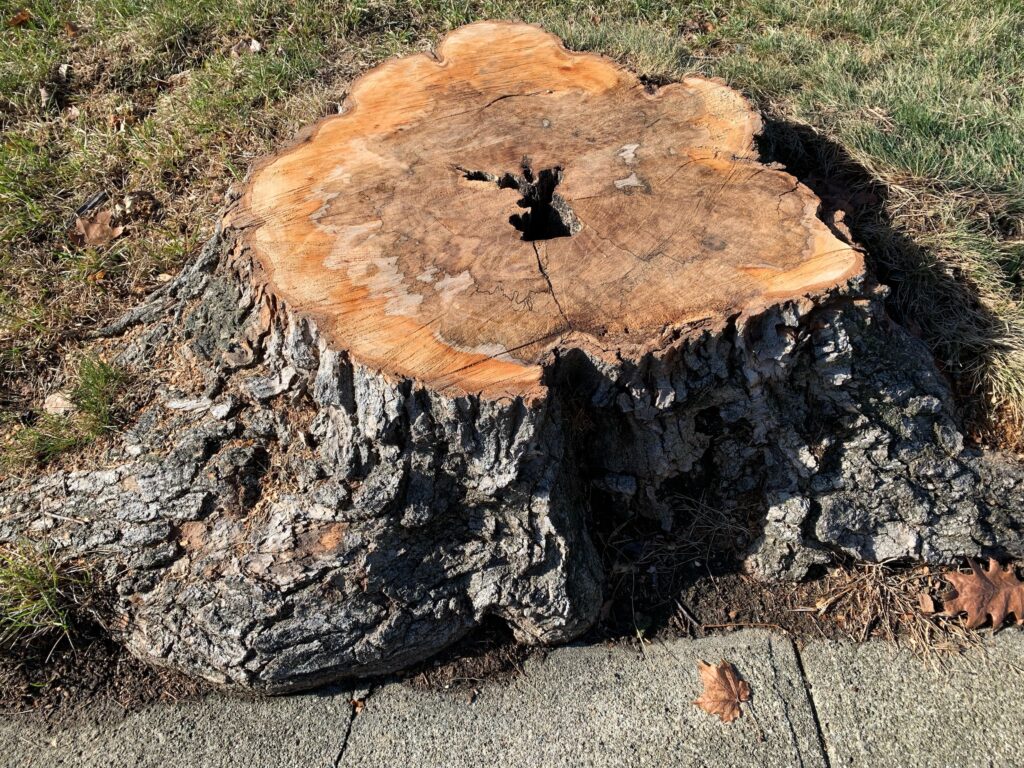
A team of five men arrived early in the morning. What took decades to grow took only an hour to reduce to a stump. I thought it should have taken longer – out of respect. Some ritual. Some acknowledgement of the gift it has been. It’s not our way.

The men were efficient. One wielding a chainsaw from his perch in the cherry-picker’s bucket, cut away small branches and larger limbs, deftly guiding them to avoid cables and wires as they fell to the ground. Once one hit the yard, another man picked it up and fed it to the shredder parked along the curb. Woodchips and dust blew in the air like snow.

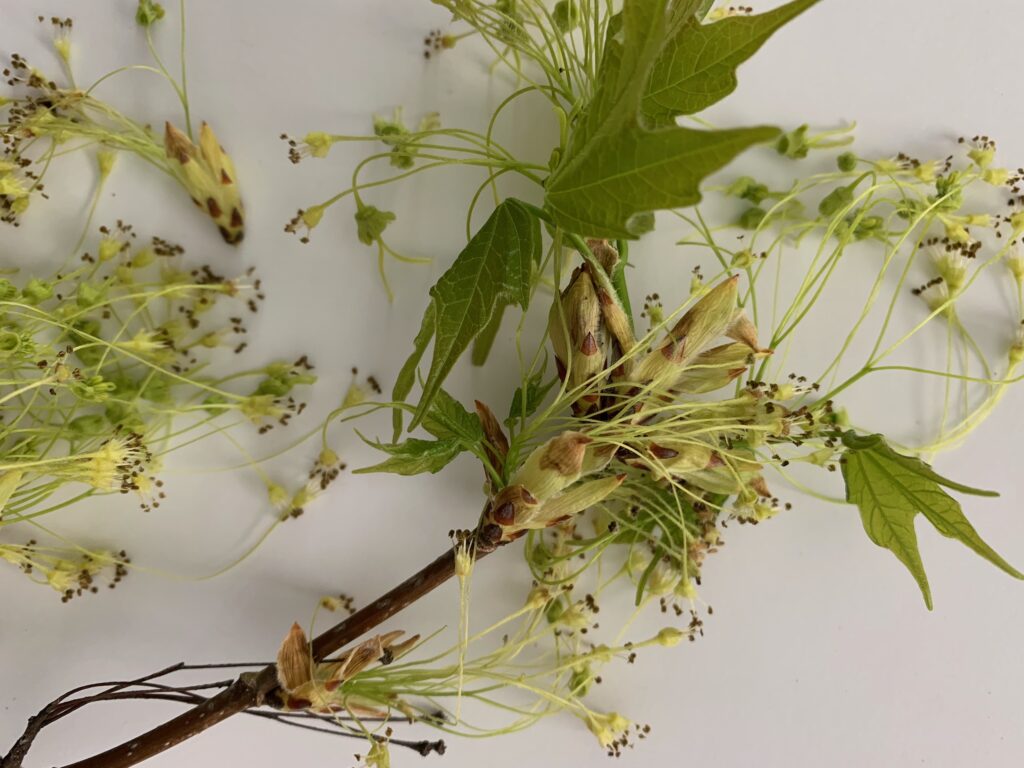
Standing in my neighbor’s driveway, I felt the ground shudder when larger limbs fell, and sadness welled in my heart for an old friend’s demise. Observing it over the years, I learned much. Did you know that some tree buds contain leaves, some flowers, and some protect both through winters until spring warmth coaxes them open? The tree led me to books and the internet where I learned that in winter, maples store sap in their branches, not roots as I had thought.  (Read my column, Greening Nature and Spirits.)

Close up of maple tree buds opening with emergent leaves and flowers.

Its branches provided shelter for birds and squirrels. Once I spied a tiny hummingbird nest. In every season the maple provided interesting lines and colors outside the living room window. In summer the leaves bestowed welcome shade.

Suzanne Simard, Professor of Forest Ecology at the University of British Columbia, has proven that trees communicate with each other, linked in part by tiny fungal mycelium. They “talk” and cooperate. Forests, her studies reveal, are wired for wisdom and care. (See Finding the Mother Tree: Discovering the Wisdom of the Forest. You can listen to her interview with Krista Tippett, Forests Are Wired for Wisdom on an OnBeing podcast.)

I looked at the tree, now mostly trunk, and saw it isolated, not in a forest community that shares nutrients, nurture, and protection, but on my suburban street. Trees stand in most of the yards, but they are carefully spaced and part of landscaped patches of grass and sometimes gardens. Most of the lawns are doused with chemicals to keep “pests” and unwanted vegetation under control – all of which, if allowed to live and grow, would create a more healthful environment.

I wondered if the tree might have been stronger if its roots had been part of a rich, woodland network and felt embarrassed that for years I took it for granted, unaware of the challenges solitary trees encounter when planted by well-meaning humans whose preferences for carpet-like lawns and manicured yards do great harm to the life that exits under our feet, out of sight.

This image has an empty alt attribute; its file name is trunk-sections-showing-rot-1024x929.jpg

The chainsaw growled, and with every falling branch and every cut into the trunk, I wondered if the maple next door, clearly near the same age as the one being taken down, was aware of what was happening to its neighbor. Had it been sharing carbon and nutrients with it over the years? What of the other trees growing along the street. What were they “hearing”? Were they grieving? Had they known this old maple was diseased?

Now, when I see the short stump left in the yard, I think, “people and trees have a lot in common.” Not just the chemicals used to communicate, one through an underground network of roots and living organisms, the other through the brain’s neural network. Not just some bits of DNA that we share. But our shared need for others. Trees and people do better in community. We seek it out. Sometimes it’s found in families. Or groups of friends. Or in churches or other organizations.

Mother trees described in Simard’s book gather energy with their huge crown of leaves and send it through their roots into the network where it’s shared with seedlings struggling to grow beneath the canopy’s shade until they, too have energy to contribute to the network. Young human beings need the care and nurture of their elders. Wrapped in an environment of love and acceptance where they can grow and thrive, the young mature, and eventually contribute to the larger community themselves.

Life doesn’t always work out that way. Like solitary trees, some people feel very much alone. Human environments can be harmful, even toxic. Unlike trees that function as they are made to do, human beings, for all kinds of reasons, can be decidedly dysfunctional. Still, we are made for love and belonging, and we flourish when immersed in it. Pandemic isolation made that painfully clear.

On this past Thanksgiving day, my daughters, partners, and I were able to be together, a rare gift. I thought of mom and dad, their love, and the family they created. My daughters and I have grown in the grace of that love and have added our own to it, expanding its reach further, to others in our lives and into the world.

As we gathered around the table, I sat for a minute in silence, reaching into my heart for a before-meal blessing. The familiar words, “Bless us, O Lord, and these thy gifts,” wouldn’t do. I was mindful of the sacrifice of plants and animals and well as the work of human hands that put food on our shared table. The loss of the tree heightened my appreciation for all creation, for the mystery and intelligence of life that we humans do not recognize. Most of all, it deepened my awareness of the interconnectedness of all things and our need for one another. I felt gratitude for the precious community of my family.

Concern stirred for our human companions, many suffering from violence and poverty, traveling on this planet that teems with life of every sort and groans under the weight of abuse and short-sighted policies. All life deserves reverence and love. Glimpses of the universe, time, and space we see through the James Webb Space Telescope images reveal how little we know, how much is mystery.

NASA Webb image Stephan's Quintet shows an Interacting Galaxy Group
Stephan’s Quintet Image Credit: NASA, ESA, CSA, STScI

I don’t remember what words I spoke before we started passing food around. Something about gratitude and longing for nourishing community for all. They were few and simple, not important themselves. It’s love, moving from the heart to the world, that counts.

May we embrace Creation as a whole, / and become attuned to all the world; / May we be blessing to the universe, and / see divinity in the within and / the without of all things.

from Psalm106 in Psalms for Praying: An Invitation to Wholeness by Nan C. Merrill
A Friend’s Gift

A Friend’s Gift

Deep friendships add light to one’s soul even in difficult and dark times. Those special people with whom we share our journey offer a safe place to rest, finding a space in their hearts for our struggles and sorrow as well as our dreams and joy. They celebrate with us. (Something I suggest we do as often as possible and for every little thing.) They accompany us as we grieve. As we process what life is handing us. Or ponder big questions along with the mundane: weather, books read, or what to cook for dinner. They share hard-won wisdom. No topic is taboo. These friends may cry with us or tap laughter hiding beneath our tears. They may simply “be with” us when there are no words to say or when neither of us can see a path opening ahead.

Such companions have blessed me. I hope the same for you. The pandemic may have complicated personal connections, but bonds with deep friends are resilient and remain. 

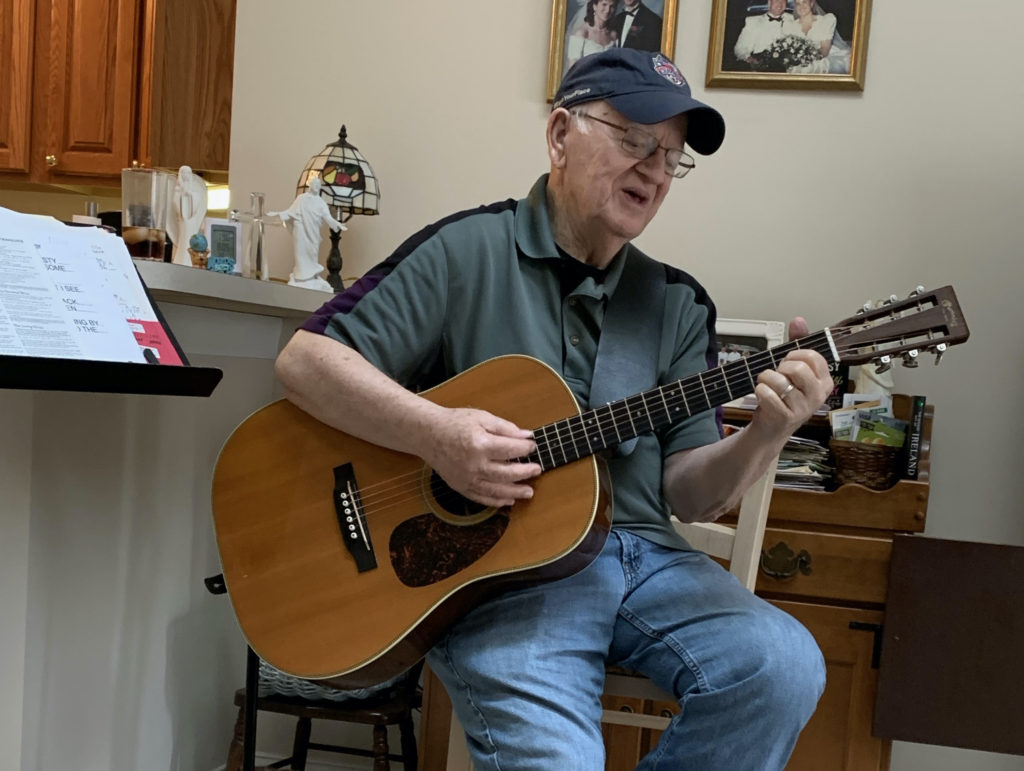
Mike was such a friend. He passed away in February of this year. Our final in-person visit was last year in late June. We shared lunch, and appropriately, guitar playing and song.

Mike Wood playing guitar and singing
Mike

Music and desire for community brought us together when I was around 17. A small group of people, most in their late 20s and early 30s, were gathering to explore their faith and how to live it out during the years that saw the Vietnam war, the growing civil rights movement, and social upheaval. The friends came together to support one another and celebrate life with singalongs, potlucks, and conversations that lasted late into the night. Invited by a mutual friend, I brought my guitar and joined Mike and others providing music.

We gathered in homes and in a member’s shoe store – after hours. Eventually the folks pooled money and purchased a small property nestled along the fringes of the Hocking Hills. It was named Koinia and became their gathering place and a refuge for those of us seeking solitude and nature’s balm.

My life and Mike’s intertwined beyond the small group. We sang in coffee houses, at weddings, and liturgical celebrations. We saw one another at holiday parties and birthday bashes for mutual friends. Years flipped by like pages of a riveting novel.

Life took us in different directions, and opportunities to connect became fewer though we offered support as we could, especially during difficult times. Hearing Mike’s voice and music and meeting his compassionate gaze was a great comfort when he sang at the funerals of both of my parents. No matter how much time passed between our visits, when we did reconnect, conversation flowed as easily as ever.

Four years ago, Mike inspired me with a story of struggle and forgiveness. I had been working alone in a small cabin near Mike and Patty’s home. Preparing to co-direct a retreat, I needed the quiet, away-from-everything space. A few days before, a longtime mutual friend, Mario, had died. On the funeral day, I drove into town, picked up Mike and his wife, Patty, and took them with me to the funeral. People gathered afterwards to share memories and food. When things quieted down, I returned Mike and Patty back to their home then stopped at a nearby convenience store to buy drinking water for the cabin.

Mario and Mike

On my way out of town, grief settled in as profound loneliness, and I wasn’t ready to return to the empty cabin. I sat in my car on the edge of a park. And sat. Finally, I called Mike and invited myself to dinner. He and Patty warmly welcomed me and shared more food, laughter, and stories. Their company bolstered my spirits, and as night approached, I headed back to the cabin. Providence had other ideas. A fallen tree blocked the final stretch of road, and unfamiliar with an alternative route through the hills to the cabin, I called Mike again.

Patty had the guest room ready when I arrived, complete with an extra nightgown laying on the bed. We visited until 11 when she said goodnight. Mike and I stayed up for a couple more hours and sang a song or two. Then just talked. As conversations go, ours meandered from Mario to grief at his passing to times at Koinia. Perhaps led by our sorrow, we eventually talked of struggles with past hurtful experiences. Mike shared a particularly difficult episode. Then matter-of-factly said, “I forgave them.”

After a quiet pause he continued. “I had to let it go. If I hadn’t, I wouldn’t be the person I am today.” I watched him. One of the kindest, gentlest, loving souls I have ever known. “I had to move on. And you know, it hasn’t been a once-and-done thing. As time went by, memories came back. Occasionally still do. I felt hurt and betrayed all over again. And angry. Each time, I forgave. It got easier.”

We sat in silence for a while. I watched him and tried to imagine him different. Bitter. Cold. Nursing a wound that wouldn’t heal. I was grateful Mike had chosen forgiveness all these years. That his life, like his songs, was full of kindness and hope.

I shared something with Mike that night. Something I hadn’t forgiven. Not completely. Not every time it resurfaced. Not easily.

What is it about old wounds that make hanging on to them feel deceptively comforting? Is it that dwelling on someone else’s shortcomings shields one from their own? Is it self-doubt? Does pulling someone else down make one feel better about themself? Oddly attractive, hanging on to hurts gives power to those who hurt us. Power that can affect one’s life long after the event. Lack of forgiveness can poison a personality. Mike knew that and refused to let it happen.

I took a deep breath. I forgave. I knew I’d have to make that choice again and again. But I could. I would. Remembering Mike will help.

Dreams, Hope, and “Making Do”

Dreams, Hope, and “Making Do”

During February, Black History month, I read work by Black authors, poets, and theologians. As the month ends and world events take an even darker turn with Putin’s invasion of Ukraine, a section of book Love Is the Way: Holding on to Hope in Troubling Times keeps surfacing in my thoughts. According to its author, Bishop Michael Curry, his grandmother and aunts knew how to hold on to hope despite “… the titanic power of death, hatred, violence, bigotry, injustice, cruelty, and indifference.” They sank their roots into ancestral wisdom accumulated through centuries of unspeakable horrors. They not only survived, he would say, but they thrived. They found joy.

My heart thirsts for such wisdom. For hope when the world seems to be falling apart. It’s not only the latest flagrant violation of human rights and international law instigated by Russia’s strongman president that anguishes my heart, though that’s top of mind now. It’s also the lack of collective will to deal with climate change. It’s the eagerness of many lawmakers in this country to legislate ignorance of its history and obfuscation of the truth because the dark chapters cause discomfort (as they should). Requiring teachers to wear microphones to monitor what they teach has been proposed in Florida’s state legislature. Remember “Big Brother” anyone? Republican legislators speaking at White nationalist gatherings. Attacks on transgender youth and their parents. Evil seems to be winning.

So, what did Curry’s grandma know that might help me hold on to hope? She knew how to “make do.” In the kitchen, that meant taking cheap cuts of meat and vegetable scraps, whatever they could afford, and turning them into delicious feasts of soul food for family and friends. “Making do” extended beyond the kitchen.

It meant taking the reality of the present, imagining possibilities, and making something new. Curry cites St. Paul, “Do not be overcome with evil, but overcome evil with good.” That’s “making do.” It sounds pie-in-the-sky. Naïve. Impossible. But the way of love is the only way to combat hate.

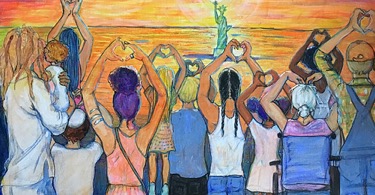
Painting by Gaye Reissland of diverse group of people with hands held high forming a heart shape with their fingers while approaching the Statue of Liberty.
Gaye Reissland acrylic on canvas 26″ x 12″ Painted for the Columbus Crossing Borders Project

Curry highlights three ingredients of “making do.”

Ancestral Wisdom

The first is a deep dive into one’s tradition that’s more than rituals or surface observances. Delve into the wisdom of your ancestors and find the truths that enabled them to contend with the evils and challenges they encountered. He writes from the perspective of a Black man in America, looking to those who faced slavery, violence, and oppression yet still had hope for the future.

Besides finding inspiration from his stories, this call to draw from ancestral wisdom pulled me to stories of my Dutch relatives who participated in resistance movements during World War II. Of my father and so many of his generation who joined the battle against Hitler and Nazism. Of my grandmother, Becky, who made soup with a beet tossed to my mother by a vegetable vendor during the depression. Becky welcomed into her home a young woman who needed refuge from an unhealthy family situation. She lived with my grandmother and mom until she married.

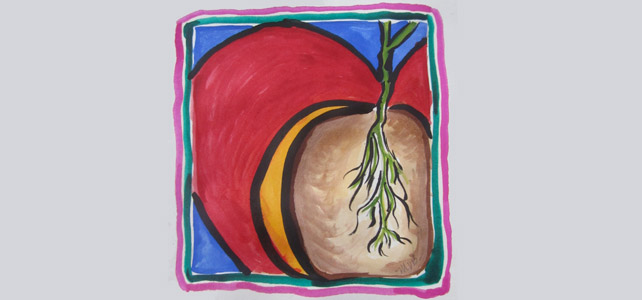
Painting of heart with a green plant sinking its roots into the center
Watercolor: Mary van Balen

I find wisdom and support in the faith tradition of my roots: incarnational theology, social justice teachings, spiritual mentors like saints Benedict and Francis, like Dorothy Day and Thomas Merton.

Heroes like John Lewis, who never lost hope, left us his hard-won wisdom and a call to embrace the path of non-violence and love in the face of evil. It’s a long road requiring deep faith and immense courage, but it’s the only way that eventually brings true reconciliation and peace.

Imagination

Imagination is the second ingredient of “making do.”  While faced with grim realities, some people imagine possibilities. They hang on to dreams of what the world could be; dreams that often are considered unrealistic. But think of movements and people who have changed the world. They all imagined something better, held on to their dreams, and worked courageously to make them happen. As Curry pointed out in his book, after his “bush-side” chat with God, Moses dreamed of a world without slavery.

Civil Rights leaders from Gandhi to Mandela to Martin Luther King Jr. all had dreams that ordinary people standing up to corruption and evil could change the world. The dream of Paul Farmer, the doctor, humanitarian, and medical anthropologist who died unexpectedly on February 21, was to bring state-of-the-art healthcare to the world’s poor. To most in that field, his vision seemed impossible. But along with a few friends and colleagues, he co-founded Partners in Health and changed the trajectory of global health efforts. Movements like “Black Lives Matter” and “MeToo” were begun by people who imagined a world without systemic racism or socially accepted abuse of women.

Today, Ukraine’s president Zelensky and the Ukrainian people clutch the dream that they can stand together, overcome ruthless Russian aggression, and remain a democracy. With support from the rest of the world, I pray they do.

It’s not foolish to hold on to a dream of a better world. It’s essential. Harlem Renaissance writer and poet Langston Hughes expressed their importance in his poem, “Dreams.” He called his readers to “Hold fast to dreams,” and wrote that when dreams die, “Life is a broken-winged bird/That cannot fly.”

God

The third ingredient Curry lists is God. Just as altering or adding a variable in an equation changes the outcome, Curry says, “When God—that loving benevolence behind creation, whose judgement supersedes all else—is factored into the reality of life and living, something changes for the good…Another possibility emerges.”

I don’t pretend to know how that works, how prayer makes a difference, but I believe it does. Perhaps when one is open to sacred Presence of Love and Goodness, that transforming Love flows through them freely into the world. Even a little bit. I believe Love let loose in the universe changes things for the better.

I also know that when facing fear and difficulties in my life, experiencing that Presence within provided the courage I needed to move forward. Courage to make decisions that brought love into the small part of the world I inhabit. I am not alone in the mess of life. No one is. The Holy One is within and is shared through those around us and through creation.

If evil and hate, spewed into life by a few or many, changes reality (the situation in Ukraine, for example), then infusion of goodness and love must also make a difference.

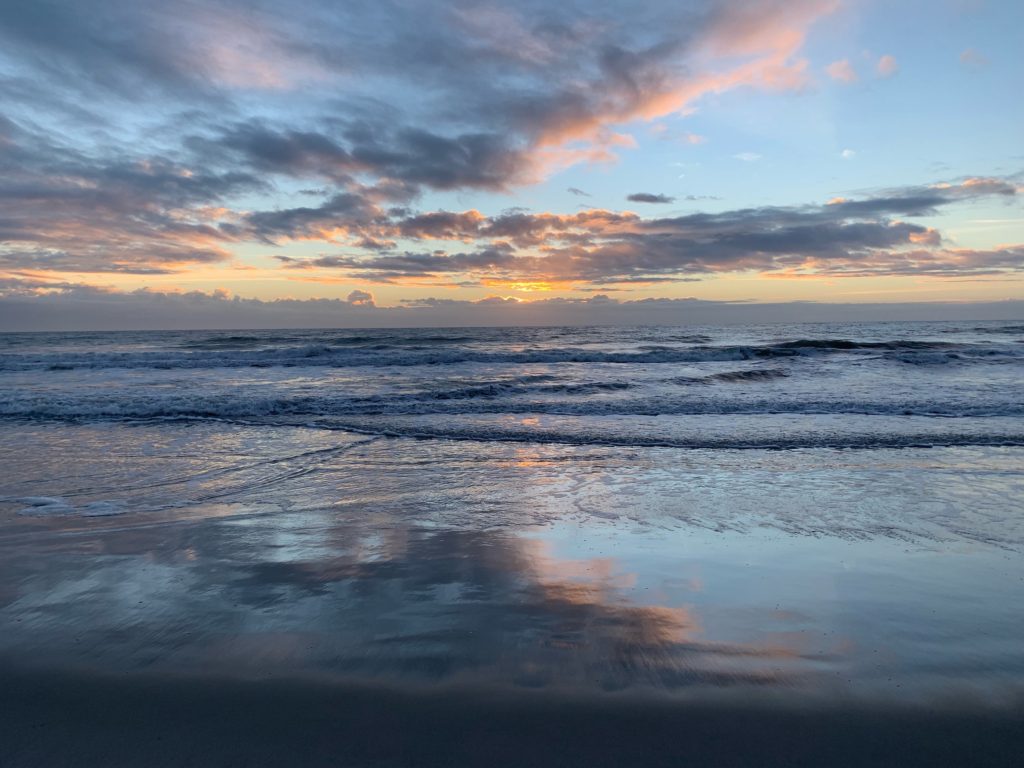
Photo of beach at dawn
Dawn at the beach PHOTO: Kathryn Holt

Finding hope

I’m still not awash in hope but I have dipped the fingers of my soul in it. I feel it in the courage and resolve of those around the world holding on to dreams in these days of crisis and anguish. I see evidence of it in lives of those who endured such times and worse in days gone by. People who have persevered in hope and who have made a difference. And I have experienced the Holy One within and seen that Love in others.

Hope, like prayer, is a communal thing. When I have none, I can draw on the hope of others. And when others find their hope buried beneath the days’ anguish and somehow, that day, if hope lives in my soul, they can draw on mine. It is through each of us that God is present. Individual acts of love seem small and ineffective in the face of overwhelming evil, but, in the end, they can and will, transform the world into what it was created to be: a place of life and light for all, for the Beloved Community.

The new dawn balloons as we free it. / For there is always light, / if only we’re brave enough to see it, /if only we’re brave enough to be it.

Amanda Gorman : “The Hill We Climb”

© 2022 Mary van Balen

Seeing with Eyes of the Heart

Seeing with Eyes of the Heart

Sometimes life delivers a reminder of the Glory it holds, like this week while I meandered through a small park running along the west bank of the Scioto River. The park was empty except for a few walkers and two knots of birders gazing up into the trees. They carried a variety of cameras and binoculars, some with lenses long and heavy enough to require extra support. It was migration season. Non-resident birds and ducks were traveling through. I’m a casual bird watcher with a life-list begun decades ago where, if I remember, I check off a bird when I see it for the first time. My list is a record of what I’ve been graced to see, not a guide for what I have left to find.

“Hi. What are you looking at?” I asked good-naturedly, observing six feet of social distance.

“Nothing!” an irritated woman spat out. “Nothing! There is nothing to see here.”

I looked around at the surroundings, brimming with spring flowers and trees in various stages of leafing out. The river reflected the sun, and an occasional heron sailed by the white clouds.

“Really? Nothing? My sister and her husband saw a black -billed and a yellow-billed cuckoo here yesterday,” I said, trying to sound like I knew a little about the hobby. I was thinking “you just never know what will show up,” and thought I delivered the comment in a hopeful kind of way.

“Yesterday. Figures. The thing is, they were here yesterday. I wasn’t!”

No, she wasn’t. The problem, as I saw it, was that likely she wasn’t present in the morning’s moment either. Not really. Her experience was constricted by an agenda, and the park wasn’t delivering. I continued my walk, and despite the disgruntled woman’s claim that there was nothing worth seeing, I found plenty. Actually, her outburst, uncharacteristic of birders in general, heightened my openness to the surroundings.

First to catch my eye were dandelions, some sunny yellow and others holding delicate silver globes of parachuted seeds, waiting for a breeze to send them flying. They mingled with fuzzy, thick- stemmed plants sending up shoots topped with a clenched cluster of buds. I leaned in for a closer look. The spotted early earth-hugging leaves gave it way: waterleaf.

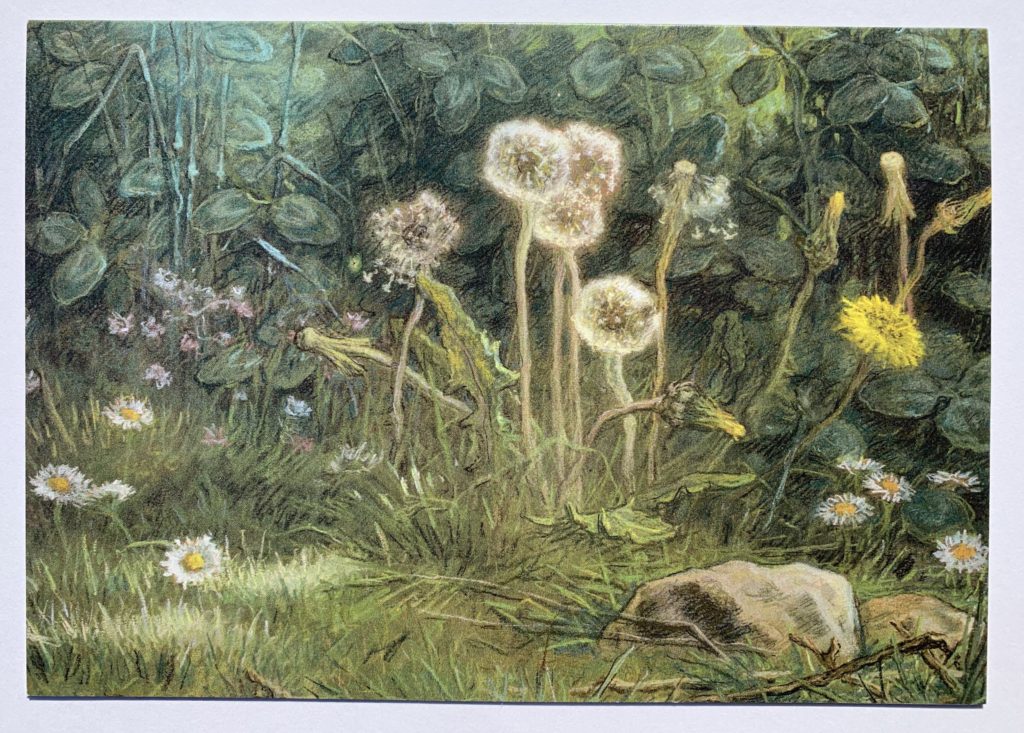
The scene reminded me of a pastel drawing at the Museum of Fine Arts in Boston: “Dandelions,” by Jean-François Millet. His detailed drawings highlighted the flowers’ beauty and caught my attention immediately upon my entering the exhibit. “A kindred spirit,” I’d thought. I’m not an accomplished artist, but when I draw, I work small and focus on common treasures.

"Dandelions" a pastel on tan wove paper byJean-François Millet, French artist. Drawing of dandelions, yellow as well as gone to seed,
Dandelions, 1867-68
Pastel on tan wove paper
Jean-François Millet
Museum of Fine Arts, Boston

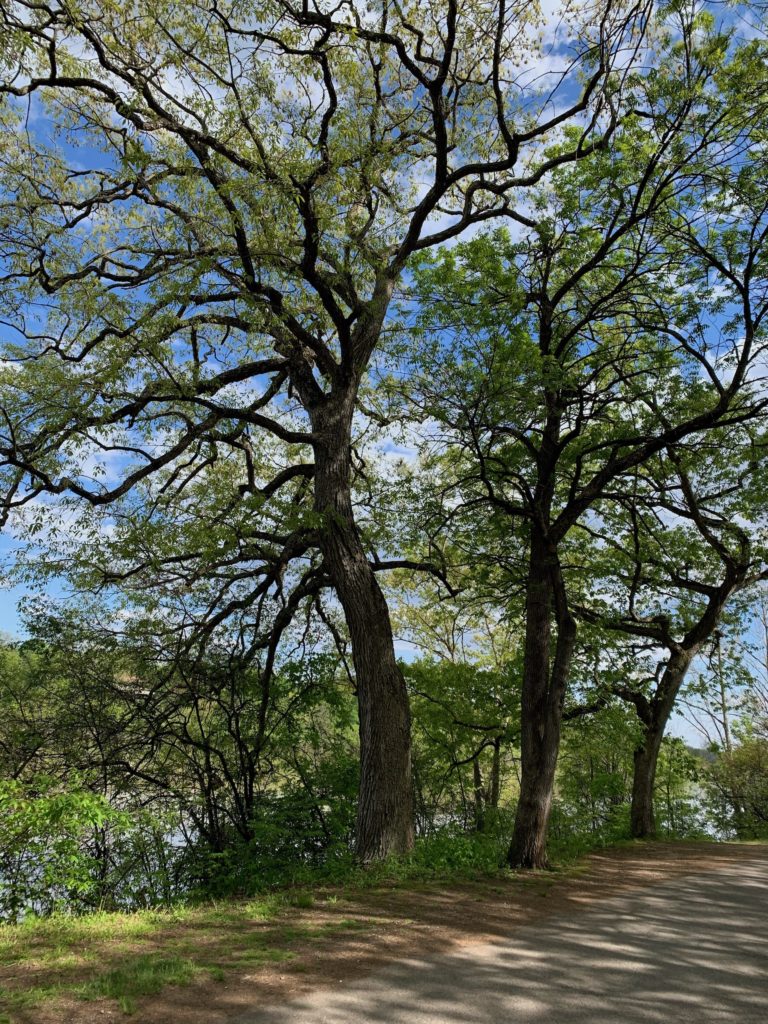
There were lots of other things to see in the park. Oak, sycamore, maple, locust, and hickory trees. White honeysuckle blooms wet with nectar. The small stream, last week singing with water splashing over its rocky bed, diminished by hot, dry days.

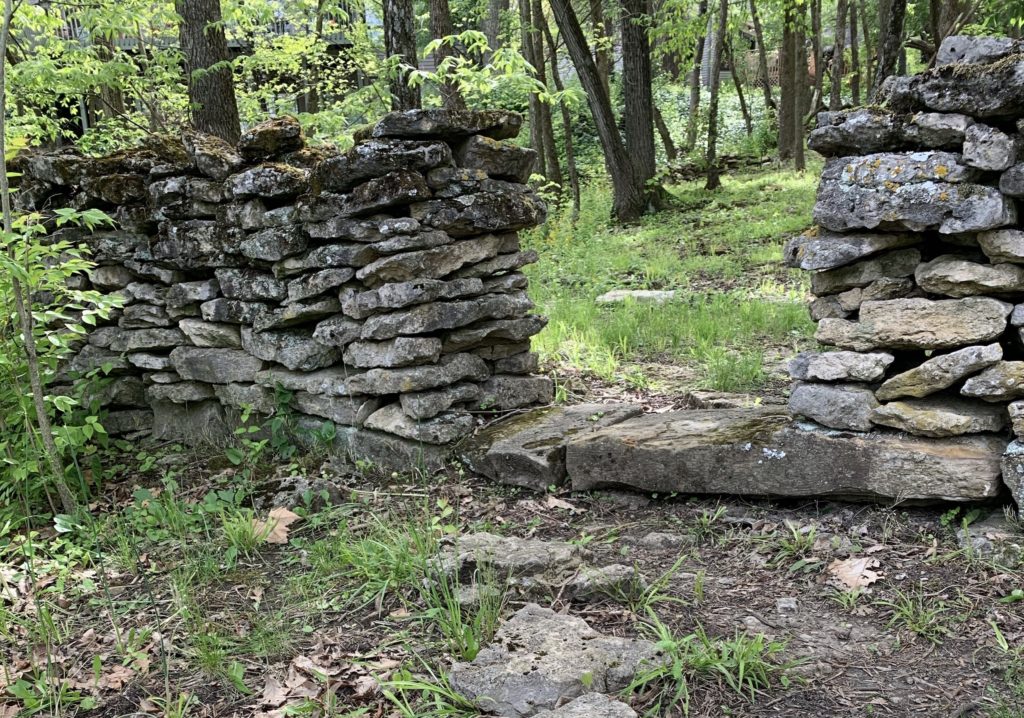
I followed the lichen covered stone wall reminiscent of those crisscrossing fields in New England and the Robert Frost poem that made them famous. In a patch of wildflowers and grasses left to grow wild, bluebells were fading and ground-hugging violets stole the show.

The path stopped at the river. Mallards were gliding past, and farther out, a ruddy duck disappeared under the water again and again. I stood a while, soaking in the scene and then turned to walk back to my car.

The birdwatchers were still gathered in the same place, but this time cameras were clicking.

“What’d you find?” I asked.

“A Blackburnian warbler,” a gentleman replied and guided my eyes upward to a small silhouette perched on slender tree-top branches. Lifting my binoculars, I found the bird, stunning with black, white, and orange markings. Closer to my car, a Baltimore oriole flamed bright on a tree branch. An embarrassment of riches.

I was reminded of my morning walk a few days later while reflecting on the feast of Pentecost by reading poetry of Jessica Powers (1905-1998) an American Carmelite nun. In “Ruah-Elohim,” she writes that “Spirit” in Hebrew is feminine and that the Holy Spirt is tender Love, come to mother us. In “To Live with the Spirit'” she reminds us that the one who walks as the Spirit-wind blows “turns like a wandering weather-vane toward love.”

But it was her description of the Apostles in “The First Pentecost” that caught my breath. They looked at one another. “…words curled in fire through the returning gloom. / Something had changed and colored all the room. / The beauty of the Galilean mother/ took the breath from them for a little space. / Even a cup, a chair or a brown dress/ could draw their tears with the great loveliness/ that wrote tremendous secrets every place….”

I ache to see with such Spirit-opened eyes, our world and one another. Could wars and hatred, violence and earth-abuse continue among human beings with eyes so wide and seeing? Would eyes of the heart see past the false constructs of “them” and “us” to the “we” that shared Spirit makes us? Ah, for such eyes!

Along with this tired planet, with the weary, war-torn beings that live on it, I join my voice to the urgent prayer:

Come, Spirit come! We need the sight you bring.

© 2021 Mary van Balen

Letting the Light In

Letting the Light In

close up of crack with light shining through itFull disclosure: I’ve tried to write this column for weeks. Thoughts and notes spill across my journal pages; drafts of documents sit on my laptop. Prayer and vigil candles are spent. Life feels heavy. Sometimes overwhelming. The state of our world and our country is revealing the dark, shadowy side beneath our comfortable façade. And cracks in that façade are everywhere.
Leonard Cohen’s lyric from Anthem comes to mind: “There is a crack, a crack in everything, that’s how the light gets in.” True enough. But cracks can also make things fall apart – as some must do – before they are put back together or something new is made. In the process, it’s often the cracks we see, not the light.

You may find that true today. The world struggles to find responses to climate change and the will to implement them. The the pandemic brings not only sickness and death, but economic crisis, causing millions to struggle to survive. It challenges the world’s “normal” which, really, hasn’t been working all that well.

Our country, fractured by political turmoil, division, and fumbled responses to COVID-19, must also recognize the racism that is staring in our collective face. The video of George Floyd’s murder by policemen was a tipping point, coming closely on the heels of other senseless murders of African Americans. Protests erupted across the U.S. and the world and continue today. They must. They make us look. They reveal cracks that have crazed our nation even before it was born.

“What can I do?” I ask myself. I don’t have answers; I have questions. It’s time for white people to look deeply at their own stories and those of their ancestors and recognize how they have benefited from systemic racism for generations. We can educate ourselves. Reading and discussing the book Waking Up White: And Finding Myself in the Story of Race by Debby Irving, is jarring as our group listens to the long history of racism and slavery in our country from the beginning, hearing how early it was codified into our laws.

Truth illuminates the cracks. It’s the light that gets in. And once it does, we have a choice. The line before Cohen’s famous one quoted above is this: “Ring the bells that still can ring. Forget your perfect offering.” Our efforts will not be perfect, but they must be made.

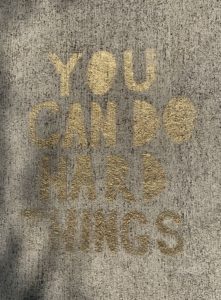
close up of stenciled words on sidewalk "Black Lives Matter"Words stenciled on sidewalk, "You Can Do Hard Things"

We all must do the hard work of hearing the truth and making changes in our lives and in the laws and practices of this country. On a walk in my neighborhood I noticed two messages painted on the sidewalk: “Black Lives Matter” and “You can do hard things.”

These unprecedented times demand we recognize the truth of both. There is much in our world and in our nation that requires doing hard things for the good of all.

This year, July 4 presents an opportunity to reflect on our country, to consider its history through an inclusive lens, and to work for its future. When I pondered the Roman Catholic Lectionary readings for this holiday, the one from Philippians spoke to my heart:

Finally brothers and sisters, whatever is true, whatever is honorable, whatever is just, whatever is pure, whatever is lovely, whatever is gracious, if there is any excellence and if there is anything worthy of praise, think about these things…

It is hopeful. It reminded me to look for what is good in the world, in one another, in our dreams and values. To focus on justice and truth. To hold tight to them. To look for the light coming in through the cracks.

But that wasn’t all. The reading continued:

Keep on doing what you have learned and received and heard and seen in me.

What have we seen in Jesus? Love. He was all love. Love of God. Love of neighbor. He stood with the poor and marginalized. He challenged those who abused power and were greedy, concerned only with their own comfort and well-being. He told the Good Samaritan story: everyone is our neighbor; we must take care of one another. He never saw anyone as “other.” Everyone belonged. In the end, he was murdered by a world that couldn’t accept such radical, inclusive love.

This reading calls us to hope and also to act, like Jesus, keeping our hearts set on what is good and just. On Love. To use our hands and feet and minds and talents to bring more of it into this world. And, as the reading ends, Then the God of peace will be with you.

©2020 Mary van Balen