Demonstrations in Physics – and Prayer

Demonstrations in Physics – and Prayer

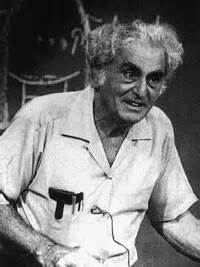
Dr Julius Sumner Miller“My name is Julius Sumner Miller, and physics is my business.” That’s how he opened every show. Physics was his business. So was wonder.

A longtime friend who attended school with my daughters and was a frequent visitor to our house, still keeps in touch though he lives most of the time in Southeast Asia. His email today included a link to a show he had rediscovered: Professor Julius Sumner Miller’s “Demonstrations in Physics.

I smiled as I watched the lesson on air pressure, a 14-minute delight of knowledge and unabashed enthusiasm. Dr. Miller’s show aired on PBS and was a staple in our house. We didn’t have cable, so my parents taped it for us. We all enjoyed them, but my oldest daughter, now a physicist herself, was the most faithful viewer.

Dr. Miller loved sharing the wonders of physics in the everyday world from air pressure, to heat conduction, to, one of our favorites, Bernoulli’s principle. His joy was contagious. For years, after my daughter disappeared into the basement to build and conduct her own experiments, she would call me down to demonstrate them and echoed two of Dr. Miller’s frequent expressions: “That’s beautiful. Let’s do it again” (and he and she would). If it didn’t go as planned, “Oh well, an experiment never fails. You just learn something you didn’t expect to learn.”

Those memories flooded back as I watched the episode this morning. Something else came to mind as well: What a gift to retain the wonder and abandon that are natural for children as we become adults. In addition to adding “enchantment to the soul,” as Miller said, it also opens the soul to receive Grace. We can’t see the extraordinary all around us if we aren’t present where we are, looking with open eyes and heart. Children are good at this.

In his book, Growing Young, anthropologist Ashley Montagu listed these qualities among others in the childlike nature: “…curiosity, inquisitiveness, thirst for knowledge, the need to learn, imagination, creativity, open-mindedness, experimental-mindedness, spontaneity, enthusiasm…joy…”

Along life’s path, many of us lose that childlike amazement at the world around us. Scientists like Montagu and Miller are not the only ones to understand the importance of such presence. Like Thornton Wilder said in “Our Town,” saints and poets do, some.

Watching Dr. Miller delight in how things work reminded me of Sts. Francis and Bonaventure extolling God’s presence in the “book of nature.” For Bonaventure, God is “fountain fullness,” spilling out of and over everything, in all life, outer as well as inner.

Most religious traditions see the Holy One reflected in creation, and creation as a way to encounter that Sacred. Rumi, the 13th century mystical poet of Islam wrote: “The beauty and grandeur of God belong to Him; the beauty and grandeur of the world of creation are borrowed from Him.”

For me, Dr. Miller’s physics was a call to prayer, a joyful time to marvel at some small part of creation and to soak up the Goodness flowing through it all.

Take a few minutes to feed the child within; watch an episode or two of Demonstrations in Physics. No matter what you believe, or not, about prayer, Presence, and creation, you’ll be delighted.


Hope for our Planet

Hope for our Planet

A picture taken on November 25, 2015 in Le Bourget near Paris shows the entrance of the venue that will host Paris' climate summit, also known as Cop21.

A picture taken on November 25, 2015 in Le Bourget near Paris shows the entrance of the venue that will host Paris’ climate summit, also known as Cop21.

How wonderful to read the New York Times headlines this morning and find an article about cooperation among world leaders on climate change. Hope! In the midst of so much fear mongering and violence, hope is what we need.

The agreement’s not perfect, everyone agrees, but it is an  important starting place. Maybe a moment that future generations will call a pivotal moment when worldwide recognition of the problem and a common will to do something about it took root.

Of course, here in the U.S., we have lots of politicians who don’t accept the overwhelming science supporting the reality of global warming and many who want nothing more than to obstruct anything that might smack of an Obama success. This includes most if not all of the Republican slate of presidential candidates.

eiffel tower with "No Plan B" message in lights referring to the importance of world leaders to make the climate change agreement work.

In Paris, the Eiffel Tower lights up with the message that there are no second chances to address climate change

Maybe they will be shamed into supporting the agreement. Maybe our citizens will make their voices heard. This is not for big oil or coal or fossil fuel companies. This action is for the generations that follow ours.

This is not only a political issue. As Pope Francis has made clear, response to climate change and care for the planet, is a moral and spiritual issue.

The road ahead will be difficult, but for the moment, I want to enjoy a bit of hopeful celebration!

Advent in a World of Turmoil

Advent in a World of Turmoil

Starry night sky over pines

PHOTO: Jennifer Stephens

Originally published in The Catholic Times, December 13, 2015


“What does keeping Advent mean for us now, today?” I asked myself after reading a couple newspaper articles about mass shootings and escalating fear and anger at terrorist attacks. I was still pondering while making a quick stop at a mall. Lights and hype along with an unending string of Christmas music bombarded the senses, and on the drive home, Pope Francis’s reference to this year’s Christmas trappings being a charade came to mind.

Checking the text, I discovered that he opened his homily with “Jesus wept,” adding later “…because Jerusalem did not know the way of peace and chose the hostility of hatred, of war.” With Christmas coming, the pope said “…there will be lights, there will be celebrations, trees lit up, even nativity scenes…all decorated: the world continues to wage war…The world has not comprehended the way of peace.” The entire world is at war, piecemeal, and the cost is great—A somber message for the coming season of joy and hope.

While terrorism and wars are in the news around the world, they are not the only form of violence. There’s also violence against the poor and marginalized when funding for safety-net programs are cut. Civil rights for all are a continuing issue, as is adequate care for those suffering from mental illness. (Many mass shooters suffer from it.)

The earth itself suffers at the hands of human beings, yet some choose to dismiss the issue of global warming and the investment in new technologies needed to address it. (Did you see the pope’s shoes, sitting along with 20,000 others in a public square in Paris during the climate talks there—A quiet “march” to support those working to find ways for governments to respond to this threat?)

The pope is right: The world has not embraced the way of peace. How do we do that? How do we find hope in a dark world?

A friend sent a poem she has been using for Advent reflection: “Annunciation” by Denise Levertov. “Aren’t there annunciations/of one sort or another/in most lives?” the poet asks before pondering how we do or do not accept the annunciations that come to us. She writes of Mary, a young girl like other young girls, but called to a “destiny more momentous that any in all of Time;” she didn’t hesitate to embrace it.

Levertov concludes that whatever we have to offer is enough. “The blessing is not in the treasure/But in the letting go.” We are called to give what we have, not to hold it close, but to generously pour onto the world. We are called to lavish Love on the marginalized who need our care and nurture, much as Jesus needed protection within the womb as he grew.

Levertov’s poem reminds me of the loaves and fishes story. The young boy freely gave what he had, and Jesus made it enough.

Maybe that’s what’s Advent’s quiet and waiting is about. Avoiding the distractions of orchestrating a “perfect Christmas” and instead giving ourselves time to pay attention to what Grace has been placed in our hearts, not turning from the challenges of sharing it in a dark and often hostile world. Like Mary, we’re called to say, “Yes, I’ll give all that I am.”

A poem by Jessica Powers, considers the Incarnation. “In Too Much Light,” she sees the Magi following one star and laments her difficulty finding one to follow. Her revelation?

Faith cries out ‘til her voice fails, proclaiming that in every spot and time, “…there is not any place/ when the sought Word is not.”

That’s where our hope lies this Advent, when even our pope laments the darkness and choices for war over peace.

It is within, given when the Holiest of Mysteries became one of us, sharing Love and trusting us to share it in our times and places. The hope is discovering that light, not outside us, but in our deepest center. Being selfless with it, giving it away, is embracing the way of peace.

When we discover the divine light within ourselves and within all others in this world, the wounded, the suffering, the marinalized, the fearful, the violent, then we’ll have found the God we prepare to celebrate during Advent.

Jessica again: “Behold, all places which have light in them/truly are Bethlehem.”


© 2015 Mary van Balen

Surprised by Pope Francis: Day and Merton

Surprised by Pope Francis: Day and Merton

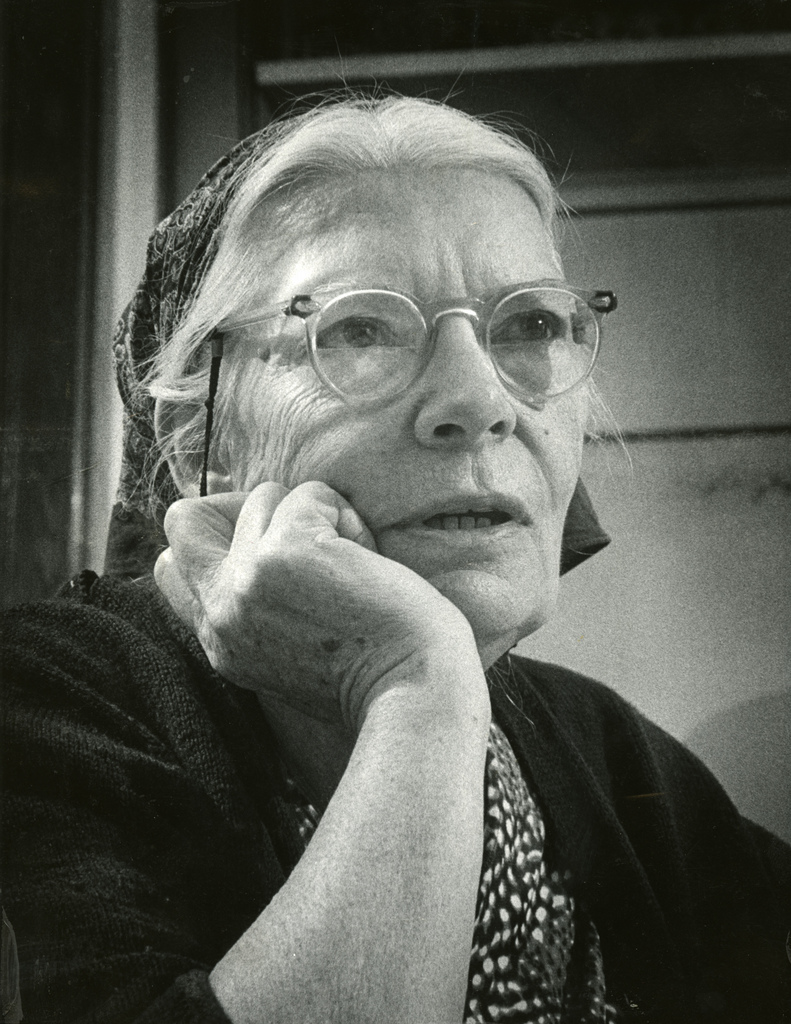
Close up of Dorothy Day

First published in The Catholic Times, October 11, 2015 issue


I stayed home from work the morning that Pope Francis spoke to the United States Congress. I wanted to watch his face and the faces of those gathered to hear him: A congress mired in partisan politics, hopelessly polarized. What would Pope Francis say to them? To the country? How would our elected officials receive his words? It was a moment I wanted to witness as it unfolded.

The pope did not disappoint. Just a couple of weeks ago, at a gathering of citizens concerned about issues of social justice and a stalled political system, a gentleman expressed dismay that the concept of the common good was no longer a topic in public discourse. Pope Francis took care of that.

He had barely spoken a hundred words when he directed attention to our solemn responsibility for the common good. “You are called to defend and preserve the dignity of your fellow citizens,” he said to the lawmakers, “in the tireless and demanding pursuit of the common good, for this is the chief aim of all politics.”

By now, most who read this column will have read (or heard) various commentaries on the address and what the pope did and did not say. But, what surprised me was how he said it: He used the example of four great Americans who gave their lives to service and to the betterment of society. Two, Abraham Lincoln and Martin Luther King, Jr., often serve as inspirational examples, fittingly so.

The other two are the ones I didn’t expect: Dorothy Day and Thomas Merton. In my late teens I read a number of their books. They influenced my faith and spirituality. Still, I wondered, how many of the government officials sitting in the room knew those names? How many watching and listening around the country wondered who they were and searched for them on mobile phones and tablets?

They’d find Dorothy Day, born in 1897, was a radical who advocated for women’s suffrage, a pacifist who opposed all wars, and a tireless worker for social justice who saw the need not only to serve the poor she encountered in daily life, but also to change the system that created such poverty and injustice. She was a writer and journalist who gave voice to marginalized people and causes.

A convert to the Catholic faith that fed and sustained her, Dorothy attended daily Mass, read scripture, and wove prayer throughout her days. As a friend who once heard her speak said, “She was prayer.

Dorothy, along with close friend Peter Maurin, founded “The Catholic Worker” newspaper and the movement of the same name. Catholic Worker Houses continue to welcome the poor and are places where the corporal works of mercy are lived out. As Pope Francis encourages, they are places of encounter.

The pope spoke a second name that I didn’t expect to hear: Thomas Merton, a Trappist Monk at the monastery of Gethsemani, in Kentucky. We celebrated the 100th anniversary of his birth this year. Pope Francis singled him out for his openness to dialog with others of all faiths, seeing them as pilgrims on the same search for ultimate truth. His last journey was to Bangkok where he attended an international conference on monasticism, organized by Buddhist monks. Like Day, he calls us to deep encounter with those unlike ourselves.

Thomas Merton standing outside Pope Francis also recommended Merton’s openness to God in a contemplative style of prayer. Merton in the midst of a world immersed in “noise” of all types—digital, visual, aural—pouring out of players, electronics, out of the depths of our souls, calls us to quiet presence. For those who fill up every moment with activity and distraction, he says, “Be still. Listen.”
Like Dorothy Day, Thomas Merton was a writer and a convert. His books addressed spirituality and political topics. He was an outspoken critic of the Viet Nam War and the arms race.

Two people of deep faith and prayer: One active in the world, the other a monk responding to world issues with his pen; both social activists who pointedly challenged the status quo and whose words speak to us today. Immigration, poverty, climate change, racism, and violence require bold responses from all of us, not only governments.

If you’re not familiar with Dorothy Day and Thomas Merton, consider reading some of their work or finding out more about their lives and spiritual journeys. Pope Francis’ choices challenge us all.

© 2015 Mary van Balen

President Obama and Pope Francis: Words to Ponder

President Obama and Pope Francis: Words to Ponder

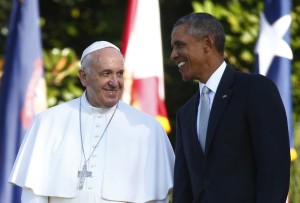
A picture of a smiling President Obama welcoming Pope Francis, also smiling, to the Whitehouse

PHOTO: THe Atlantic

I drove one of my daughters downtown to catch the Mega Bus. It pulled out just in time for me to begin listening to President Obama welcome the Pope to the United States. Eloquent and moving, his words, spoken as a man of faith, addressed the Pope saying “You shake our conscience from slumber; you call on us to rejoice in Good News, and give us confidence that we can come together, in humility and service, and pursue a world that is more loving, more just, and more free. Here at home and around the world, may our generation heed your call to “never remain on the sidelines of this march of living hope!”

The Pope’s address, delivered in English, challenged us to address issues of poverty, inclusion of those on the margins, and global warming. Referring to the urgency of dealing with climate change, he quoted Martin Luther King, Jr.’s “I Have a Dream” speech, saying “…that we have defaulted on a promissory note and now is the time to honor it.”

Pope Francis doesn’t avoid difficult topics. I’m looking forward to hearing his address to Congress tomorrow morning. And, just as much, to his sharing lunch with the homeless rather than with the congressional elite.  I love this pope!

Text of both speeches

The Nuns on the Bus Come to Columbus

The Nuns on the Bus Come to Columbus

A vertical banner reading: The Nuns on the Bus, Bridge the Divides:  Transform Politics

Photo: Mary van Balen

Sunday, Sept. 20, Lutheran Pastor Gary Sandberg warmly welcomed the Nuns on the Bus at the Kerns Religious Life Center on the campus of Capital University in Columbus, Ohio. The space, made available for the town hall meeting,  was filled with people of all ages and religious backgrounds. I was pleased to be part of the diverse group that shared one thing in common: concern for social issues and the failure of current political structures to deal with them. As one man said, the term “The Common Good” seems to have disappeared from public discourse.

Sr. Simone Campbell and six other nuns from across the country weren’t interested in presenting a lecture. They wanted participation, and from the start, had small groups of people talking with each other about local challenges and divides and how we could move forward to address them.

The list was long and included human trafficking (I didn’t know that Columbus ranked 7th in the country), Gerrymandering (There’s an issue on the ballot…Issue #1… Vote.) payday lenders, lack of affordable housing, ethnic and racial divides, LGBT issues, polarization, school-to-prison pipeline, lack of shelters for the homeless, especially homeless families, infant mortality (Again, Columbus ranks near the top of the list of US cities with this problem.)

You get the idea. People had suggestions: Join B.R.E.A.D., vote, take time to listen to those who have views that differ from your own, put a face on the problem by sharing stories with those in positions of power, publicize things that are working (because some things are working), and the list went on.

Sister Simone Campbell PHOTO: Mary van Balen

Sister Simone Campbell PHOTO: Mary van Balen

This meeting energized people. It broadened knowledge of issues and solutions right where we are. It was hopeful. It pointed to prayer and action and the difference one person can make. It articulated Catholic social teachings in a way that encouraged participation.

A piece of wisdom: Find one thing that you are passionate about, and become involved. Every one needs to do something. And when we do, we make a difference. We can bridge the divides. We can change politics.

I stand with The Nuns on the Bus!


Encountering the Other

Encountering the Other

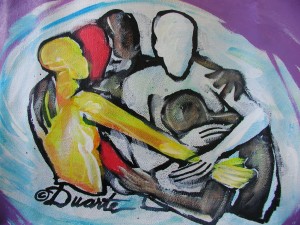
modern painting circle of five people in an embrace

Painting by Richard Duarte Brown

Originally published in the Catholic Times, 9. 1315

A few days ago, while driving to work, I heard a story on NPR about the thousands of immigrants arriving on the small Greek island of Lesbos, refugees fleeing war and oppression in Syria, looking for a place to live. They risked a dangerous journey leaving everything behind and set off toward an unknown future. Husbands and wives, parents and children, friends and relatives, all willing to trust their lives to people and places they do not know.

Listening to reporters interviewing newly arrived refugees, I marveled at the joy in their voices. Thrilled to have survived the journey and to be standing on solid ground in a place free of war and the atrocities that accompany it, they spoke with such hope, such faith in God, or if not in God, in fellow human beings.

I wanted to rejoice with them, but concern tempered my delight as I wondered what the road ahead would bring for them: Mounds of paperwork and bureaucracy from governments hesitant to welcome so many people needing work and aid. Hostility and resistance from those who will feel threatened by their presence, by their “otherness.” Soon, frustration will replace the euphoria of the refugees’ first taste of freedom from constant fear and suffering.

Tragedy already darkens Syrian refugees’ arrival. The United Nations refugee agency reports that over 2,500 people have died this year trying to make the dangerous ocean crossing.

Driving home from work that same day, I heard an inspiring story of Icelanders who had formed a Facebook group, “Syria is Calling,” and is pressuring their government to take in more than the 50 refugees it had offered to accept—a lot more, 5,000. While the large number of people the group is proposing to welcome is impressive, it was the outpouring of individuals’ willingness to help that stirred my heart.

People offered to open up extra bedrooms in their homes and provide food, money, and house wares to help new arrivals settle in. This personal response is more demanding than putting a check in the mail, which is my plan. It means living with people who have different beliefs and values. In some cases, like sharing one’s home with strangers or welcoming them into your city, such action means daily encountering the “other” with openness and reverence for their personhood. It means, in the midst of serious complexities, maintaining the belief that we are more alike than different.

This post from “Syria is Calling” eloquently proclaims this truth: “Refugees are our future spouses, best friends, our next soul mate, the drummer in our children’s band, our next colleague, Miss Iceland 2022, the carpenter who finally fixes our bathroom, the chef in the cafeteria, the fireman, the hacker and the television host. People who we’ll never be able to say to: ‘Your life is worth less than mine.’”

These words challenge all of us around the globe to examine our own attitude toward the “other,” not only the Syrian refugees, but the marginalized people who live in our own cities and neighborhoods.

The Letter of Saint James, included in this Sunday’s readings, speaks forcefully about the responsibility of Christians to put their faith into action: “If a brother or sister has nothing to wear and has no food for the day, and one of you says to them, ‘Go in peace, keep warm, and eat well,’ but you do not give them the necessities of the body, what good is it? So also faith of itself, if it does not have works, is dead.”

Fear of those who are not like us is no excuse; it is a human failing that must be confronted and transformed by love, a process that can take a lifetime. It is a process that requires encounter.

But suffering and injustice can’t wait for lifetimes. Our faith, our humanity, requires action before we are comfortable. We must respond with love despite our fear, and incrementally, our hearts will change. As Jesus said, love will cast out fear. We are all other to someone. Encounter will transform us: those in position to give and those who receive, privileged with voice and marginalized with none.

© 2015 Mary van Balen

A Weary Prophet

A Weary Prophet

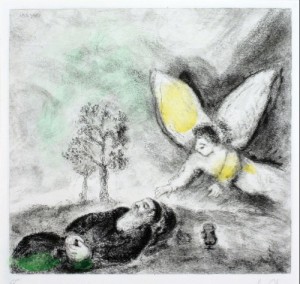
Elijah being touched by an angel with yellow wings

Marc Chagall, Elijah Touched by an Angel, from the Bible suite, 1958. Image source: The Jewish Museum, New York

First published in the Catholic Times, newspaper of the Catholic diocese of Columbus, OH August 16, 2015


This Sunday’s reading tells the story of a prophet who is worn out and discouraged. He has served God, trying to bring people back to Yahweh, trying to change the hearts of King Ahab and his wife, Jezebel who was a follower of Baal. She had many of Israel’s prophets killed. In an effort to call them all back to the Lord, Elijah spoke to the people and set up a spectacular contest. Hundreds gathered on Mount Carmel. He instructed the 450 prophets of Baal to pick a bull, cut it up, and place it on wood stacked for a fire, but not lit. That would be Baal’s job. Elijah would do the same when they had finished, calling on Yahweh to set his sacrifice ablaze.

The prophets went to work, but no amount of chanting or dancing could raise a response from Baal. When they gave up, Elijah built an altar of stone, arranged the wood, and placed the sacrifice on it. He dug a deep trench around the altar, and ordered water poured over the bull, wood, and earth. Three times he instructed them to do so until everything was soaked and the trench full.

Then, he prayed, simply. Yahweh’s power exploded in flame, consuming the bull, wood, parching the earth, and drying the trench. The people were convinced and helped Elijah slaughter all the prophets of Baal. On hearing of the contest and slaughter of the prophets, Jezebel vowed to take Elijah’s life before another day passed.

That is where we meet Elijah in Sunday’s reading. He has fled into the wilderness to save his life. Exhausted, he sits under a broom tree and prays the prayer of the despondent. He had had enough, blamed himself, and was ready to die. “Take my life,” he says. “I’m done.” He had tried his best, failed, and was alone.

Haven’t most of us, at one time or another, had similar feelings? Life sometimes brings tragedy, chronic illness, or emotional pain. Many in our world live in poverty or daily encounter discrimination and oppression. Some wake in the morning not sure where they will find the day’s food. Through it all, we try to be faithful. To trust God with us.

But sometimes, like Elijah, we are worn out. Maybe our struggle is not dramatic. It can be a nagging discontent. A doubt about what is ahead. Whatever it is, large or small, sometimes it wears us out. We are tired and discouraged, and God doesn’t seem to be around.

The prophet’s story, at one time or another, is our own. Worn out, he utters his prayer and falls asleep. I’m not sure what he expected, but I doubt it was the angel’s touch, waking him and providing food and drink. He does, then falls back to sleep. The angel comes again and orders him to eat “…else the journey will be too long for you!”

Despite the sternness of the angel’s directions, the scene has gentleness about it. God knows what Elijah needs: Sleep, food, and drink. The angel’s demands aren’t harsh, but are like those of a mother who knows what her child needs even when he doesn’t. So she tells him: Eat. Turn out the light and go to bed.

Elijah did as he was told. The rest and food gave him strength to make a long journey. I wonder what he thought as he put one foot in front of the other for days. How he prayed, if he recognized God walking with him as he went along. Sometimes we work things out in our own minds, and sometimes, we just keep going and they work out themselves. Sometimes we pray and sometimes God prays for us. I imagine both things happened to the Elijah.

Then, when he arrived at Mount Horeb, the prophet received something else he needed: an experience of God, not in storms, earthquakes, or fire, but in a quiet whisper of a voice.

This isn’t the whole story. It’s a great one to read from beginning to end, not just the bit we hear on Sunday. As I read I was moved by God’s tenderness and care for this weary prophet. and remembered an African saying, shared by a friend years ago: The strength of the fish is in the water.

For the fish, water is everything. For Elijah, when he knew it and when he didn’t…for us, our strength is in God. For us, God is everything.

© 2015 Mary van Balen


When Spring Freezes

When Spring Freezes

PHOTO: Mary van Balen

PHOTO: Mary van Balen

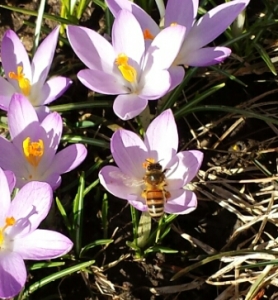
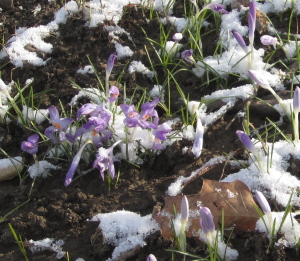
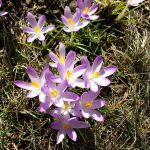
I couldn’t believe my eyes. Not only were the crocuses in my neighbor’s lawn blooming in early March, they were covered with bees! After months of sub-freezing temperatures, inches of ice, and more inches of snow, the earth had warmed enough to coax beautiful purple flowers out of their dark waiting place. Spring, it seemed, had arrived.

Passersby stopped to see what enticed me to stoop low and look closely. “Bees,” I said. “Bees are all over these flowers.”

Some stopped long enough to look themselves. After a frigid winter, we were ready for a change.

Spiritual life can be like that. Sometimes winters of the soul seem to last forever. Then, just when we’ve come to terms with the possibility of unending cold and emptiness, everything changes: Hope wakes up and shakes her feathers. Life erupts like the crocuses. Intoxicated, we nuzzle down into the golden centers and rise up heavy with life-giving pollen sticking all over. Unable to contain our joy, we move from hope to hope, from beauty to beauty. Like bees, we’re called by Mystery to an ancient dance, and we join in, spreading the sticky grace and picking up more everywhere we go.

PHOTO: Mary van Balen

PHOTO: Mary van Balen

Then, as quickly as it left, the cold returns. The crocuses across the street are suddenly bowed under a fresh fall of snow. Bees have disappeared to wherever it is they go to escape the freeze. A collective sigh rises from the earth. People bundle up in winter coats again. The few days of warmth make the cold bite deeper, and we shiver in temperatures we would have welcomed a month ago.

Spiritual spring can be just as fickle. Fear or worry blow in from somewhere and hope retreats. Sticky grace feels more like goo. We’re not flitting from  hope to hope. We’re not moving at all. A groan rises from deep inside. The emptiness seems larger after having danced with Joy.

“It won’t last,” we tell ourselves but struggle to believe it.

It’s a good time to listen to music or to sit in the dark and gaze at stars, or a candle, or nothing.  We might curl up with a good book of poetry, or linger with scripture. Story reminds us that this dance with winter and spring is nothing new. If we can settle in with the cold and dark, we discover they  have gifts of their own. And it doesn’t last forever.

Eventually, sun will melt the snow. Flowers will straighten their stems and lift their heads. The bees will come back, and we’ll feast on sticky Grace.

PHOTO: Mary van Balen

PHOTO: Mary van Balen

Birdsong and Hope

Birdsong and Hope

PHOTO:Mary van Balen

PHOTO:Mary van Balen

Sitting quietly, holding a cup of tea to warm my hands, I tried to enter into silence, greeting the morning, welcoming Presence. Breathe in. Breathe out. Breathe in. Breathe out. After ten minutes or so, I couldn’t help but focus on the birdsong coming from snow-blanketed tress and yards outside my building. Try as I might, I couldn’t let them go. “An invitation,” I decided.

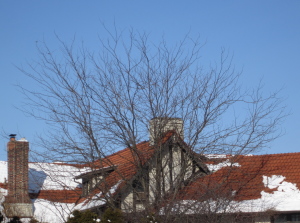
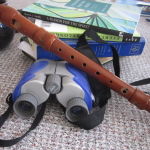
Putting down the tea I opened the front door to see if I could spot the singers. Squinting my eyes against the bright light reflecting off all the white, I could see a small form or two on a tree a few doors down. I went inside, grabbed binoculars, slid my feet into slippers, and walked out the side door onto the driveway.

Cold, crisp air felt wonderful. Sun shine everywhere. Birdsong coming from every direction. “Sparrows,” I decided, on the trees over the red-tiled roof. “Cardinal.” The raspy bark of a woodpecker. Then, from somewhere out front, a clear, three-note call. I turned and followed the sound. Against the bright sun, only the bird’s silhouette could be seen. I began to hum along…three descending notes. “Lovely,” I thought, singing along. “What notes?”

I stepped back inside to find an instrument. The piano hadn’t made the transition into my apartment, residing now at my sister’s home in Ann Arbor. The guitar wasn’t tuned. Ah, the recorder, resting in its original hinged box, sat in front of a row of books in the glass-fronted case. Wrapped in scraps of pink and white flannel cut from pajamas decades ago, the pear wood instrument still produced warm tones as my fingers ran through the scale.

PHOTO:Mary van BAlen

PHOTO:Mary van Balen

There were the notes: B above middle C, A, and G. Over and over. Like “Three Blind Mice.” I don’t know why I wanted to know the notes. Maybe to honor the little singer who helped fill the winter morning with hope. Hope of coming spring. Of life waiting for a thaw, prepared by cold and darkness to push up into daylight. I played the notes over and over. God-breath could sing through me today, if I let it. That’s the invitation.

One more look outside. The long icicle hanging from a downspout along the porch overhang was melting. Drop after drop formed at its tip, liquid light. Suddenly, it crashed into the snow beneath. The little bird had disappeared into a large tree across the street. It kept singing, now in tandem with the one called ‘hope’ that perched in my soul, as Emily Dickinson wrote, who wouldn’t stop at all.