A Christmas Puzzle

A Christmas Puzzle

I was never a puzzle person, but my mom was, particularly as her children became adults and had homes of their own. Sometimes, she placed all the pieces of the puzzle to be done on a card table set up in the family room. Carefully she turned over each piece, revealing their colors and patterns as well as their shapes. Slowly, piece at a time, with the image on the lid of the puzzle box as a guide, the picture emerged in the center of the table.

When I came to visit, I’d join her to add a few pieces. When we found some that connected but whose place in the big picture was still a mystery, we’d snap them together and arrange them around the puzzle in progress. Eventually, someone would see where they belonged.  

In a roundabout way, a friend’s recent comment brought puzzle-solving with mom to mind. While my friend believes Love infuses all creation and gives life to the ever-expanding universe, she can’t imagine such a God loving her in particular. She experiences the love of those in her life and the Sacred in creation. But God loving her individually? She can’t believe it. “What difference can I possibly make’” she asked. “I’m just not that important.”

The first thought that came to me was an ongoing correspondence that I’d had years ago with a high school classmate’s cousin. He was a brother at the Dominican House of Studies in Washington, D.C., and she thought we’d enjoy exchanging letters. (No email then!) We did. At one point in our conversation, the image of God came up. Surprisingly, the metaphor of a puzzle came to mind. I wrote that I thought the Holy One was an ongoing process. Since a bit of Divinity is shared with every person, God could not be revealed completely until the final person had lived. Like in a puzzle, one missing piece draws the eye to the empty spot and spoils the picture. I concluded, we are each important, like a puzzle piece, and contribute to the image of God. It isn’t finished.

I shared this memory with my friend. It helped. “Have you written a column about this?” she asked. So, here I am, during the Twelve Days of Christmas, pondering puzzles, Love, and the ongoing Incarnation.

Putting a puzzle together requires patience and paying close attention to the pieces you have, the emerging picture on the table, and the picture on the box lid. Similarly, being present and noticing, as Mary Oliver might say, is essential to experiencing the Sacred in our midst. We don’t have the “big picture” for a guide as puzzle solvers do, but I don’t think God does either. I’ve never been one who believed God has a specific plan for each of us. I’m more inclined to think that the Holy One shares a bit of Divinity with each of us and then gives us free reign to run with it, delighted with where we take it and what we do with it. Well, maybe not always, but we do have opportunities to recenter, change direction, and move on when needed!

Perhaps the mystery of creation and the One who put it in motion is like a puzzle with infinite pieces of many shapes, sizes and colors, and no picture as a guide. The puzzle keeps growing along the edges, the big picture emerging and changing, bit at a time. God, human beings, the cosmos and whatever it holds (I’ve always thought that would include other beings. How could it not?) all evolving together.

NASA Photo

I thought of St. Bonaventure’s words: “God is a circle whose center is everywhere and whose circumference is nowhere.” The growing is around edges that extend from every point in every direction without end.

As I pondered these things during the Christmas season, another quote came to mind. This one is from Meister Eckhart, a 13-14th century priest, theologian, and mystic.

“What good is it to me that Mary gave birth to the son of God fourteen hundred years ago, and I do not also give birth to the Son of God in my time and in my cutlure? We are all meant to be mothers of God. God is aways needing to be born.”

No matter how one experiences the Sacred in life, or what one believes. No matter how one prays or lives, all are called to share Love that is shared with them. All are called to make the world a better place by bringing Sacred love and kindness into their time and space. That’s how I think of each person opening to and accepting the spark of Divinity and “running with it”.

My prayer for 2026 is that more and more people will do this. Take their gifts, their Love, and put them out there in the world, right where they are, to touch and heal and encourage and transform. And, as Pierre Teilhard de Chardin advises, trust in the slow work of God.

I send with hope, wishes for blessed holiday and a new year that is kinder to the earth and all people and creation on it. A 2026 filled with the light of Divine Sparks.

Following the Servant-King

Following the Servant-King

The feast of Christ the King has rolled around again, and I have decided to do something I rarely do: repost a column. This one, written in the first year of the pandemic, is as relevant now as it was then. Perhaps more so in these days of NO KING demonstrations. I changed the title, added Samuel’s warning to the people’s demand for a king, and deleted reference to the pandemic. I tweaked a bit here and there.

This time, I close the column with the word “kin-dom” rather than “kingdom” because that is the reality Jesus lived and preached—an inclusive, egalitarian community of all people, respecting and caring for one another and the planet with love. He knew that we—along with all creation—are part of the same cosmic kin-dom.

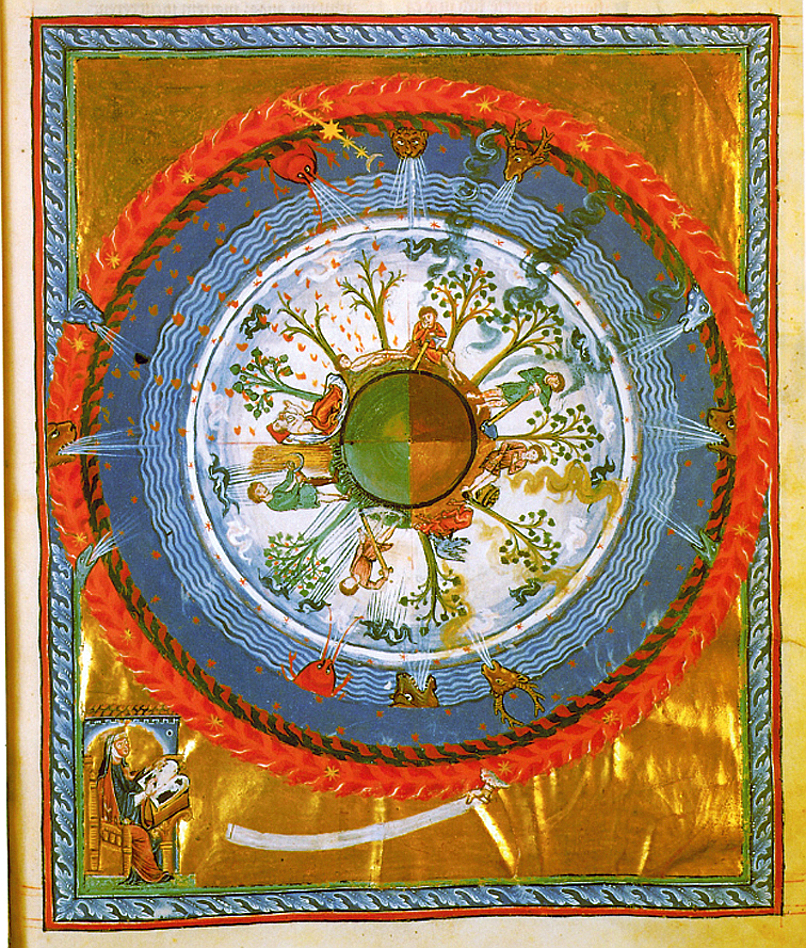
Mandala by Hildegard von Bingen showing four seasons
Mandala, “The Wheel of Life,” by Hildegard von Bingen

I’ve never warmed up to the image of Christ the King. “King” has too many political overtones. Images of a stern king enthroned and bedecked in robes and a gleaming crown, maybe with one hand grasping a scepter, a symbol of power, have put me off. It seems an odd segue into the celebration of the ongoing Incarnation and the remembrance of Jesus’s birth in poverty.

Kings and kingship have a long history, including the Judeo/Christian tradition. Samuel resisted the people’s desire to have a king:

Samuel told all the words of the Lord to the people who were asking him for a king.  He said, “This is what the king who will reign over you will claim as his rights: He will take your sons and make them serve with his chariots and horses, and they will run in front of his chariots.  Some he will assign to be commanders of thousands and commanders of fifties, and others to plow his ground and reap his harvest, and still others to make weapons of war and equipment for his chariots.  He will take your daughters to be perfumers and cooks and bakers.  He will take the best of your fields and vineyards and olive groves and give them to his attendants. He will take a tenth of your grain and of your vintage and give it to his officials and attendants.  Your male and female servants and the best of your cattle and donkeys he will take for his own use.  He will take a tenth of your flocks, and you yourselves will become his slaves.  When that day comes, you will cry out for relief from the king you have chosen, but the Lord will not answer you in that day.”  1 Samuel 8, 10-18

The people’s reasoning – because everyone else has one – seemed shaky. But a king they got, for a while.

I suppose there have been genuinely good kings (and queens) over the centuries, but the associated trappings of power and wealth are hard to overlook. And they corrupt.

In his lifetime, Jesus resisted the title of king, and when people clamored to make him one, he made himself scarce. Of course, the “kingdom of God” is central to his message. But it is a kingdom unlike any earthly kingdom: there is room for all. It isn’t observable. It’s a work in progress, and the progress depends on the people.

It isn’t about exteriority but what’s in the heart, for that is where the kingdom resides, where the Word is spoken and takes root and grows. The signs of the kingdom are love, service, joy, peace, willingness to suffer for the good of others. God sows this Word-seed in human hearts. It has power to grow and transform every person and through them works to transform the world. But how painfully slow is that process!

The kingdom is both/and. Already here and yet to come. “Already here” because the Holy One has placed a bit of Divinity in everyone. “Yet to come” because it must grow with cooperation and surrender.

The kingdom is Presence and Possibility. All creation exists in the embrace of the Christ – “The soul is in God and God in the soul, just as the fish is in the sea and the sea in the fish.” (St. Catherine of Siena) All creation, including human beings, is becoming – “Above all, trust in the slow work of God.” (Pierre Teilhard de Chardin)

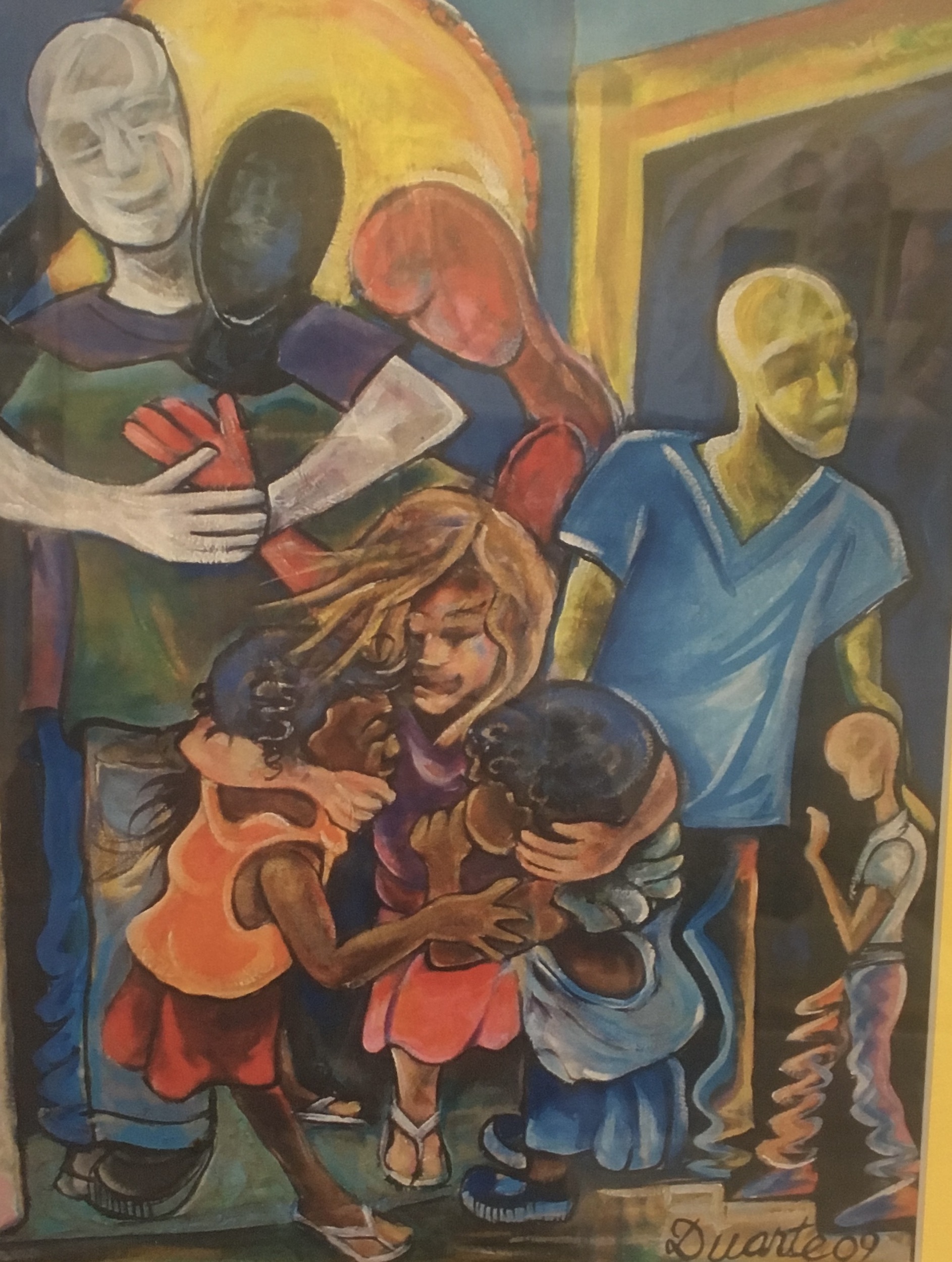
Detail of painting by Richard Durate Brown

It is a servant-king that Jesus modeled. He didn’t sit on a throne or live in opulence or control with commands or hang out with those in power. His motives weren’t self-aggrandizement or accumulation of wealth. He didn’t have a place to rest his head. He led by example. The poor and marginalized where his companions.

Jesus was a man of both action and prayer. He preached, healed, fed, walked, and sat with others. And when he prayed, he didn’t sit in a privileged place but more likely on a rock in the wilderness.

In our time and place in a world ravaged by violence, divisiveness, hatred, and othering. A world in political turmoil, the call is to follow this Servant-King. The power to be wielded is that of Love, prayer, and service. Jesus provides a job description in Matthew’s gospel. When he“ sits on his glorious throne,” the criteria for judgement is love in service. Did you feed the hungry and give drink to the thirsty? Did you clothe the naked and visit the prisoners? What did you do to open yourself to Love and then give it away?

If I were asked to create an image of Christ the King, it would be of a person busy taking care of others. Ordinary attire would replace robes and crowns. The scepter would be gone, and if a hand was free at all, it would hold a shepherd’s staff or maybe food to be given away, a stethoscope, a cooking pot, seeds, a pen, a book, a brush. Whatever one needs to be who they are created to be. To do their work in bringing the kin-dom.

Celebrating My Monk Friend: Kilian McDonnell, OSB

Celebrating My Monk Friend: Kilian McDonnell, OSB

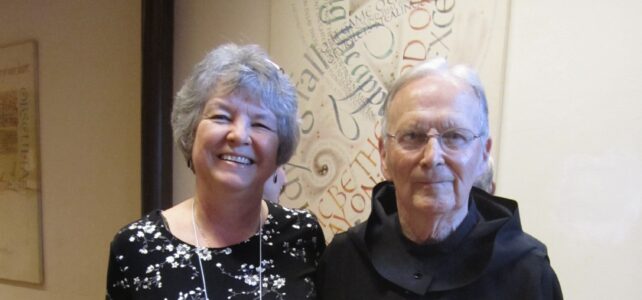
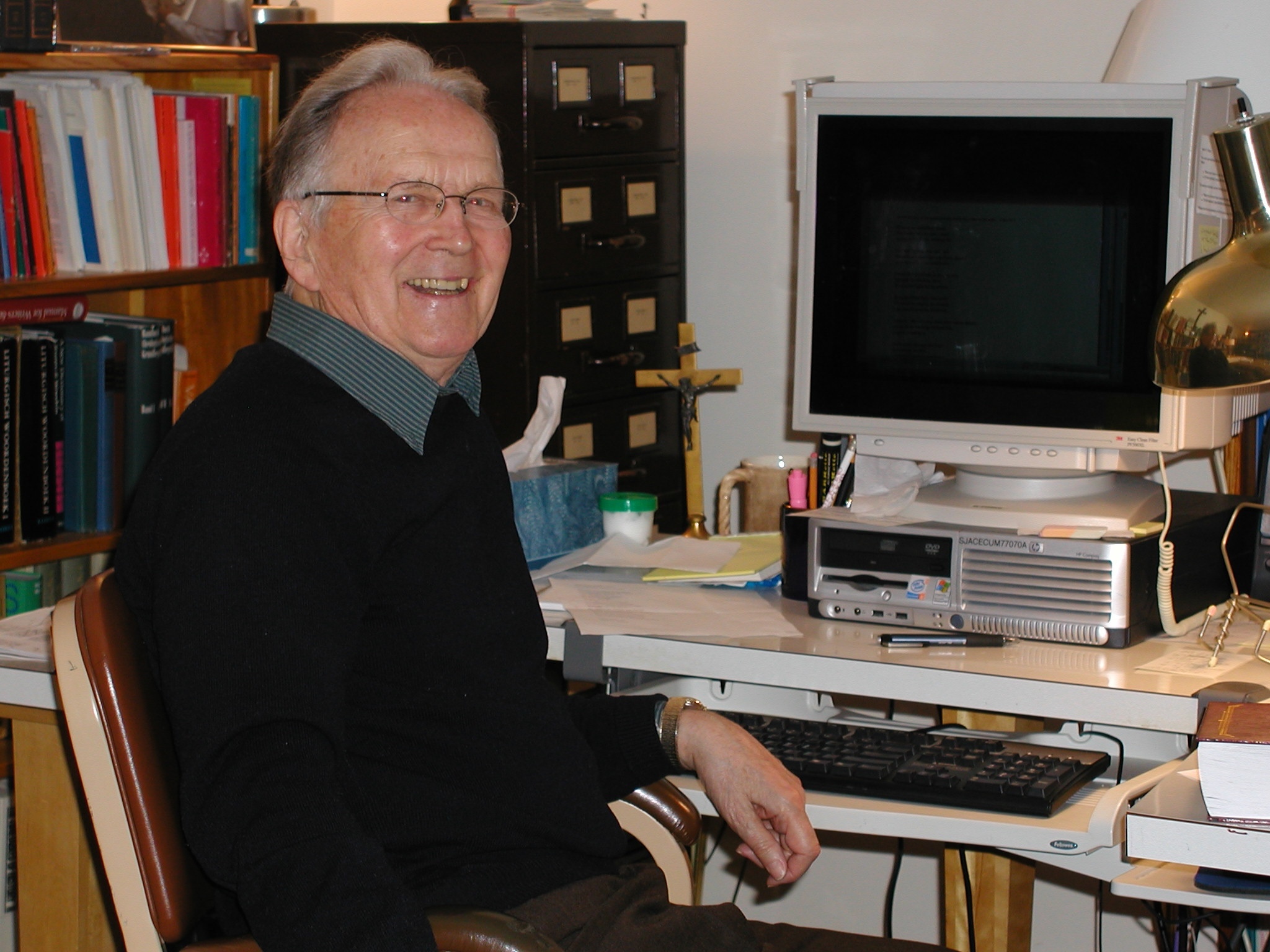
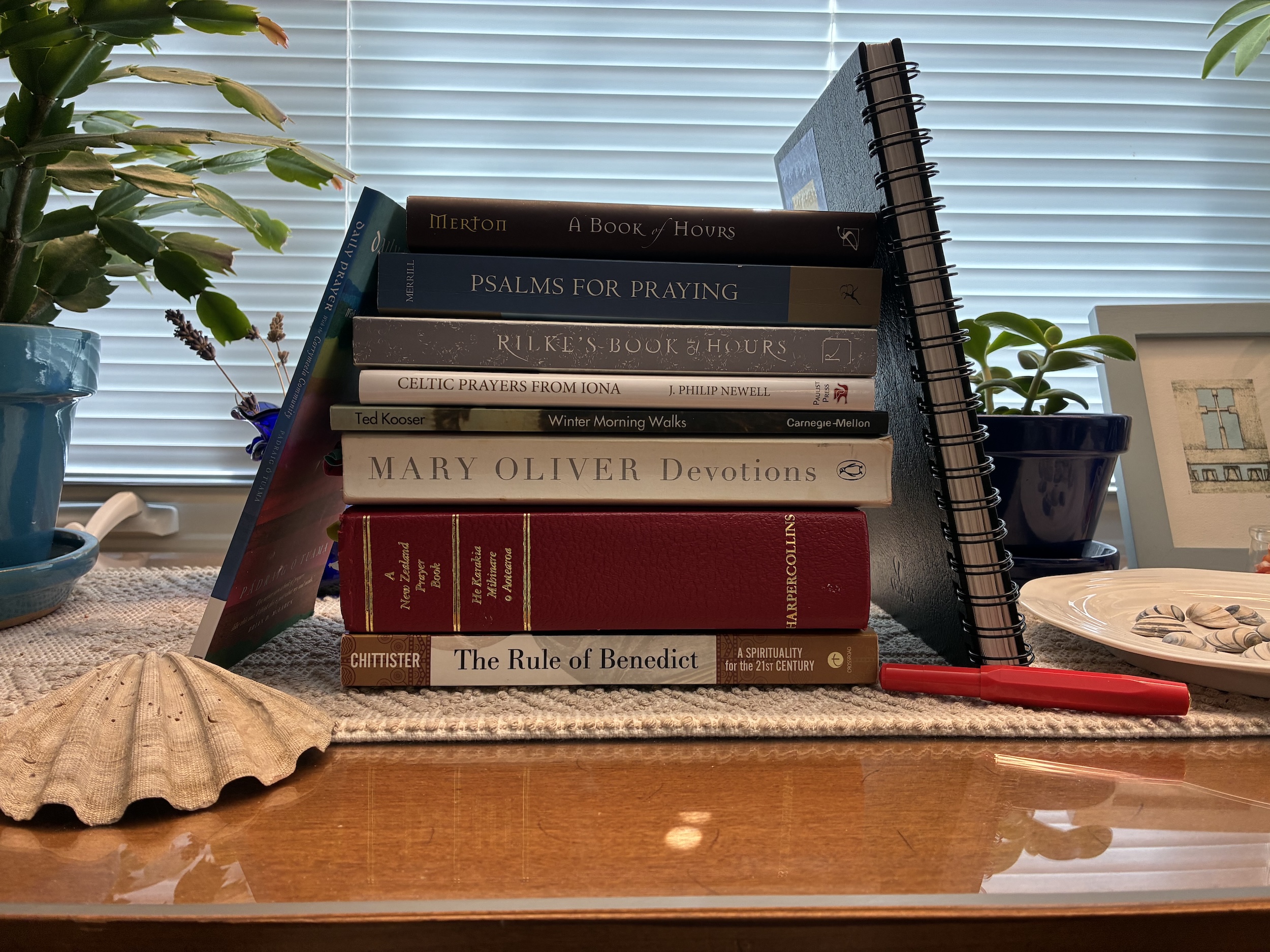
Morning sun poured through the slatted window shade, painting me and my gray recliner with stripes of light. A live-edged wooden table fashioned by my daughter sat beside me, holding a cup of tea and a few books, ready for my “greet the morning” ritual. Instead of reaching for Mary Oliver or Ted Kooser, I opened a book of poetry by my friend, Kilian McDonnell, who had died the day before. Kilian: Benedictine monk, theologian, author of scholarly books, professor, founder of the Collegeville Institute, poet, and my friend. He died on September 8 and would have been 104 on September 16, the day of his burial—a complete 104- year journey.

Unable to attend his funeral, I watched the livestream from St. John’s Abbey in Collegeville, Minnesota. At 104, he had outlived many of his family members and friends, but those who were able to travel gathered with the monks to give him a prayerful, loving sendoff.

Don Ottenhoff, former Executive Director of the Collegeville Institute, offered some words of remembrance. He told a story of arriving at the Institute for the first time in 2004 and seeing a portrait of its founder hanging on the wall in the Institute’s meeting place: a very serious Kilian reflecting his stature as a noted theologian and scholar. Later, in a storage closet, Don discovered a second portrait by the same artist: a playful, mischievous Kilian with a hint of a smile, reflecting another side of Kilian: the poet wrestling with God, Scripture and world through the lens of imagination. Don replaced the stern portrait with the smiling one. He and Kilian took turns replacing one portrait with another until Kilian relented and allowed the warmer, more approachable one to remain. It greeted me when I arrived at the Institute in 2008.

At the scholars’ first lunch together with Institute staff, I scanned the table, looking for a face that matched the portrait. Finding none, I wondered if Kilian were still alive. A monk slipped into the seat beside me and introduced himself. It was Kilian, going strong at 87. He welcomed me and helped me relax in the group of scholars and PhDs – I am neither – that I would be living and working with for the next nine months. Definitely the smiling Kilian.

he His office was across the hall from mine in the library basement. When the noon prayer bell called, he stopped what he was doing and walked across a road and the small grassy patch it encircled to the abbey church. I often walked with him. Once he wondered aloud if monks, gathering every day to chant the same old Psalms year after year made sense anymore or if it made any difference in the world. I wasn’t sure about the world, but being part of that gathering day after day made a difference for me. It wasn’t always the words, though sometimes it was. It was the community, the cadence of the chant, ancient, like the rhythm of ocean waves. A restful balm washing over my tired soul.

Our friendship deepened over the months. One evening, struggling with the recent death of my mother, a crumbling marriage, and an exhausted spirit, I called. He came. We sat in my apartment and talked. I don’t remember what was said. What I do remember was his willingness to be present, to listen, and to share some of his journey.

Our conversations were not always so serious. Once I walked across the hall to his office and asked if he’d translate an article for me. Published in a Sardinian newspaper, it featured my daughter who works there as an archaeologist. He obliged then told me I should teach myself Italian. “Take Pimsleur language tapes out of the library,” he said. “I taught myself Italian at fifty-nine.” I told him I was there to write a book and he said, “Well, you can listen while you’re in the car.” When I responded that I didn’t drive much since I walked to the library, the church, and events around campus, he said I could listen while I worked in the kitchen or did other things around the apartment. I checked out the tapes but confess they mostly stayed in their case.

I did some driving of course, including taking us both to the St. Cloud cinema to enjoy the Met’s simulcast operas and good conversations as we circled around and around the lobby during intermissions.

Kilian and I stayed in touch after my year at the institute was over. I enjoyed the celebration of his 90th birthday along with his family, monastic community, colleagues and friends. At 90, he assured us he would be around when his next book of poetry was published. He was! I visited him at the Abbey a few more times and attended a weeklong workshop at the Institute in the years that followed. We called and exchanged cards and letters and writing projects now and then.

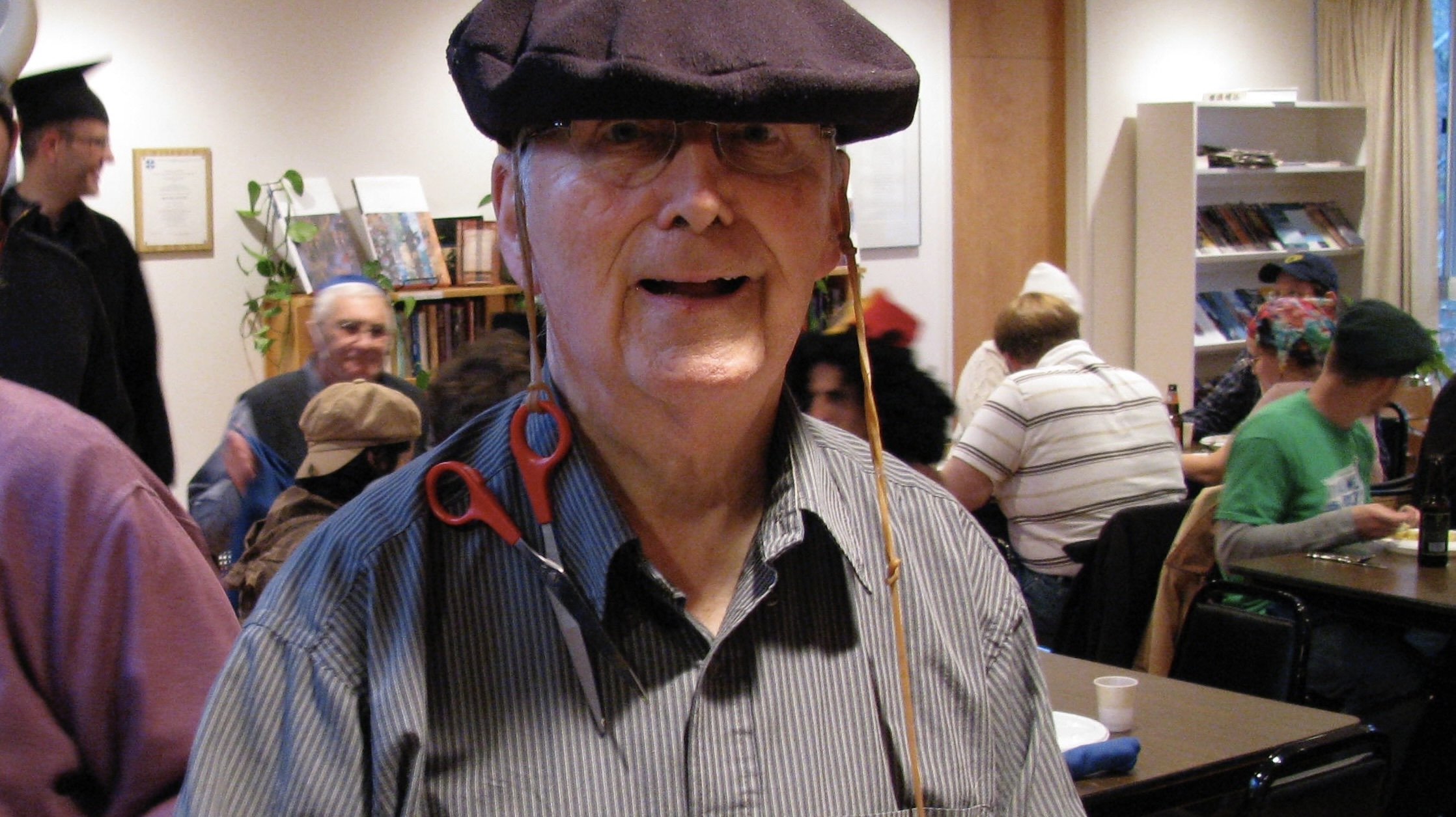
After hearing of his death, I looked through photos of my time at the Institute and subsequent visits to Collegeville. There was a fancy dress party one October. Everyone had to wear some kind of hat. Kilian came with a pair of scissors hanging from each side of his smart flat cap! He enjoyed a good laugh and the conviviality of lighthearted community gatherings—some planned, some spontaneous—embracing them as he embraced life’s more serious and difficult times.

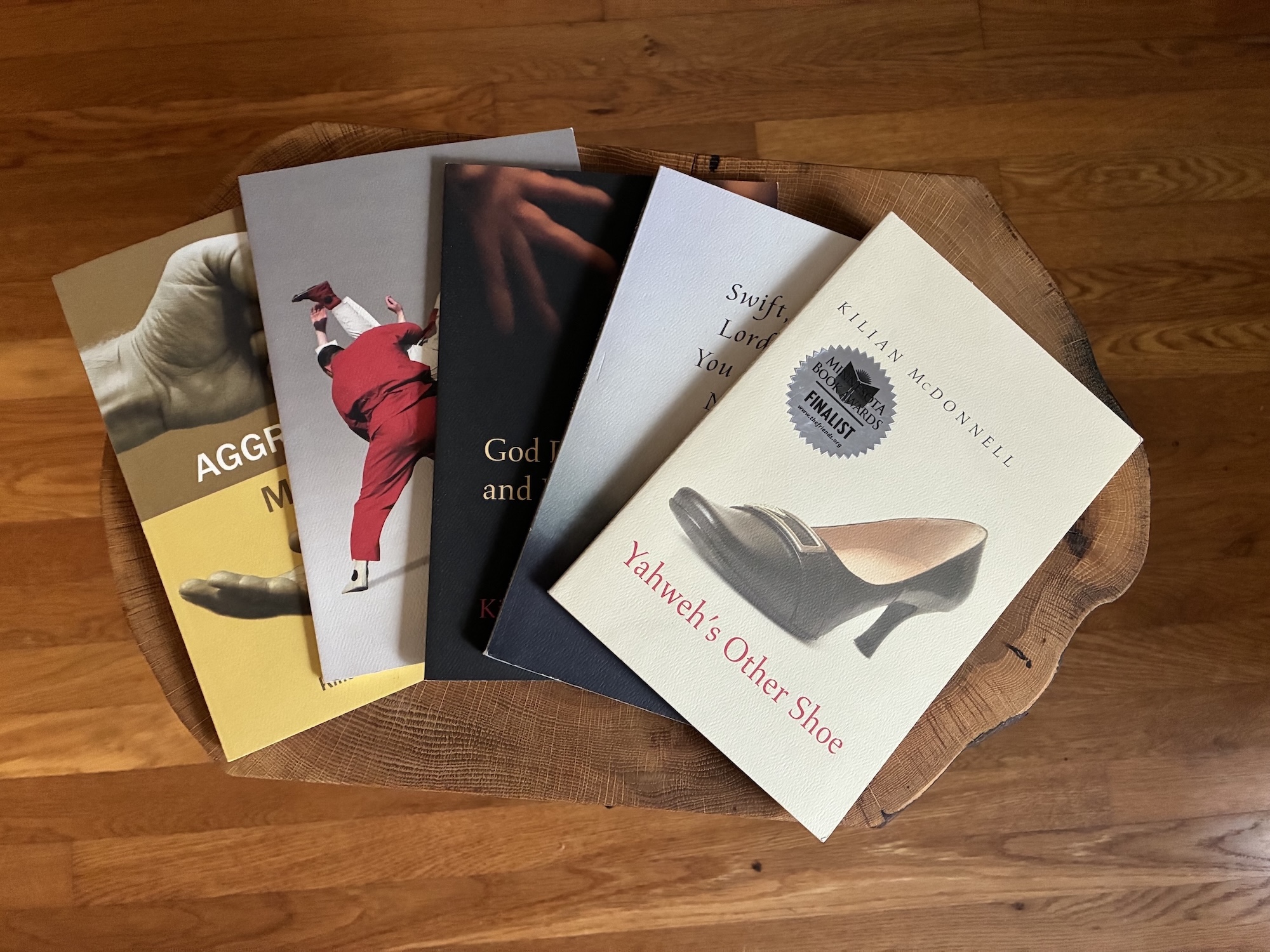
At seventy-five Kilian began his fruitful pursuit of poetry. He read and studied the masters. He had prize-winning poets as mentors and set aside hours for writing. By ninety-three he had published five volumes of poetry. (He liked to remind his readers that he did not write pious verse!) One volume, Yahweh’s Other Shoe, was a finalist for the Minnesota Book Award. His poem “The Monks of St. John File in for Prayer” is included in Garrison Keillor’s Good Poems for Hard Times. His poetry appeared in other places including Krista Tippett’s OnBeing and Keillor’s NPR segment, The Writer’s Almanac.

I turn seventy-five this month and often think of Kilian when I pull out watercolors and journals or toil over a picture book manuscript. Kilian’s voice emerges from the silence: “Mary, keep going. Do your work. You’re not too old.” And so I do.

Kilian was a Benedictine monk. A man of prayer and openness – to God and to all life offered. The unexpected. The joys. The sorrows. He embraced them as he could, and the Grace that came with them. Kilian’s life was full, and he shared it freely with the world. I am deeply grateful.

Resources

Kilian’s Poems in:

“Perfection Will Do You In” by Parker Palmer

On Being: The Monks of St. John’s File In for Prayer

Good Poems for Hard Times by Garrison Keillor

You can find all Kilian’s books of poetry—Swift Lord You Are Not, Yahweh’s Other Shoe, God Drops and Loses Things, Wrestling With God, Aggressive Mercy—at Bookshop.org

Collegeville Institute

Kilian was committed to ecumenical dialogue. In 1967 he founded The Collegeville Institute (Originally The Collegeville Institute for Ecumenical and Cultural Research). As stated on it’s website, its mission is to “…promote scholarship, leadership, creativity, & community among people of faith.” You can find more about the Institute and its many offerings starting on its homepage: Collegeville Institute

What Prayer Looks Like These Days

What Prayer Looks Like These Days

My prayer changes as I do and as life does. There are the tried and true: meditation, quiet prayer, old favorites, books of hours, chants. There are communal gatherings and liturgical celebrations. But sometimes, when the world turns upside down, the “order” that I have established prayer-wise disappears. Despite good intentions, I can’t maintain the routine. I blame myself and forget that the spiritual journey is not a smooth, predictable path. (I will borrow from Richard Rohr’s paradigm: order, disorder, reorder.) During this “disorder,”what once brought a sense of connection with the Holy One no longer does. During spiritual dark nights, when the Holy One seems absent, I’ve been counseled to pray through it, to open my heart even when nothing seems to fill it. And so I have.

I remind myself that some of those “dark nights” took months, once even years, to pass. They required trust in my relationship with the Holy One, which, really, is what prayer is all about. Perhaps that is the root of my difficulty with prayer: floundering trust as chaos envelopes the U.S. The hatred, greed, and disregard for law and Constitution is infuriating. Mass deportations without due process and lack of concern for innocents swept up in the frenzy rend my heart. Scrubbing this country’s past of contributions of those who are not white and straight creates an alternative history and implies that everyone else is inconsequential. Removing the immorality and cruelty that has been part of US history glorifies the powerful while dismissing their victims. Truth is one of the victims.

The pushback against the LGBTQ community, particularly the trans community, continues to grow, fueled by misinformation, ignorance, and fear.

The current budget bill passed by Congress is immoral. Slashing programs that serve the poor, the oppressed, and the marginalized in this country and around the world makes no sense. Tax cuts for the wealthiest 1%? Jesus must be weeping.

In this time, I have difficulty “reordering.” I feel spiritually adrift. After sharing this with my spiritual director, we talked about prayer and different ways to frame it.

Prayer is spreading Love energy, she said. It’s resting in God and following God’s Way as best I can. A Christian, I connect that with the way Jesus lived his life. Others will have different understandings, but Love is the root of them all. Standing up for Love. Bringing Love and compassion into this time and place. Standing up for the marginalized. Anyone can do it.

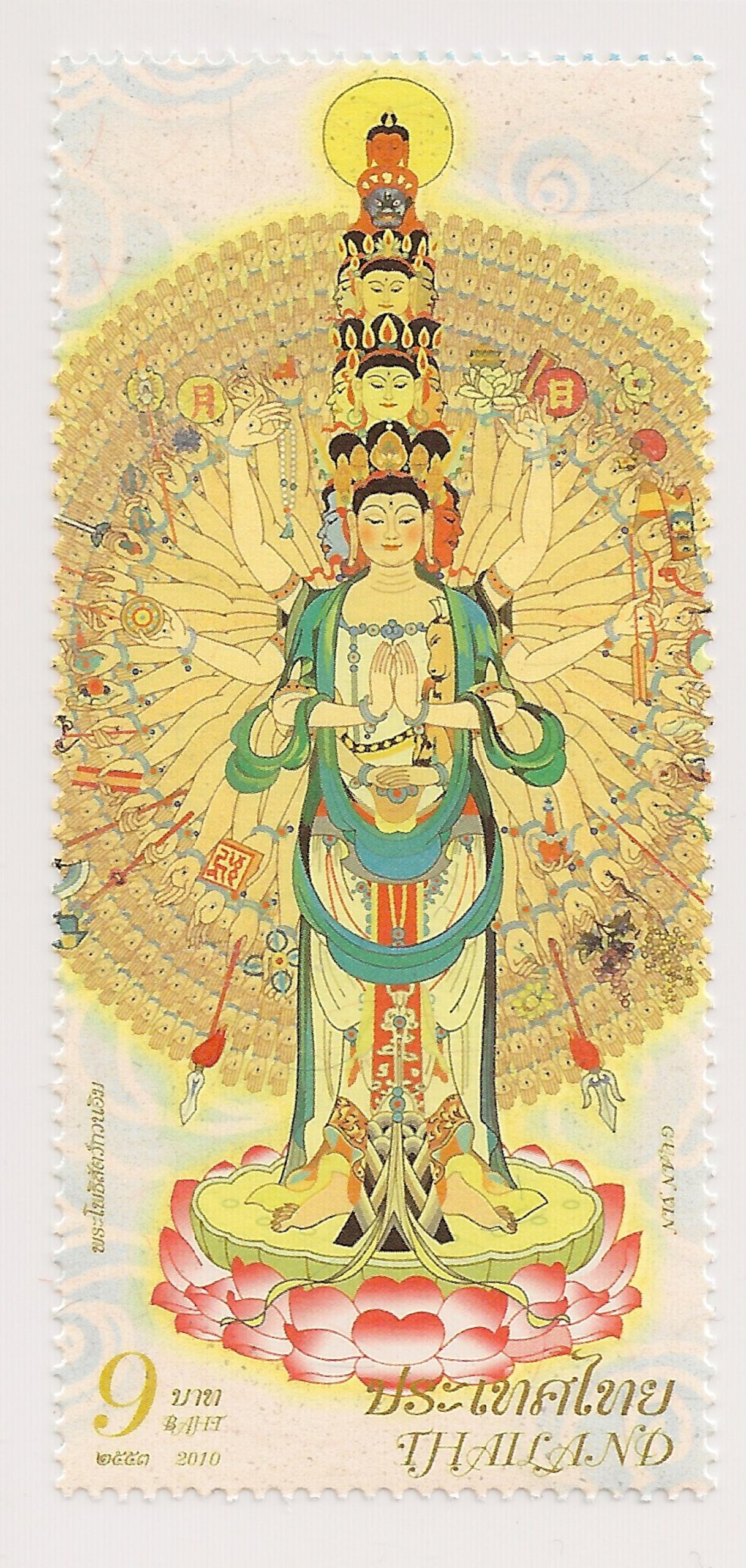
stamp with image of Guan-Yin

Image of Guan Yin, Buddhist bodhisattva whose name means “Observing the sounds of the world.” She has multiple heads to see and hear those suffering and multiple arms to aid them.

Intention is the key to my prayer these days. I pause and remember I am called to be Christ in the world. Is what I do contributing to bringing compassion into the world? Am I compassionate to myself, taking time for self care so I am able to be present for others? Am I a good “ear” for people who need to tell their stories, listening deeply so they know they are heard and held? Are my letters and calls to legislators designed to defend those targeted with executive orders or legislation that threaten their well-being. To expose harm and hold up morality to those in power and to encourage reflection and change? When I write a column, first I pray that what small bit I have been given to share encourages those who are looking for ways to make a difference.

Christ Has No Body

Christ has no body but yours,
No hands, no feet on earth but yours,
Yours are the eyes with which he looks
Compassion on this world,
Yours are the feet with which he walks to do good,
Yours are the hands, with which he blesses all the world.
Yours are the hands, yours are the feet,
Yours are the eyes, you are his body.
Christ has no body now but yours,
No hands, no feet on earth but yours,
Yours are the eyes with which he looks
compassion on this world.
Christ has no body now on earth but yours.

Theresa of Avila 1515-1582, Spanish Mystic and Carmelite reformer along with John of the Cross.

While making an effort to pray with a favorite small book of prayer, Daily Prayer with the Corrymeela Community, by Padraig O Tuama, I am also practicing reframing my understanding of prayer: being intentional about how I live the unfolding day and making sure it is to bring Love and justice into the world. Speaking out as I am able, against the darkness. And trusting in my relationship with the Presence that holds all.

The Civil Rights activists in the 60’s provide inspiration. Their actions were supported by their faith. They weren’t advocating revenge, but respect, equality, and justice. Martin Luther King, Jr.’s “I have a dream speech” speaks to the unending struggle of those on the margins.

“Now is the time to make justice a reality for all of God’s children,” he proclaimed in his soaring oratory. “I have a dream that one day this nation will rise up and live out the true meaning of its creed: ‘We hold these truths to be self-evident: that all men are created equal.’”

Prayer for me these days is all about intention to be present to Love…and to be Love in the present moment. How it looks day to day doesn’t matter.

Quieting the Spirit

Quieting the Spirit

Swimming, One Day in August

by Mary Oliver

It is time now, I said,
for the deepening and quieting of the spirit
among the flux of happenings.

Something had pestered me so much
I thought my heart would break.
I mean, the mechanical part.

I went down in the afternoon
to the sea
which held me, until I grew easy.

About tomorrow, who knows anything.
Except that it will be time, again,
for the deepening and quieting of the spirit.

I discovered this poem after an editor sent an image of a handmade card with a partial quote. This poem, at this time, is perfect for me

Like Mary Oliver, many things have been “pestering my heart” to the point of breaking. Most have to do with the current political scene in this country and its repercussions for democracy here and abroad, for all Americans, but especially for the poor and marginalized. I call my senators and representatives. When their voice message mailbox is full, I write emails. I donate to organizations that will help people directly or by filing lawsuits against unconstitutional or illegal actions taken by the current administration. 

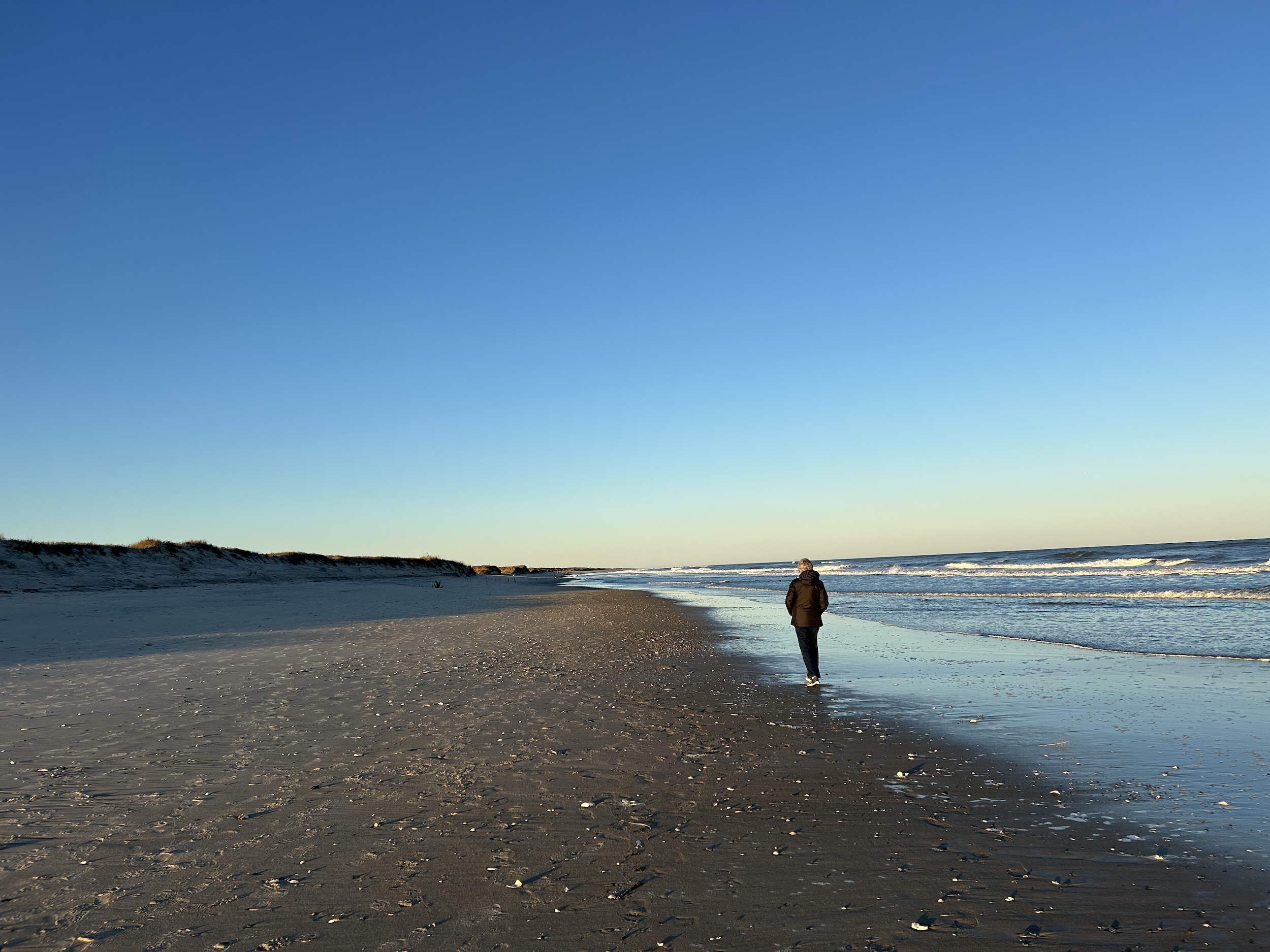
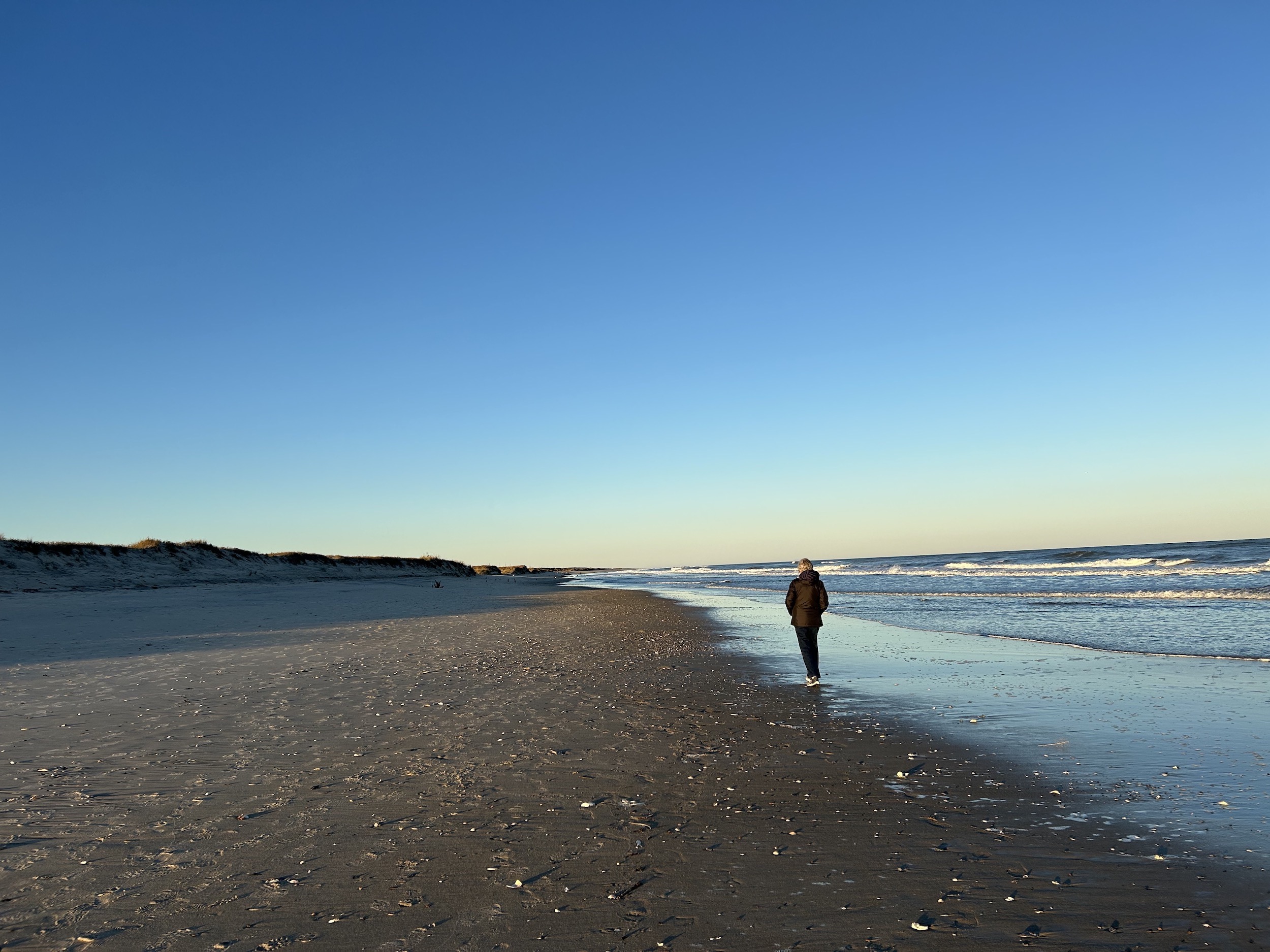
But the most difficult thing for me to do is just what I need and what Mary Oliver says: “… the deepening and quieting of the spirit.” Unlike Oliver, I don’t live close to the sea. But when I have a chance, a long walk along the beach calms my spirit. It’s the rhythm, the timelessness of the ebb and flow. It’s the awareness of the immensity of creation, earth and beyond, that helps me settle into a sense of being a small part of something unimaginably larger than myself and of the Holy Presence that holds all. It helps me take a long view.

Woman walking along the beach

But as I say, I don’t live close to the ocean, so I try to do what I can do where I am. I have varying degrees of success.

When I sit in quiet prayer, my mind fills with worry and concerns. No matter how often I acknowledge them and let them go, they return. Far from quieting my spirit, the time often agitates it. Instead, I read the New Testament and focus on Jesus’s actions and those of the women and men who followed him. Jesus didn’t “win” in our common understanding of the word, at least in the short run. The oppressors did, crucifying him and persecuting his followers. Jesus didn’t promise an easy way, but in the big picture, Love overcomes all. The prayerful reading engages my mind and heart.

I walk and pay attention to what is around me. The gift of the season. The birdsong. The sun and clouds. Stepping outside on a clear night, I take in sky. The stars and planets are breathtaking, even in the city. 

I read poetry, novels, and spirituality and virtually gather with friends to share what spoke to us. Gathering is important and helps remind me that I am not alone facing these times.

This week, my daughter visited, and we went to the theater to watch A Complete Unknown about Bob Dylan. A 60’s folk singer, I loved the music and remembered the events and musicians. We came home and listened to Joan Baez while making and eating dinner. Then, at my daughter’s insistence, we pulled out my two guitars and sang the old songs. She washed dishes and I continued to play. 

Doing things that feed my spirit and bring joy helped me connect with my deeper self. We baked cinnamon rolls, brioche bread, and banana muffins. We cleared the table and painted. And sat up late into the night drinking tea, talking, and watching favorite reruns.

“Centering down,” as Howard Thurman said, can happen in other ways than sitting quietly in a chair or walking the beach. I have found that when I do enough of these things, I am better able to be quietly without becoming distraught. Without living in fear of a future that is not yet. However we do it, it is time for “… for the deepening and quieting of the spirit” and living as best we can in the present.

Source

“Swimming, One Day in August”: First published in Red Bird: Poems by Mary Oliver, Beacon Press, 2008

There Is Only One River

There Is Only One River

My daughter called on her way home from a bakery where she picked up a loaf of challah for a soup dinner with a friend flying in for the weekend. The baker gave her a warm challah knot made from dough scraps while she waited for the loaves to come out of the oven. We remembered making challah at home. The braiding. The sweet aroma of honey-egg bread that filled the kitchen. By the time we hung up, I had decided to make a loaf myself.

I played an old Peter, Paul, & Mary album while I gathered ingredients and donned an apron I bought at the Eiffel Tower, surrounding myself with happy memories. I pulled aside the curtain that hangs over the long, narrow window and tilted the aluminum slats on the bent miniblind that covers the window in the old wooden door. Sunlight filled the room.

Challah is easy to make. Four steps of about 30 minutes each. Plenty of time to wash dishes and utensils as I went. And, to sing. 

Along with Pete Seeger (my favorite), Joan Baez, and Judy Collins, Peter, Paul & Mary were major contributors to the soundtrack of my younger life. Guitar in hand, I sang at home, with high school friends, at sing-a-longs, coffee houses, and churches. I thought I could do without the guitar while traveling around Western Europe one summer, but by Germany, I bought one the size of a large ukulele and strapped it to my backpack. 

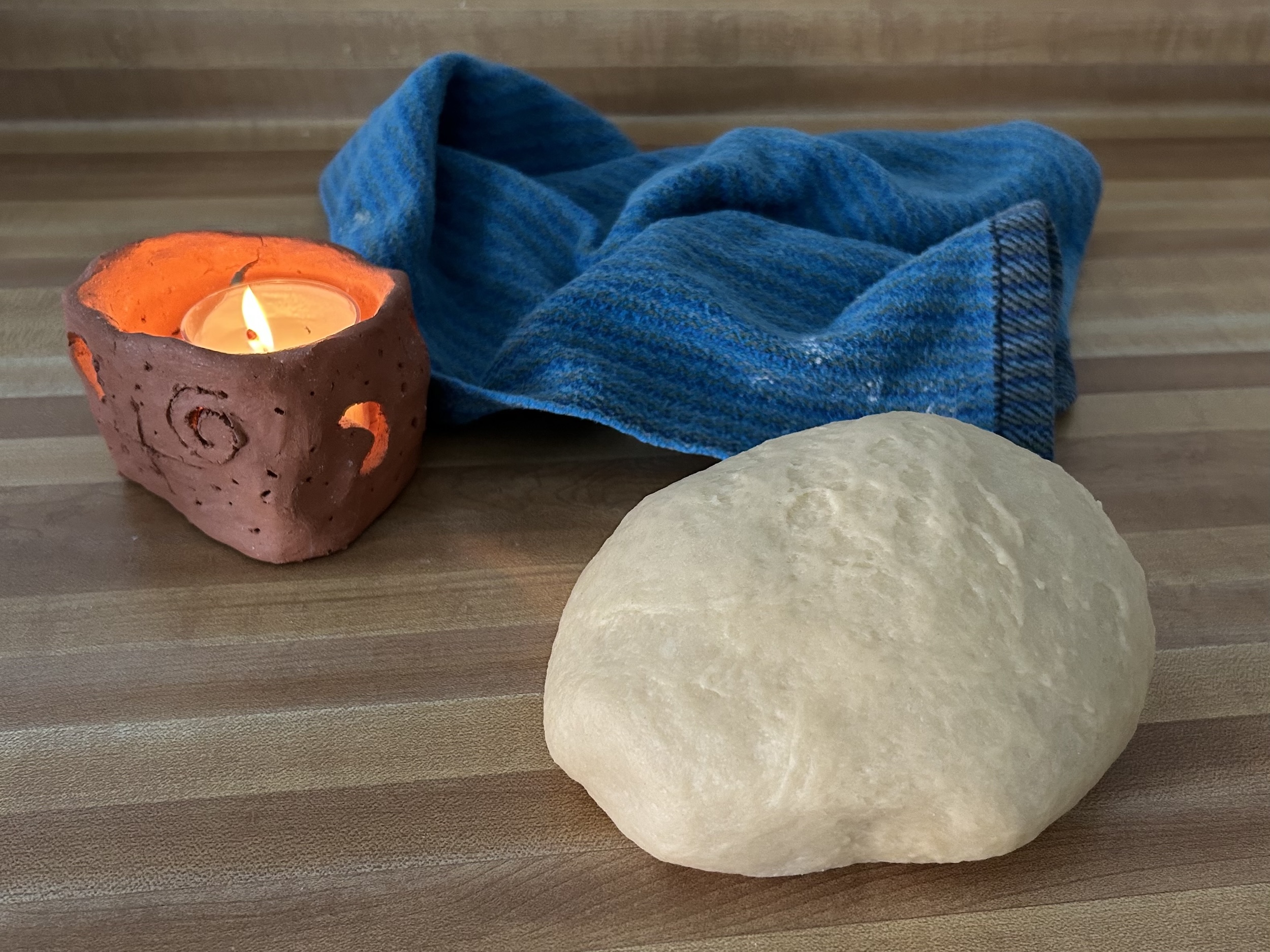
Ball of bread dough sitting on kitchen counter with candle and dishtowel

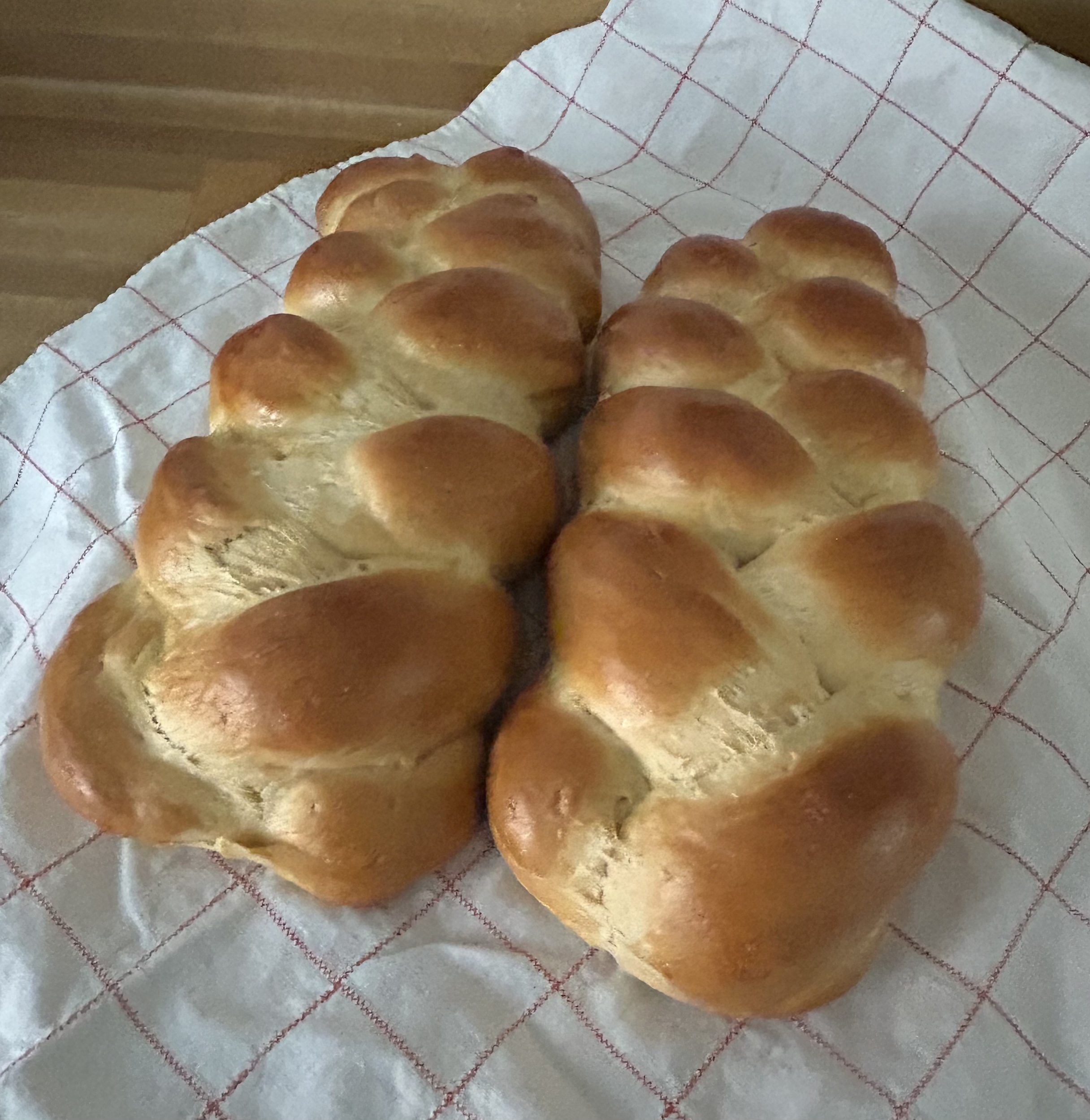
In my kitchen, I sang as I mixed and kneaded the dough. I sang as I separated it into six pieces, rolling each into a long strand. I braided two smaller loaves. One to keep. One to give away. I remembered harmonies to old favorites. As I worked, one song in particular touched my soul, aching from the horrible events unfolding in Washington and across the country: “The River of Jordan,” written in 1972 by PP&M member, Peter Yarrow.

I suppose I shouldn’t be surprised at the appropriateness of the lyrics for the current situation in our country. Bigotry, hatred, violence, “them vs us,” is nothing new to the human race. There are always those who stir up fear and use it for their own gain. But what is happening here, the scope, the speed of it, is overwhelming. 

I played that song over and over and sang with my whole heart. I remembered that PP&M sang at the 1963 March in Washington and the March from Selma to Alabama in 1965. Singling out groups for oppression and “othering” is part of our country’s history. It remains.

Baking bread, letting in the sunlight, singing familiar songs were balm. Walking down the street to deliver a loaf to a young mother and her son helped, too. We laughed as the little one showed me one thing after another and sat close as I read books to him.

But Yarrow’s song still plays in my mind. And I wonder… What can I do? How can I live out the wisdom held in the lyrics: 

We are only one river. We are only one sea.
And it flows through you, and it flows through me.
We are only one people. We are one and the same.
We are all one spirit. We are all one name…

A little at a time. Where I am. What I can do. Look for goodness and beauty. Celebrate it. Put some into the world. Connect with and support others. Persevere. Pray. 

Like bread, we nourish one another. Like a braided loaf of many grains, we are one.

two loaves of braided challah

Resoucre:

Listen to Peter, Paul, & Mary and friends sing The River of Jordan

With Gratitude for Jimmy Carter

With Gratitude for Jimmy Carter

I celebrated the election of Jimmy Carter with fellow students, faculty, and administrators of a theological school, munching Southern ham biscuits in the student lounge. Following the presidencies of Nixon and Ford, President Carter and Rosalynn walked hope and joy into the national psyche as they stepped out of their car and made their way to the White House on foot. 

Those 48-year-old memories still evoke hope and deep respect for the man. In stark contrast to the incoming administration that thrives on divisiveness, revenge, and the pursuit of wealth and power, Jimmy Carter was all about service. 

Recently I read two articles that provided insight into the exceptional life and character of President Jimmy Carter.

The first was Samatha Power’s New York Times opinion piece, “Samatha Power: The Conscience of Jimmy Carter.” In it she noted that Carter often quoted Jesus in Matthew 25:40 saying that whatever we fail to do to the least among us, we fail to do to him. 

Human Rights

Inspired by profound faith, President Carter worked tirelessly, during and after his presidency, to promote human rights at home and around the world. He received the Nobel Peace Prize in 2002 “… for his decades of untiring effort to find peaceful solutions to international conflicts, to advance democracy and human rights, and to promote economic and social development.”1

In her opinion piece, Power outlines the central role human rights played in Carter’s foreign policy. He followed the dictates of his conscience, not political polls. He was the first president to publicly support a Palestinian State. He brokered a peace between Egypt’s Anwar Sadat and Israel’s Menachem Begin. His public denunciation of South Africa’s apartheid was the first for a U.S. president. 

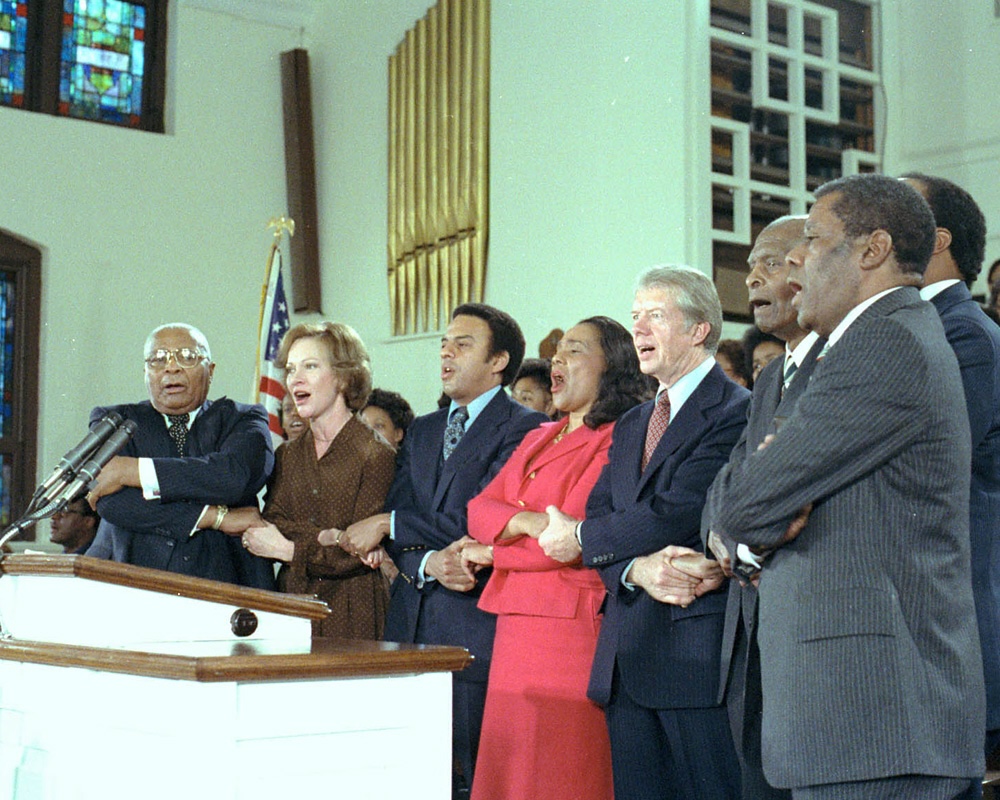
 January 14, 1979, President Carter accepted the Martin Luther King Jr. Nonviolence Peace Prize at Ebenezer Baptist Church in Atlanta, Georgia. Image Credit: Jimmy Carter Library

Civil Rights

He grew up in a predominately Black area in rural Georgia and saw first-hand the effects of racism and the courage of those who worked to end it. Martin Luther King, Sr. was a close friend and inspiration. Beginning as a State senator, Carter worked to increase the presence of Black Americans, people of color and women in judicial and government positions. He appointed more African Americans, Hispanics, and women to these positions than all previous presidents combined.2 He also worked to increase fair election practices. As Governor of Georgia, he announced “The time for racial discrimination is over.” He signed the Refugee Act into law in 1980 and welcomed hundreds of thousands of Cuban refugees to our shores. 

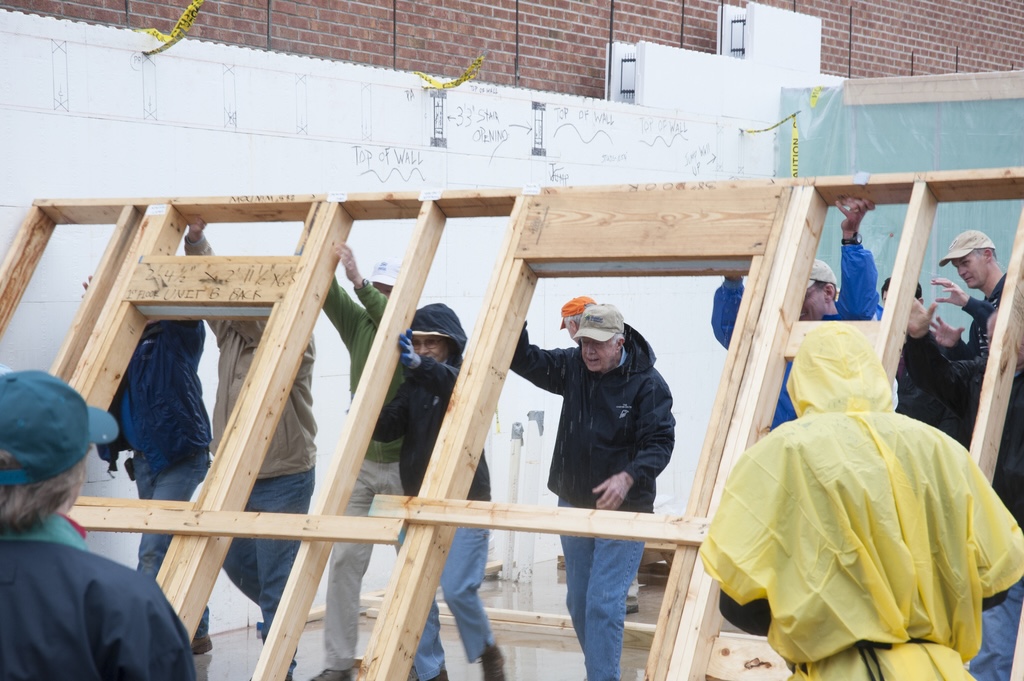
Jimmy Carter and Rosalynn Carter working on building homes in D.C.’s Ivy City neighborhood for World Habitat Day 10.1.2010 Photo: Sammy Mayo, Jr. – HUD

Habitat for Humanity 

Carter’s understanding of human rights included the right to food, shelter, health, and education.3 He worked with Habitat for Humanity, along with Rosalynn, building houses, even in his 90s! (I read the book The President Builds a House to my children at dinner one evening, exposing them to a role model and to the truth that helping others is a responsibility we all share, regardless of social position.)

Women’s Rights

He was long a vocal advocate for women’s rights, and he cut ties with the Southern Baptist Convention in 2000, citing the church’s rigid stance on women’s roles both in the home and in church leadership. In 2009 he wrote an essay addressing his action, “Losing My Faith over Equality.” In 2014 he published a book, A Call to Action: Women, Religion, Violence, and Power. (Jimmy Carter wrote over 30 books including poetry and children’s books.)

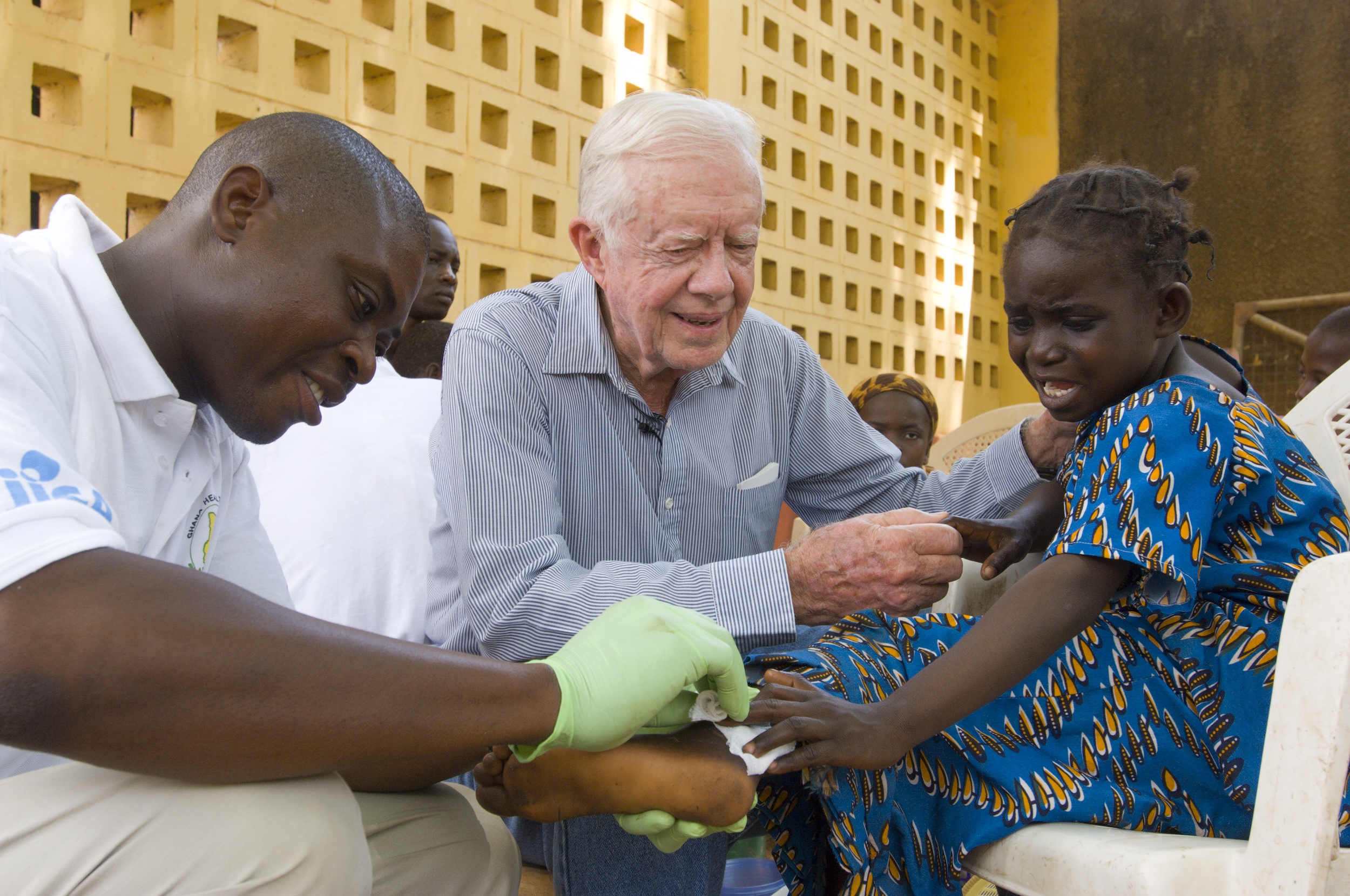
Jimmy Carter tries to comfort 6-year-old girl at Savelugu Hospital in Ghana as Carter Center assistant dresses her extremely painful Guinea worm wound 2007 credit: The Carter Center
Former President Jimmy Carter tries to comfort young girl at Savelugu Hospital in Ghana as Carter Center techinical assistant dresses her extremely painful Guinea worm wound. 2.8.2007 Image Credit:The Carter Center

The Carter Center

In 1987, he and Rosalynn founded The Carter Center to promote human rights, democracy, and disease prevention. Along with other organizations (including the United States Agency for International Development where Samantha Power is the administrator) the Carter Center helped reduced cases of the Guinea worm that caused millions of deaths in the 80s and only 13 in 2023. The Carter Center also has all but eliminated the scourge of river blindness.

Foreign policy

Environment

According to Power, Carter “… was the first American president to elevate environmental conservation to a global concern.”4 Carter recognized the human right to clean air and water and the need to protect the environment. He installed solar panels on the West Wing of the White House, providing power to heat the water. (They were removed by President Ronald Regan.) He created 39 new park sites including 13 in Alaska, and in 1980 he signed the Alaska National Interest Lands Conservation Act that provided protection for over 100 million additional acres in Alaska.5

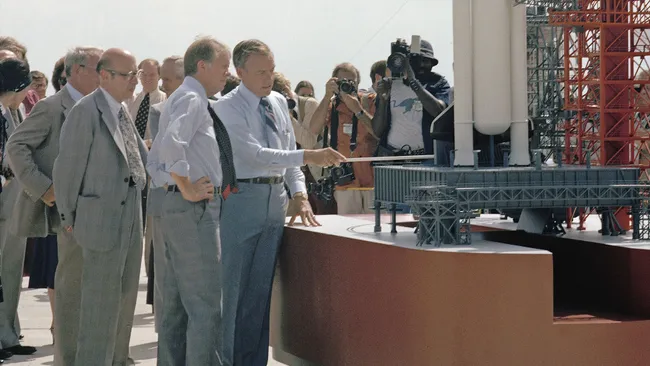
President Carter bdeing briefed on preparations for fist space shuttle launch at Kennedy Space Center 10.1.1978 Image Credit: NASA

NASA

An engineer as well as a peanut farmer, Carter approved money for the floundering NASA shuttle program. Skeptical, but not wanting to waste money already spent on the program that was years behind schedule and well over budget, he approved millions of dollars and saved the project. His decision was not popular, but in the long run it enabled the creation of the International Space Station (ISS), which today remains a center of scientific inquiry and international cooperation. Shuttles also delivered large payloads into orbit, perhaps most well-known, the Hubble Space Telescope. 

In 1977, Carter recorded a message of peace and hope on the Voyager Golden Records included on both Voyager 1 and Voyager 2. (His message was also included in printed form.) The records carry information about life and culture on earth including science, music natural sounds, and spoken greetings to any extraterrestrials who might find and decode it. Amazingly, both spacecraft are still traveling, now in interstellar space.

 A copy of the Presidential Proclamation of July 16 – July 24, 1979, as the “United States Space Observance” signed by President Carter hangs over the desk of a NASA engineer I know. Besides the proclamation, the letter contains Carter’s appreciation of NASA’s work, the importance of space in daily communications and monitoring earth’s environment. He wrote that continued exploration held promise for “… the wiser management of our planetary resources, for the expansion of knowledge and for the development of civilization.” (Today, astronauts on the ISS and hundreds of satellites are monitoring our environment, giving us a more complete picture of the state of earth’s climate and resources.)

Faith and Being Salt

You may know all these things. It’s difficult to list the all good he has done. His persistence in pursuing policies and actions that contributed to the well-being of all people was rooted in his faith. 

Which brings me to the second article “Why Does Salt Matter,” by Debie Thomas in the Center for Action and Contemplation’s Daily Meditations. I have a saltshaker sitting beside my pepper mill, but Debie Thomas reminds us that historically, salt was precious and used for much more than seasoning food. It was used medicinally as a disinfectant, to staunch bleeding, and to treat skin diseases. She points out that when Jesus called his followers “salt of the earth,” he likely had this broader sense in mind. Of course, salt used in excess can ruin a dish, overwhelming the flavor. In Debie’s words: “Salt doesn’t exist to preserve itself; it exists to preserve what is not itself… Salt is meant to enhance, not to dominate. Christian saltiness heals; it doesn’t wound. It purifies; it doesn’t desiccate. It softens; it doesn’t destroy…”6

Her reflection was published two days after Carter’s death, and as I read, he immediately came to mind. Jimmy Carter was salt. The best kind. His faith was the bedrock of his life and his actions. While today the label “Christianity” is sometimes used by those whose actions don’t reflect Jesus’ example, Jimmy Carter’s life and actions did – before, during, and after his term as president. 

He was salt. He was the city on the hill, the light on a stand. He and his wife left a legacy of love and service and faith that touched and inspired people around the world. I am one. And I am deeply grateful.

Notes

1 The Nobel Peace Prize 2002

2 Presidential Campaign and the Carter Presidency The Carter Center This is an excellent summary of Carter’s presidency. Other aspects of Carter’s life and legacy can be found on The Carter Center site.

3,4 The Conscience of Jimmy Carter by Samantha Power

5 Jimmy Carter’s conservation legacy

6 Why Does Salt Matter? by Debie Thomas

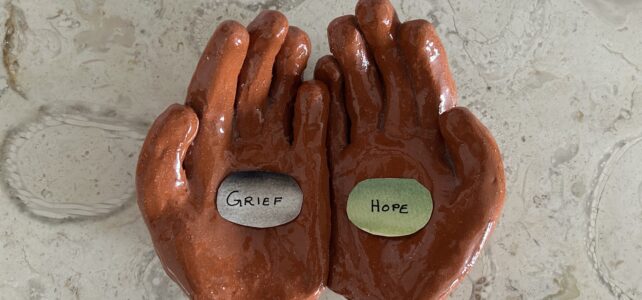
Holding Both Grief and Hope

Holding Both Grief and Hope

This column is more political than my usual offerings. I can’t talk about spirituality as if it exists in a vacuum. Many of my readers will resonate with my thoughts and feelings. Others may not. But I must do what is mine to do.

I began writing this column in September, when I woke up thinking “hope.” Feeling hope. While that may not seem surprising, it was for me. In the middle of election season, I had been living with dread and fear about the future. No matter how deep it’s pushed down or how purposely ignored, fear sucks hope right out of a person. That was me.  

What allowed me to throw fear out and embrace hope instead? The Democratic National Convention. Instead of the vengeful rhetoric espoused by some Republican candidates aimed at stirring up fear and keeping us down and apart, there was hope. There was a positive view of the future that included everyone. No hateful misinformation about the transgender community. No disparaging remarks about immigrants or calling for mass deportation. No whitewashing the part race and slavery played (and plays) in U.S. history.

When the cameras scanned the crowd, diversity was everywhere. It was celebrated by those who spoke and in what they said. It seemed possible that this country could embrace compassion and love of neighbor. It seemed possible that we could, together, move in a more positive way through the challenges and tragedies of our world. Perhaps we could believe that we are, indeed, more alike than we are different.

When I woke up on November 6, fear and anger again had replaced my hope, and dread for the future was taking over. The vision of inclusion, respect and moving forward together was replaced by one of negativity, revenge, and disrespect of “other.” The highjacking of “Christianity,” putting it into service of an approach that seems anything but Christian, continues to sweep the country. Efforts to enshrine Evangelical White Christian Nationalism as the official religion of the U.S. is grossly un-American.

I wasn’t alone in my “morning after” despair.  Many concerned with climate change heard “Drill, baby drill,” with disbelief. Many concerned with women’s rights heard “Your body, my choice,” with dismay. And basic human rights? Democratic institutions?

Struggling with all this, I listen to many wisdom voices, past and present: my faith and spiritual/wisdom teachers of many traditions; civil rights leaders; psychologists and counselors; poets; good friends. In addition to eating well and incorporating exercise into the day, here are thoughts on getting through these difficult times:

Grieve Alone and Together

Recognize feelings and emotions. Experience them. Feel sorrow, anger, fear, and despair. Weep. Rant. Vent. Sometimes alone. Sometimes with friends who can hold your tears and love you when you’re a mess. Find communities where you can share your grief. When one member has no hope, someone there will. Remember, grief isn’t once and done.

Who are the people, the communities that can hold you, support you, love you? Who are those who share your sorrow? Who are those with whom you can both grieve and find hope?

Find a Place Where Grace Flows

The week after the election found me on Chincoteague Island with my daughter. The ocean draws me into a contemplative space, opening my soul to release emotions – joy, gratitude, grief, sorrow – as well as to receive grace of healing, wonder, and gratitude.

My salty tears mingled with salty air. I rejoiced at the birds’ antics and wondered at shells at my feet. I laughed, prayed, and sang into to the pounding of wave after wave on the sand. Sometimes alone. Sometimes with my daughter. Together we watched the Supermoon rise, the king tide flood the marshlands, and herons wait patiently along the banks until the water receded and they could resume their mindful-walking fishing practice.

My ocean visits are few and precious. I have other Grace places: a small, neighborhood woods; a local café where I go to write; art museums; a friend’s kitchen table; my favorite chair flanked with a handmade table that holds a mug of tea and a stack of books.

What are your ordinary as well as extraordinary places where Grace flows? As Robert Lax would advise, go there often.

Establish a Grounding Practice

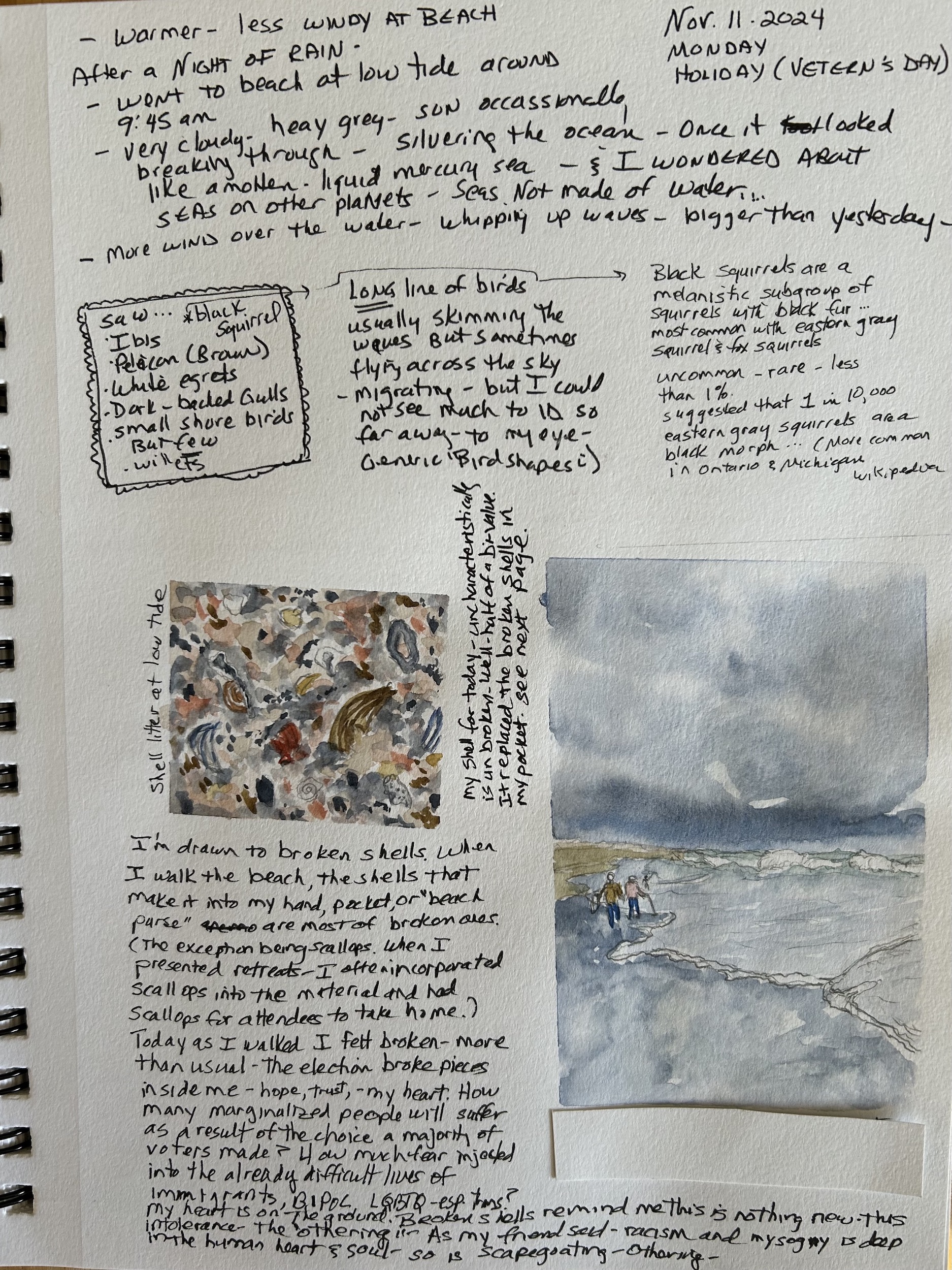
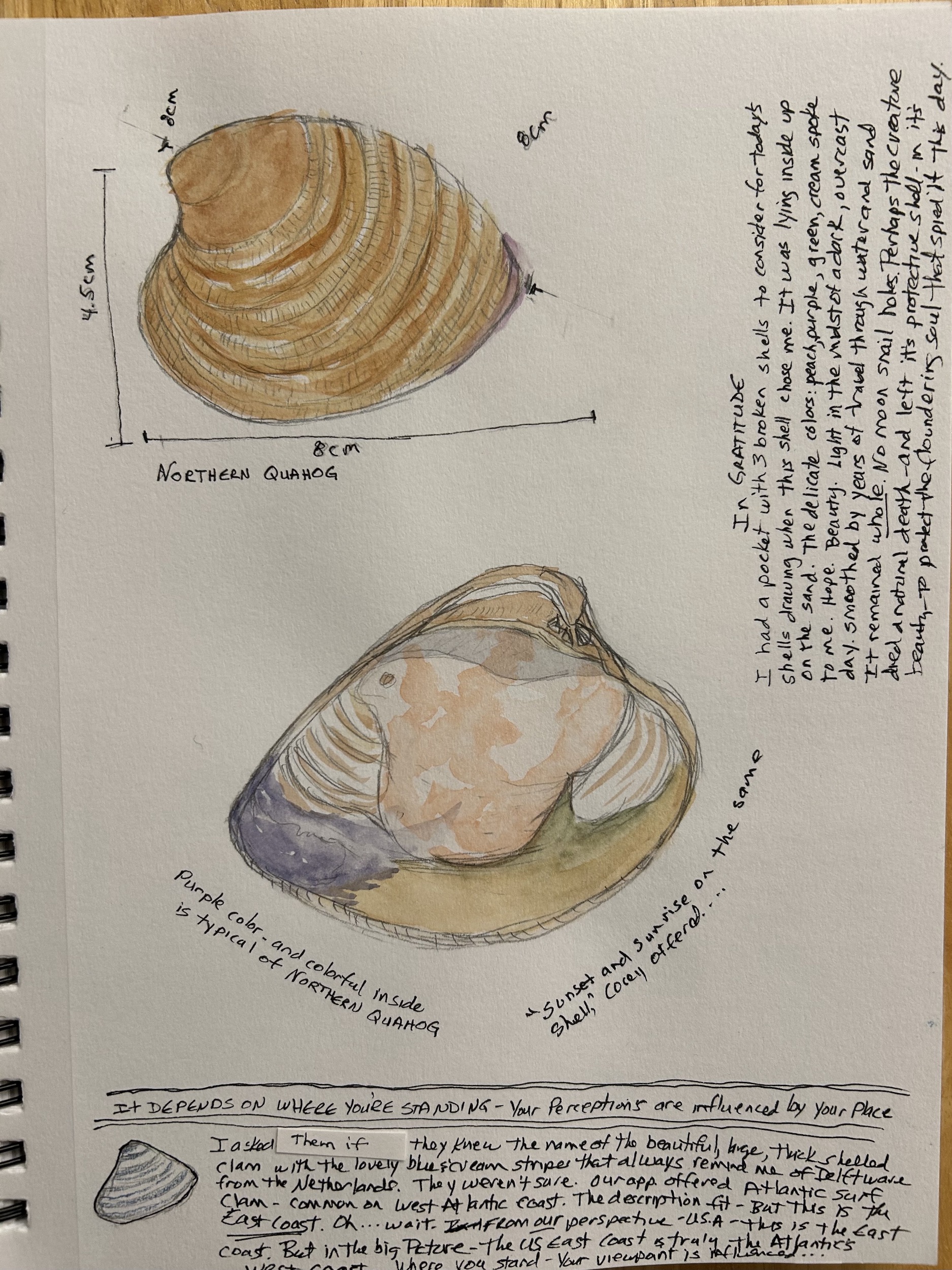
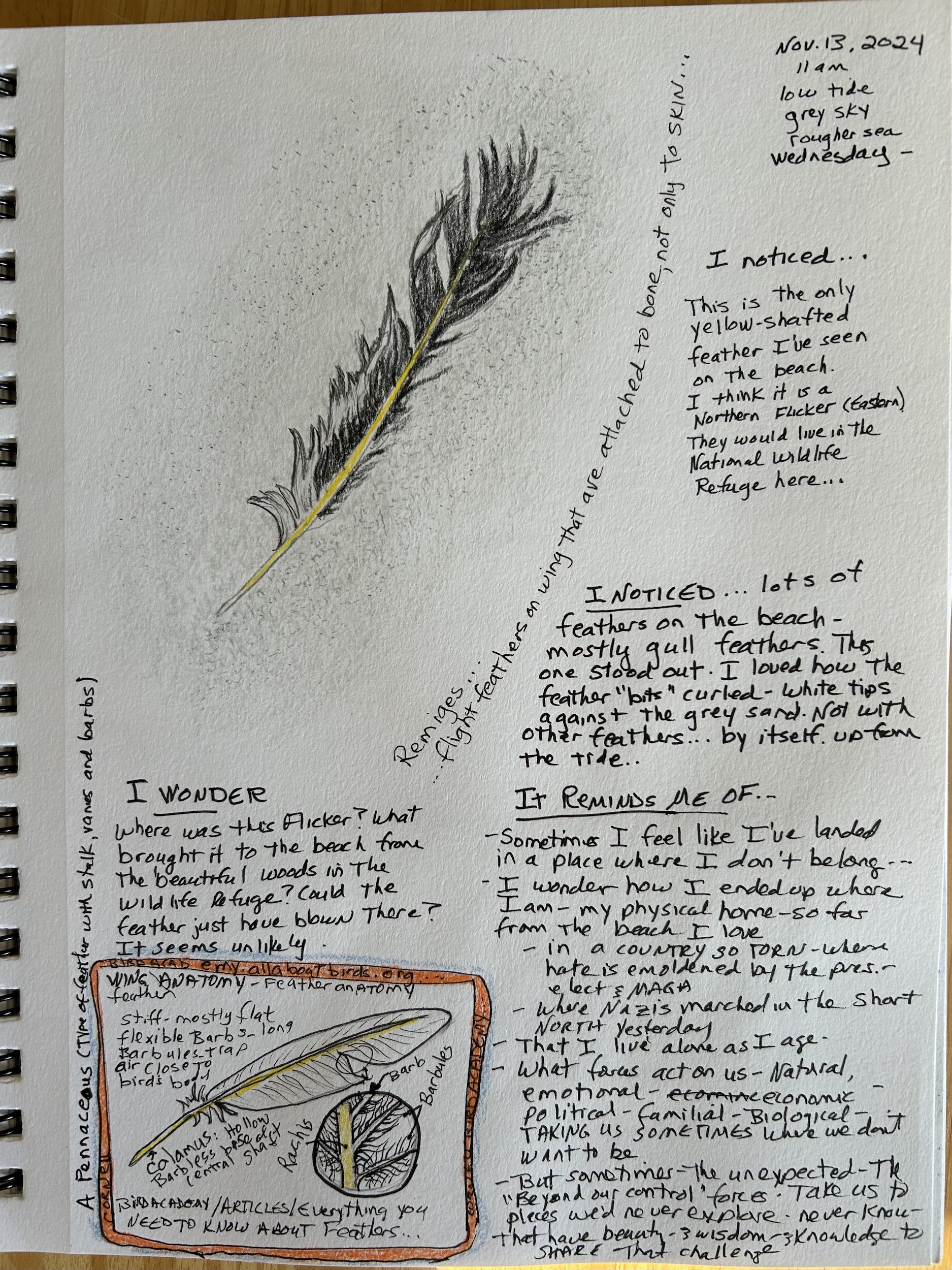
page of nature journal painting of shell litter people walking beach wrirtint
Nature Journal page

Take time for spirit-nourishing practices.

At the beach condo, my daughter set up a long table filled with art and journaling supplies. Every day we showed up there, like pilgrims to a holy place. She painted. I created page after page in my nature journal: mosaics of small drawings, paintings, and words.

Journaling/Art

For some, journaling and creative arts are prayerful, centering activities. While on Chincoteague I didn’t work on my current book project. I didn’t write this long overdue column. Now, back home, those projects call for my attention along with piles of laundry, dishes, and routine chores. While I can’t give hours every day to nature journaling, I’ll try for one day a week. And I can be faithful to my regular journaling practice.

Quiet Time/Prayer

During information overload, refrain from too much news consumption and social media scrolling. Make time for quiet. I’m reestablishing a morning routine of sipping tea, twenty minutes of quiet prayer, and reading.Throughout the day I take a few moments, breathe deeply and remember that I live and move in the Presence of the Sacred, no matter what I’m doing.

Quiet walks around the neighborhood or in a park can provide mental and spiritual spaciousness.

Give yourself the gift of time to engage in practices that help ground you and sink deep into your center. Encounter the Sacred that dwells there. The Goodness that cannot be overcome.

Move Forward

In a New York Times opinion piece “How Not to Fall Into Despair,” Brad Stulberg quotes Holocaust survivor Viktor Frankl and uses his term “tragic optimism.” It involves acknowledging pain and hardship and in the face of it, moving forward in a positive way.

It’s the “both/and” stance central to many religions, including Christianity. Jesus lived acknowledging and confronting the evils of his day while still finding room in his heart to hold love, forgiveness, and hope.

He lived compassionate engagement, hanging out with the marginalized and calling his followers to care for the poor, widows, and orphans. Love God and your neighbor as yourself, he said. He didn’t list exclusions. He didn’t ignore the oppressors in power but didn’t let fear paralyze him.

What is mine to do?

One friend said she was taking the “left foot, right foot, left foot, right foot” approach. Not looking into the future but being present to the moment and to what she could do where she was, to put kindness and compassion into the world. Another is concentrating on volunteering for organizations that serve others in her city. Both are claiming agency rather than helplessness.

It involves what Stulberg calls “wise hope and wise action.” Not hope born of denial, thinking that if we just wait long enough, things will get better, but seeing things for what they are and still taking action.

In his final written message published in the New York Times after his death, the great civil rights activist John Lewis charged us to do that. To stand up and speak out when we see something that isn’t right. “Democracy is not a state.” He said. “It is an act.”

I am overwhelmed by what is happening. I feel helpless. But I’m not. I can do what I can do where I am. I can write. I can be kind to strangers and the marginalized. I can donate to organizations that support causes I believe in, especially those that serve targeted populations threatened by the wave of “othering” spreading across the country. I can stay informed, write to Congressional representatives. I can speak up to representatives in my state government when they propose and pass legislation that demonizes and oppresses monitories.

Darkness doesn’t have to win in the long run. Not when enough people inject the light of love and compassion into the night.

What is yours to do? How can you claim agency and move forward?

The Long View

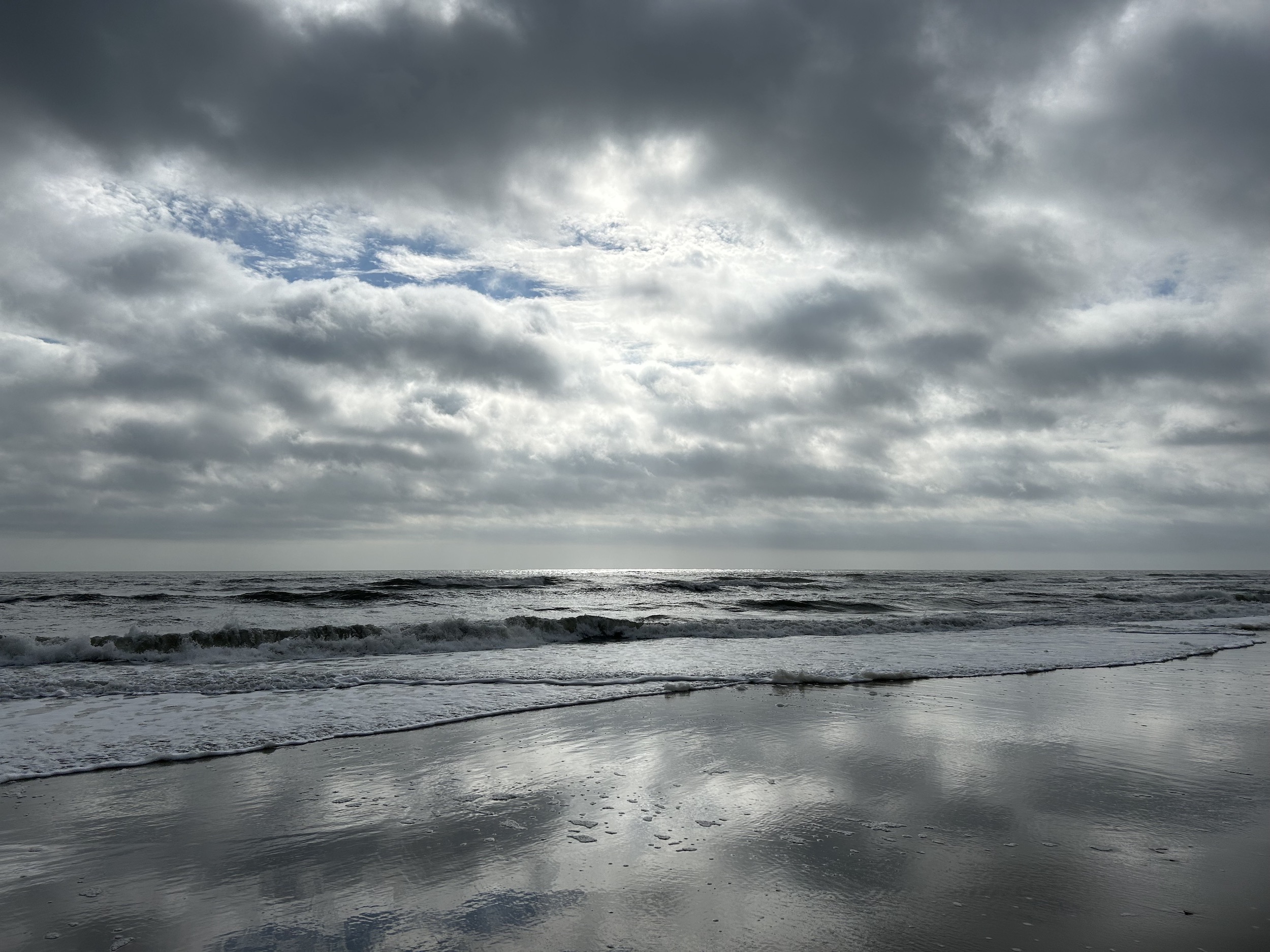
looking out over ocean. Dark cloudy day with sun peeking through

Recently I stood with a woman on the beach, both of us looking across the ocean. “Stay connected to nature,” she said. “It will help with the long view. It will give you strength. It endures.”

Sitting in the National Gallery of Art in front of two van Gogh masterpieces I remembered that people suffering in all kinds of ways throughout history have been able to see beauty and hope through their grief and found ways to share it with the world.

In dark times, I find it difficult to believe that the moral arch indeed bends toward justice. But Viktor Frankl, John Lewis, and countless others, known and unknown, did. And they knew the truth of that saying depends on individual action. They lived holding both grief and hope in their hearts and found courage to move on.

Jesus did. Those who strive to imitate his life, to follow his Way, will too. It’s not a “Christianity” that storms the Capitol with violence when things don’t go your way. It’s not a “Christianity” that sees some people as expendable and deserving of disrespect. It strives to serve the common good. It’s a both/and faith. It’s a grief/hope faith. It doesn’t deny pain, oppression, and suffering. Jesus wept over Jerusalem. But he kept on going, living with compassion.

May it be so.

Sources

Together, You Can Redeem the Soul of Our Nation by John Lewis

How Not to Fall Into Despair by Brad Stulberg

With Gratitude for Mary Oliver

With Gratitude for Mary Oliver

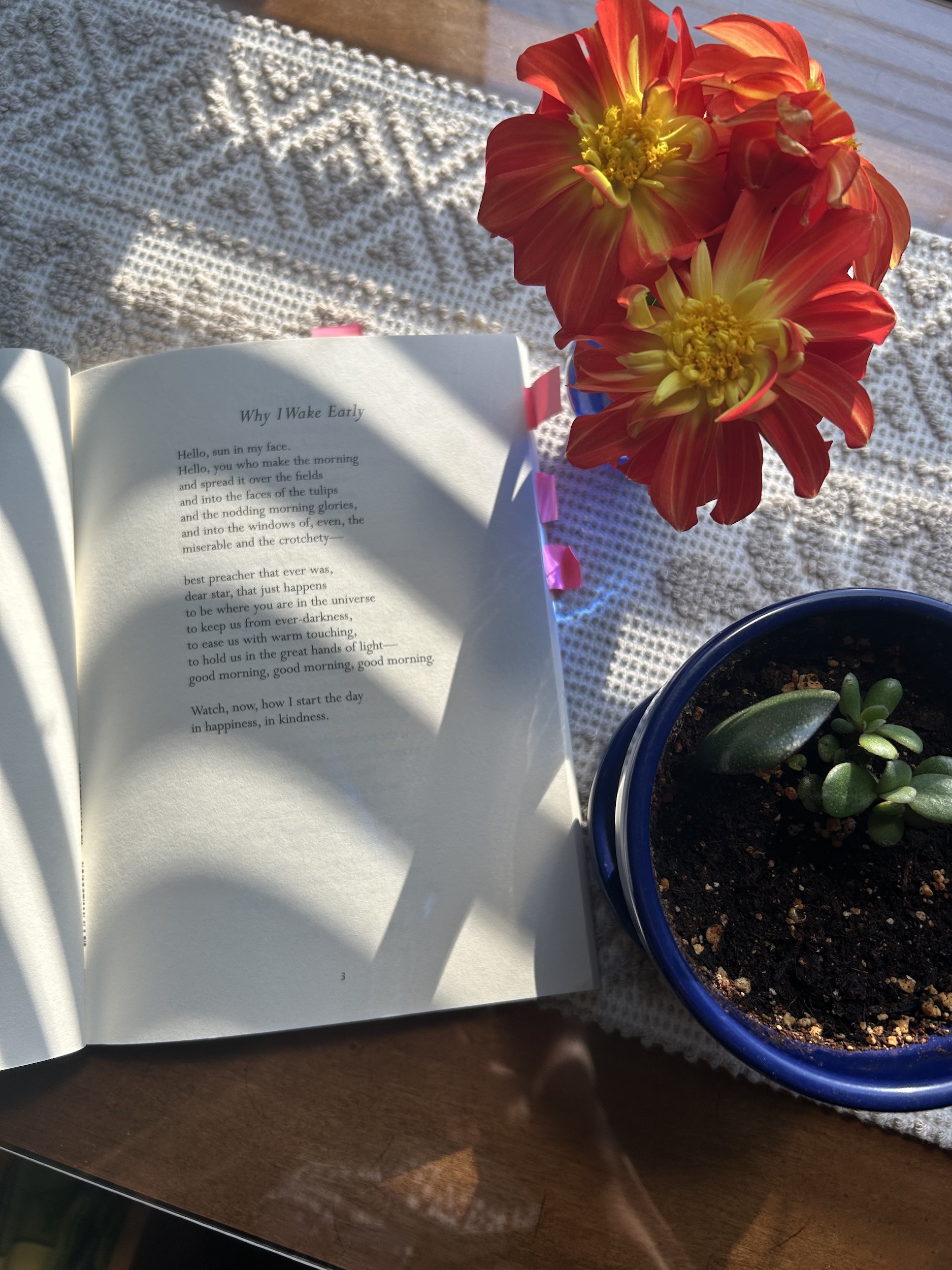
September 10 was Mary Oliver’s birthday. It would have been her 89th. I thought of her that morning as I walked into my living room. The sun poured through the window over the buffet, flooding the plants, shells, and other treasures that live there with light.

Hello, sun in my face
Hello, you who make the morning
and spread it over the fields
and into the faces of the tulips
and the nodding morning glories,
and into the windows of, even, the
miserable and the crochety—...

I recited her poem “Why I Wake Early.” It has become my morning prayer whenever the sun greets me by spreading its light over the chair and couch, painting the hardwood floor with yellow stripes reaching to the dining table at the other end of the room.

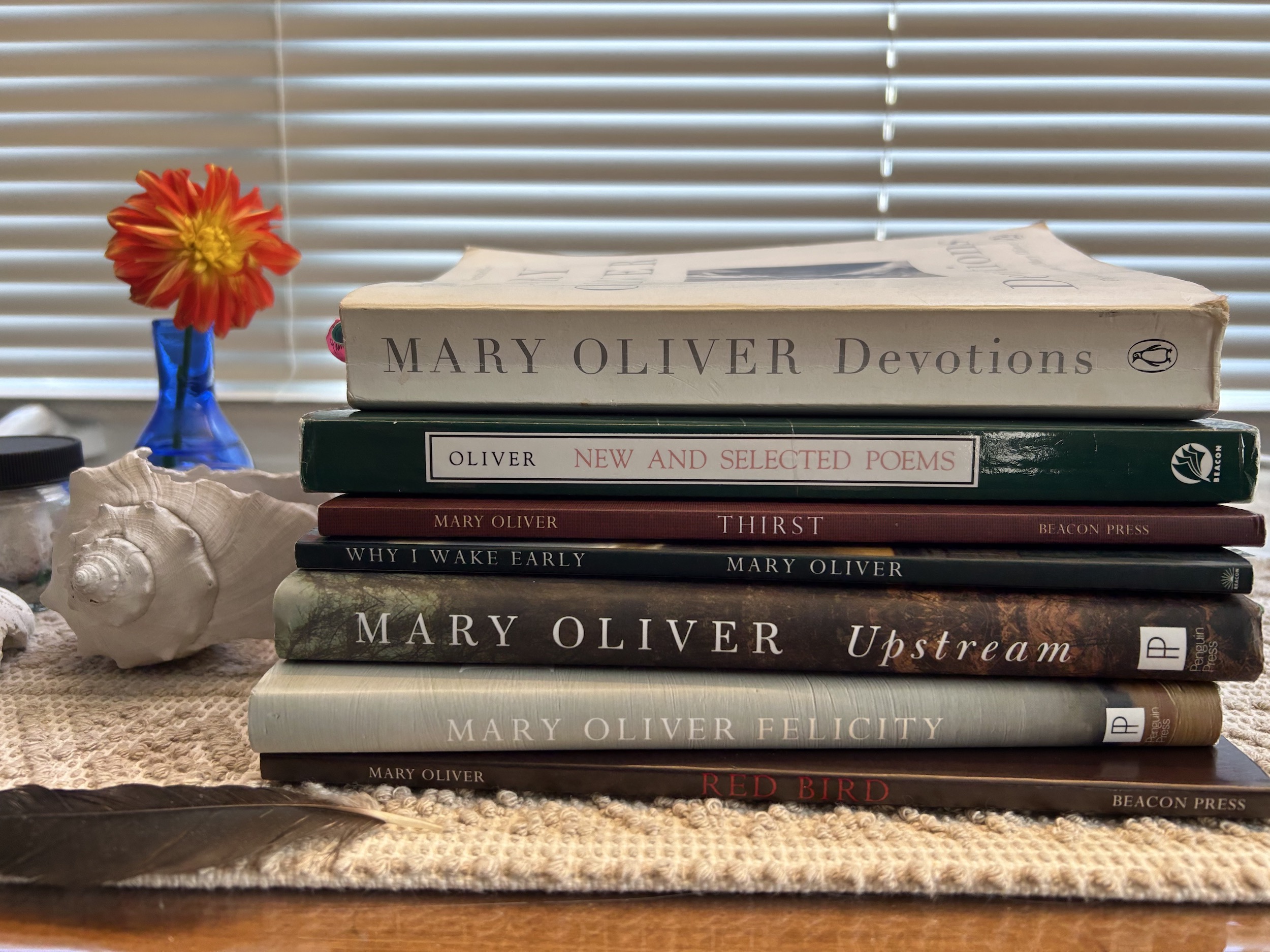
Mary Oliver is part of my morning reading, and in her honor, I treated myself with a few favorites. Years ago, when I first read it, “At the River Clarion” won my heart with the opening line: I don’t know who God is exactly. Yes. After years of listening, searching, and studying, I still say the same thing. Attention to creation provided hints to the poet. The river splashing across the stone where she sat. The stone itself. The mosses under the water. They spoke to her of holiness and the part of it all things are. Not a message quickly heard, she said, but one understood by being present to the moment, day by day by day.

In the poem, she wonders how one gets “to suspect such an idea,” being a tiny piece of God. Perhaps it’s as 20th century theologian Karl Rahner articulated: God’s enlivening presence within all from the start creates a desire for something beyond ourselves and enables a response to the Divine.

I remember in my high school years, corresponding with a friend’s cousin who was a lay brother at the Dominical House of Prayer in Washington, D.C. I treasured our letters and wrote that we are all part of the wholeness of God. All holding some bit of God, like a puzzle piece, deep within. And when all things finally gathered together, God would be wholly present. What planted that sense in my teenage heart? If Rahner was right, it was there from the start, calling for openness to Mystery and attention.

As Mary Oliver so clearly understood, we are called to notice. Seeking is unnecessary since God is already here. But attentiveness and quiet have something to do with deepening the relationship with the Holy within and without.

Recently, I spent a day with two friends I have known since we were in our late teens. Like beautiful threads, we weave in and out of one another’s life tapestries. Sharing our spiritual journeys is always part of the conversation. Nestled in the woods on the edge of the Hocking Hills, their home is simple yet adorned with beautiful bits of nature and art (many pieces made by friends). Chairs and couches are arranged in a cozy circle good for talking, and the kitchen, complete with a long table, welcomes family and friends.

We shared memories of past gatherings and coming adventures, titles of books we’re currently reading as well as ones that are staples of our lives. We read poetry, caught up on our families, and ate delicious homemade soup and bread while sipping iced tea.

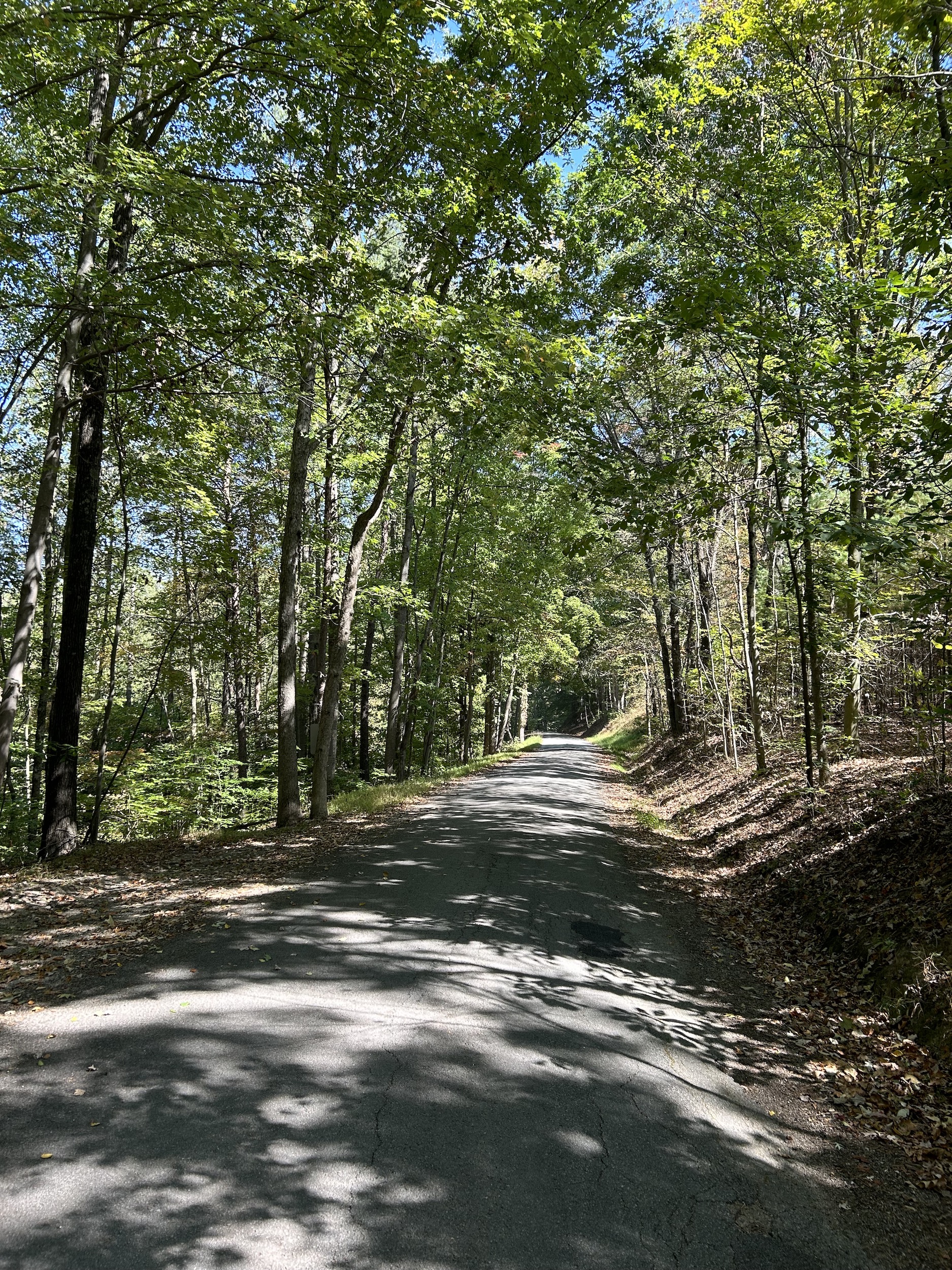
On our walk, light filtered by trees on our right made beautiful patterns across the road and the tree trunks on our left. Nuthatches and chickadees had their lunch at the large feeder and woodpeckers’ drumming announced they were finding theirs elsewhere.

And while I spoke of my soul’s longing to spend days with the ocean, the woody beauty called out for attention. When given to the place where I was at that moment, attention revealed Mystery and Love waiting there.

Oliver’s poem “Praying” begins by pointing out that an encounter with Holy Presence need not be occasioned by something particularly stunning. She says it doesn’t have to be a blue iris. I’d say it doesn’t have to be the ocean.

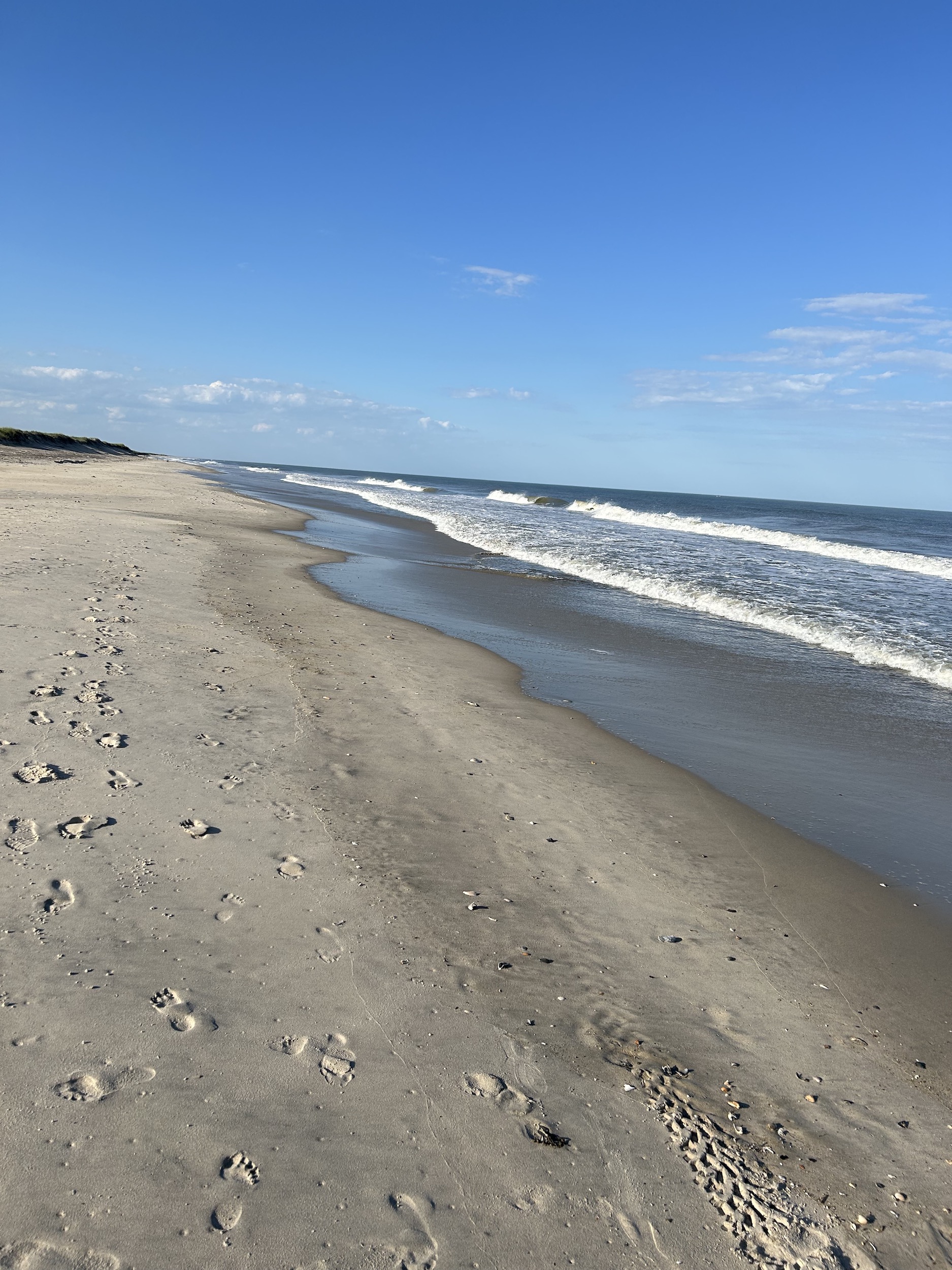
ocean shore
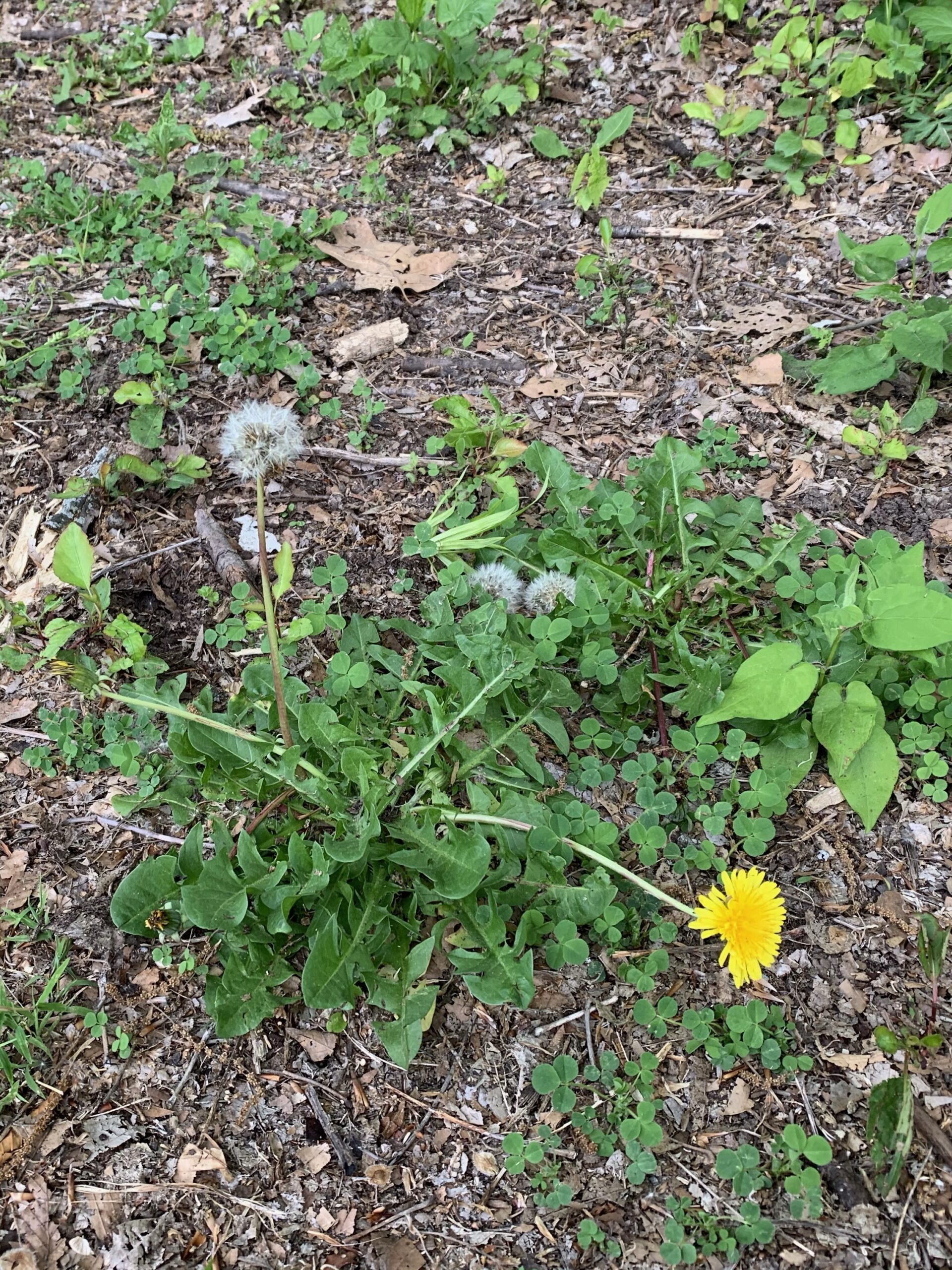
dandelion and weeds
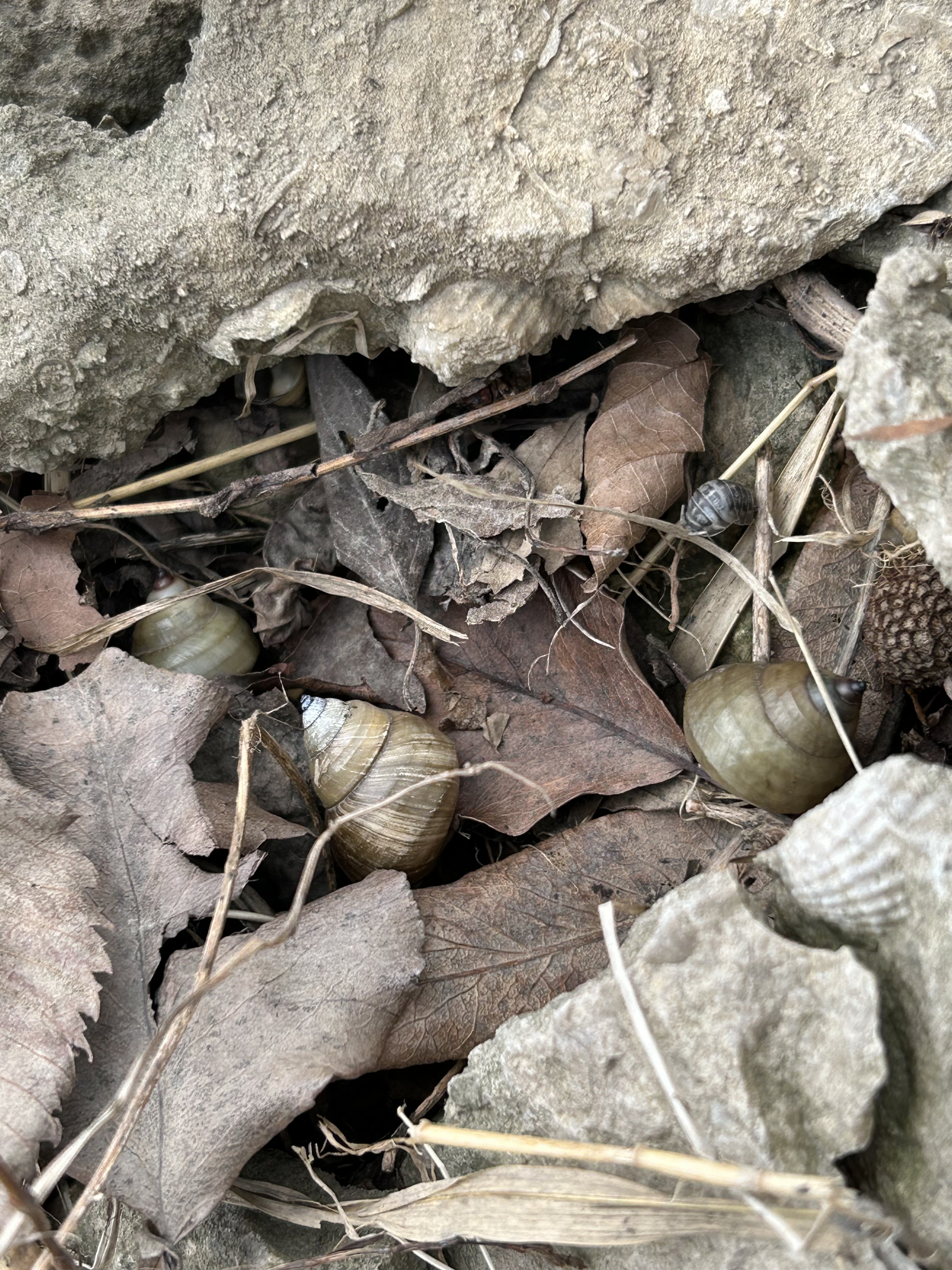
fossil rocks, snail shells leaves

Praying

It doesn’t have to be 
the blue iris, it could be
weeds in a vacant lot, or a few
small stones;
just pay attention, then patch

a few words together and don’t try
to make them elaborate, this isn’t
a contest but the doorway

into thanks and a silence in which
another voice may speak.

Mary Oliver generously shared the fruit of her attention and journey with us in volumes of poetry. I give thanks. And while I’m still hoping for a week or two at a beach before the year is out, I will try to heed her admonition in “Messenger,” that “My work is loving the world…” and that despite having old boots, a torn coat, and arriving at mid-seventies “…still not half perfect …” I will focus on what is mine to do. She sums it up in her poem “Sometimes”:

“Pay attention. / Be astonished. / Tell about it… “

Thank you, Mary Oliver.

Sources:

“Why I Wake Early” by Mary Oliver   Published in Why I Wake Early  (2004) p. 3

“At the River Clarion” by Mary Oliver   Published in Evidence (2000)

“Praying”  by Mary Oliver  Published in Thirst ( 2006) p. 37

“Messenger” by Mary Oliver   Published in Thirst (2006) p. 1

“Sometimes” by Mary Oliver   Published in Red Bird (2008) p. 35-38

All these poems and many more, have been published in Devotions: The Selected Poems of Mary Oliver (2019). She arranged these poems herself from her books published from 1963 to 2015! If you love Mary Oliver, this is a book to own!

You can purchase it online from Bookshop.org and support independent bookstores across the country. if you have a favorite, you can even choose the bookstore you would like to support. Mine is Gramercy Books in Bexley, Ohio

Entanglement

Entanglement

While the concept of “entanglement” is not new, it is increasingly encountered today.

Suzanne Simard’s work and book, Finding the Mother Tree, reveal the entanglement of tree roots, fungus, and mycelium that connects individual trees, creating a community. This intricate, underground network allows trees to communicate with each other, warning of impending danger and responding to one another’s distress. Through it, mature trees share nutrients with young ones growing beneath their canopy.

The word “entanglement” appears in current spiritual writing, referencing its use in quantum physics. Care must be taken in appropriation of a term from one discipline to another. “Entanglement” in a physicist’s work has a different meaning than it does in a theologian’s. Still, it provides an apt metaphor.

Quantum physics offers an extraordinary look at how matter, at an elemental level, can be connected even when separated by vast distances. True not only between individual particles, but also among thousands of atoms and molecules within the animate and inanimate. Entangled particles act as one thing.

And there is the metaphor: All creation is entangled, made one by the shared, enlivening force called by many names: God, Ground of Being, Presence, Holy One, Spirit.

Entangled creation includes human beings. Despite the “othering” that happens – especially during the current political climate – dividing humanity into groups of “them” and “us”, we are profoundly connected. What is done to one affects all.

Suffering and violence around the world affect those far from it. Joy, enthusiasm, and kindness reach across the globe, making it a better place.

That human beings continue to war against one another and to destroy this planet, ignoring the warnings of extreme weather, vanishing species and habitats, and poisoned waters, are indicators that the reality of entanglement often goes unrecognized.

Yet it calls for a response: Respect. Respect entails reverencing all people, all things. Respect is the appropriate response to the Presence residing deep within each of us, within all creation, from the smallest particle to the vast cosmos. All is holy ground.

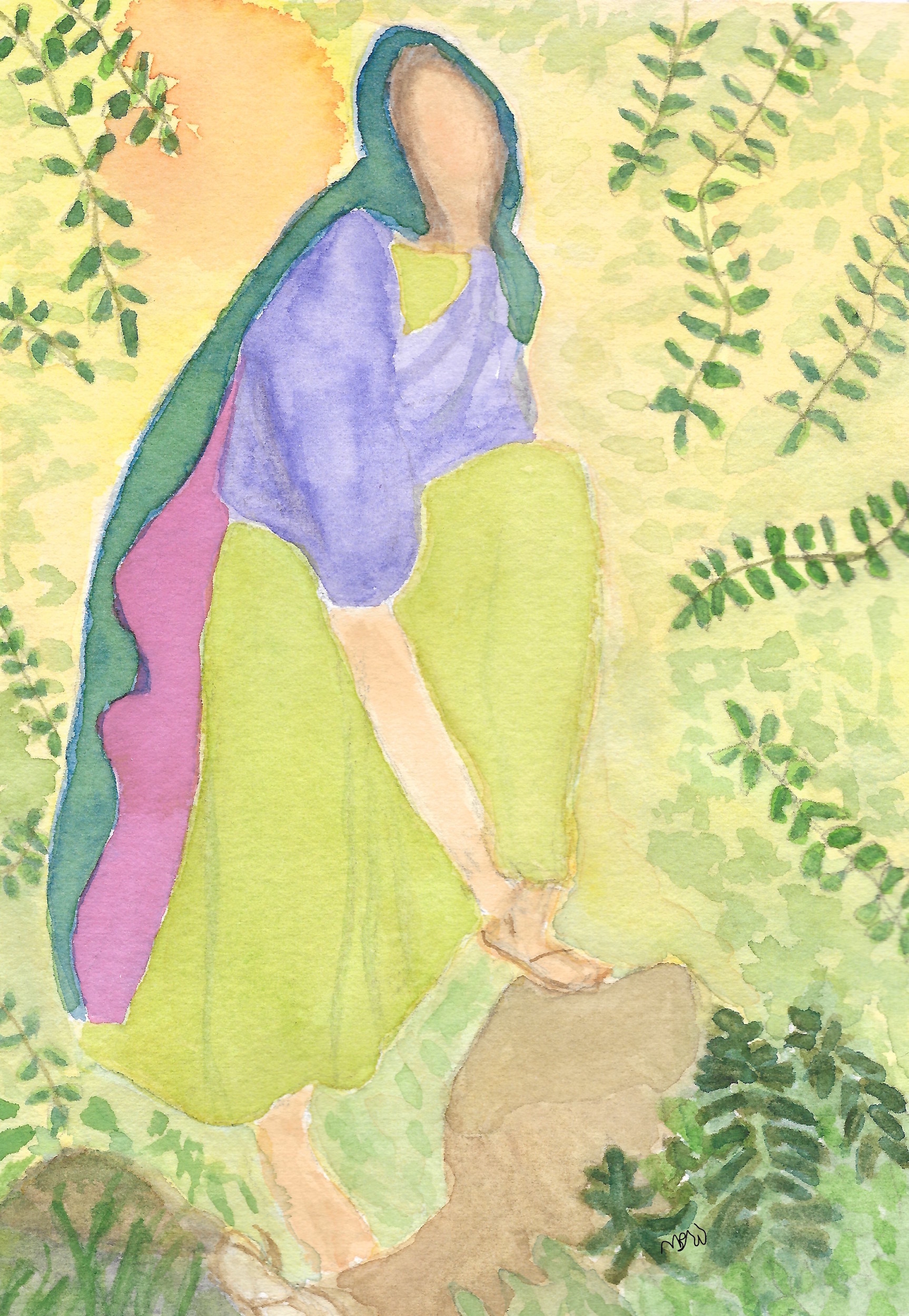
We are called, like Moses, to take off our shoes.

watercolor painting of Hebrew woman taking off her sandal
Mosetta ©2018 Molly Weiland watercolor

 slightly different version originally published in Awakenings the newsletter of The Spirituality Network, September 2024

Photo: Mary vay Balen

Source:

What is Entanglement and Why Is It Important?”   on Caltech Science Exchange