
God come to my assistance. Lord make haste to help me.
Images on newscasts and online bring the widespread devastation ravaging Japan’s Northeastern coast into our homes and hearts, but I had another, more personal connection. On March 7, I stood in line at Tokyo’s Narita airport, buying boxes of green tea and a drink to keep me going until Delta Flight 620 would return me to the States through Minneapolis/St. Paul. Four days later, passengers on the same flight were among the last to depart Narita before the airport was closed down. I read they waited seven hours after boarding before the plane was given the go ahead to take off.
As I viewed video and listened to reports, I wondered about the young women who worked at the kiosk where I made my purchases and the crowds of travelers I had seen returning to their homes in Japan. How many of them were headed to the Northeast? What once would have been regarded as remote has been made more immediate through travel and technology. Some of the first images broadcast to the world were taken on cell phones. We no longer need spectacular photos of our planet from outer space to realize that we are one human race bound, one people of God.
As I prayed morning prayer and then searched through the Liturgy of the Hours and Mass readings to find something, some wisdom that spoke to the tragedy.I read and reread until suddenly becoming aware of the introductory prayer common to them all. An ancient prayer, it says it all, “Help!” in a more elegant, poetic way: “God come to my assistance. Lord, make haste to help me.”
I cannot imagine how those living in areas demolished by the quake and tsunami feel. What happens to one’s heart while looking at piles of debris that were once home and neighborhood? What happens to one’s faith when the closest sources of water, food, and shelter are miles and miles away?
After the first flood of gratitude that you are still alive, how do you face the future without becoming overwhelmed? With communication lines disrupted, what fear accompanies the long wait to hear from loved ones?
Another quote comes to mind, this time from St. Teresa of Avila (15151582)
Christ has no body but yours,
No hands, no feet on earth but yours,
Yours are the eyes with which he looks
Compassion on this world,
Yours are the feet with which he walks to do good,
Yours are the hands, with which he blesses all the world.
Yours are the hands, yours are the feet,
Yours are the eyes, you are his body.
Christ has no body now but yours,
No hands, no feet on earth but yours,
Yours are the eyes with which he looks
compassion on this world.
Christ has no body now on earth but yours.
There are many ways we can respond to the disaster that has befallen our sisters and brothers. Here are a few links to charitable organizations that are responding to this crisis:
Donate through Catholic Relief Services
© 2011 Mary van Balen
 In the eyes of God our Father, pure unspoilt religion is this: coming to the help of orphans and widows when they need it, and keeping oneself uncontaminated by the world.
 PHOTO: Mary van Balen In the morning let me know your love, O Lord.
 PHOTO: Mary van Balen
  PHOTO: Mary van Balen
  PHOTO: Mary van Balen
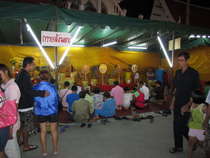
  PHOTO: Mary van Balen On February 18, Buddhists in Thailand celebrated Makha Bucha Day or Sangha Day. It commemorates the unplanned yet simultaneous appearance of 1,250 disciples before the Buddha nine months after his enlightenment. They paid him reverence and listened to him before setting out around the country to spread the teachings which became the root of Buddhism.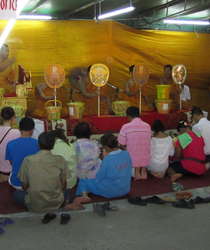
 PHOTO: Mary van Balen
 There is a variety of gifts but always the same Spirit; there are all sorts of service to be done, but always to the same Lord; working in all sorts of different ways in different people, it is the same God who is working in all of them.
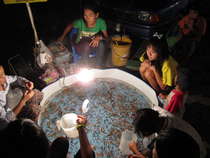
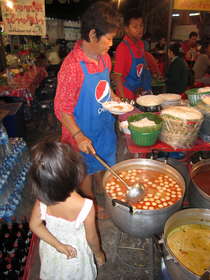
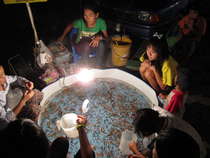 As I wandered through the temple grounds, many sights reminded me of parish festivals at home: children hoping to take a gold fish home, games, rides, and lots of food. Of course, plenty of things were different: Monks were chanting as were ever changing groups of laypeople who, after offering orange buckets filled with ordinary items for the monks daily use, knelt and joined in their prayer. No hotdogs or cotton candy, but roasted chestnuts and sweets that included sweet corn as well as chocolates.
 As Paul continues in 1 Cor.: “God has arranged the body and that there may not be disagreements inside the body, but that each part may be equally concerned for all the others. If one part is hurt, all parts are hurt with it. If one part is given special honour, all parts enjoy it.”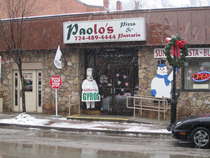
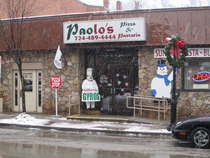 This snowy winter day found me walking the streets of Charleroi, Pennsylvania. Actually, I was doing more slipping and sliding than walking. Anyone could tell by my gingerly pace and occasional grasp at a parking meter for balance that I am basically a flatlander who, while used to messy slush, had little experience with walking through it up and down hills.